Products Palantir Technologies
Maven Smart System
Computer-vision and AI targeting suite delivered to the US military under Project Maven, used to detect, classify, and track objects across satellite, drone, and other sensor feeds.
Softwareby Palantir TechnologiesIntroduced 2024




Photos: www.spatialintelligence.ai · mundobytes.com · Беспилотники (дроны, БПЛА, UAV) (Telegram) · www.linkedin.com · Center for Strategic & International Studies
Videos

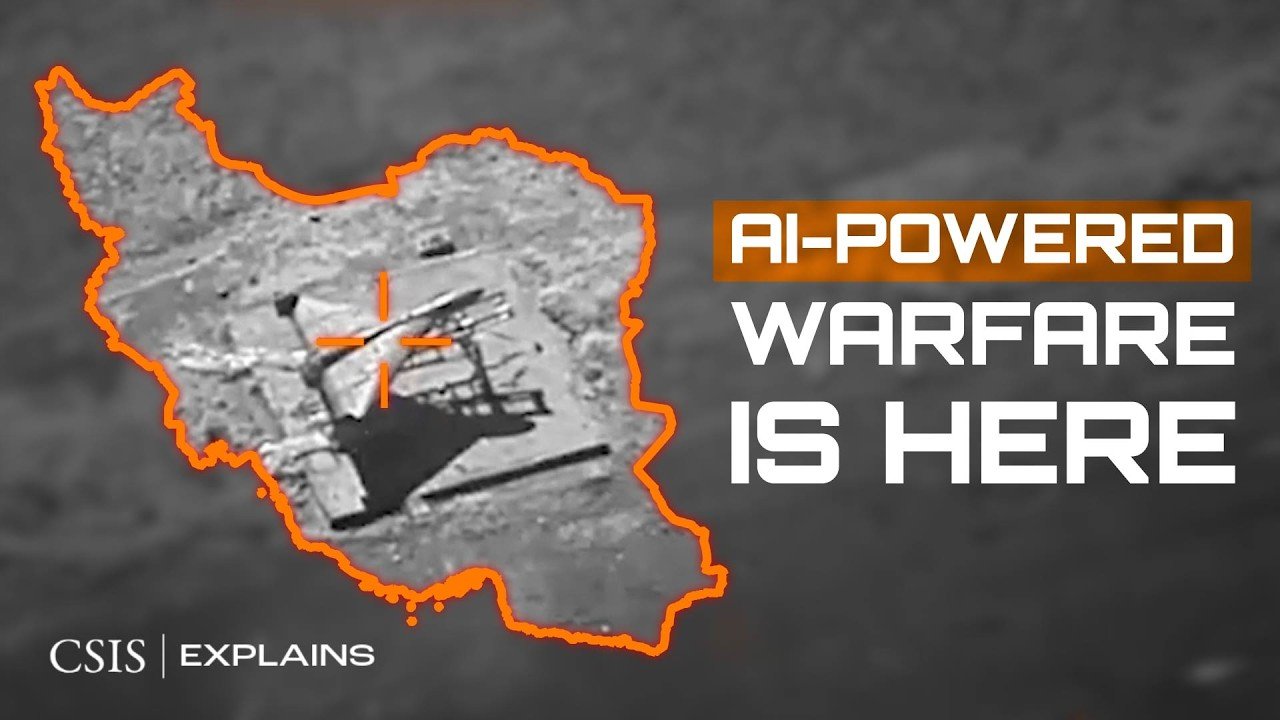
Maven Smart System is the operational software that delivers Project Maven — the United States Department of Defense’s flagship effort to apply computer vision and machine learning to military intelligence — to combatant commands, services, and frontline units. Built and sustained by Palantir Technologies, the system reached broad fielding across US forces in 2024 after Palantir consolidated the prime integrator role. Project Maven itself launched in 2017 under the Pentagon’s Algorithmic Warfare Cross-Functional Team. The system functions as a sensor-fusion and target-nomination layer: it ingests video and imagery from drones, satellites, and other intelligence feeds, runs automated detection and classification models, and surfaces candidate objects of interest to human analysts.
Technically the platform stitches together a catalogue of computer-vision models trained to identify vehicles, vessels, aircraft, weapons systems, and patterns of life across full-motion video and overhead imagery. Outputs land in a shared operational picture where analysts refine, confirm, or reject the machine’s nominations, and vetted tracks can be passed forward to strike cells with metadata that supports rules-of-engagement and target-vetting workflows. US officials have described the result as compressing target nomination from hours of manual sifting to minutes.
The United States is the lead operator, fielding across the Army, Navy, Air Force, Marine Corps, and Space Force and across combatant commands including CENTCOM, EUCOM, INDOPACOM, NORTHCOM, and TRANSCOM. CENTCOM has used Maven to identify and track Houthi launchers and vessels during Red Sea operations. In May 2024 the Pentagon awarded Palantir a roughly $480 million, five-year contract; a May 2025 modification added about $795 million, raising the ceiling to nearly $1.3 billion through 2029, by which point the system reported more than 20,000 active users. In March 2025 NATO’s Allied Command Operations acquired a Maven Smart System variant — the alliance’s first deal of its kind.
The platform sits at the centre of a long-running argument inside the US technology industry about military AI: Project Maven was originally led by Google, which withdrew in 2018 after sustained employee protest. Palantir’s subsequent dominance reflects a broader consolidation of defence AI work around vendors willing to accept that mission set.
Sources
- www.c4isrnet.com/artificial-intelligence/2024/05/30/palantir-wins-contract-to-expand-access-to-project-maven-ai-tools/ (2026-06-21) — C4ISRNET (30 May 2024) — initial $480M five-year IDIQ; covers CENTCOM, EUCOM, INDOPACOM, NORTHCOM, TRANSCOM.
- defensescoop.com/2025/05/23/dod-palantir-maven-smart-system-contract-increase/ (2026-06-21) — DefenseScoop (23 May 2025) — +$795M modification to ~$1.3B through 2029; 20,000+ active users.
- www.thenationalnews.com/world/us-news/2024/02/26/us-ai-syria-yemen/ (2026-06-21) — The National (26 Feb 2024) — CENTCOM use of Maven against Houthi rocket launchers and vessels; 85+ strikes.
- shape.nato.int/news-releases/nato-acquires-aienabled-warfighting-system- (2026-06-21) — NATO SHAPE (Mar 2025) — NCIA + Palantir Maven Smart System NATO for Allied Command Operations, finalised 25 March 2025.
- www.pbs.org/newshour/show/amid-pressure-from-employees-google-drops-pentagons-project-maven-account (2026-06-21) — PBS NewsHour (2018) — Google's 2018 exit from Project Maven under employee pressure.