OSINT
What the open-source channels are saying about drones, robots and AI in the war — capabilities, new tactics, notable strikes, and how the mood is shifting. English summaries, with a link to every source.
Russian milblogger trend watchupdated · 70 postsRussian milbloggers are riding a wave of confidence on long-range strike — jet-powered Geran-5s now hitting Lviv, Rivne, Khmelnytskyi and bridges in Zaporizhzhia and Dnipro — while admitting Ukraine is pulling ahead on heavy multirotors (medevac by drone) and fibre-optic FPV. The Starlink chokehold narrative is quietly collapsing: speed limits reportedly lifted, and even Rybar now blames the weather, not Musk.
Loud right nowThe deep-strike campaign on western-Ukrainian logistics and Dnipro-crossing bridges — jet Geran-5s on Lviv, Rivne, Khmelnytskyi and Mykolaiv, the Vantovy bridge in Zaporizhzhia hit, Kyiv's Nivky substation down — is dominating the feed and tied directly to the drone angle: milbloggers argue reactive Gerans are now effectively uncatchable by helicopter and are reaching targets interceptor drones cannot.
Expand analysis →
Collapse ↑
What Russian milbloggers are saying — their claims and mood, not confirmed fact.
Autonomy & AI at the edge
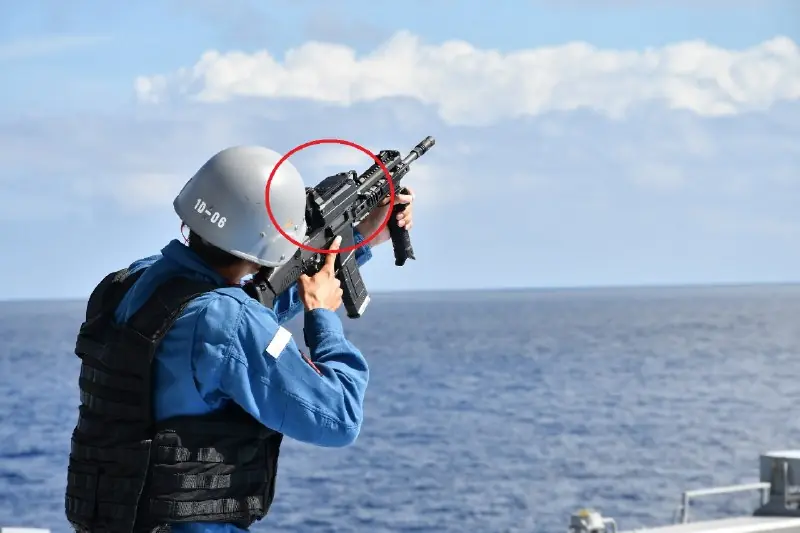
The edge-autonomy story this fortnight is less about new onboard brains than about where the networks sit: Boris Rozhin and Rybar are talking up Deputy Defence Minister Yevkurov’s announcement of standalone unmanned heavy-armour units — Rozhin himself claims a T-72 could be driven from Moscow over fibre, mesh or Starlink-class satcom, and plugs the ‘Rassvet’ command system as the enabler, framing manned tanks as obsolete (boris_rozhin-230640, boris_rozhin-230391, milinfolive-181895). On the strike side the AI-assisted Lancet / ZALA Z-16 reconnaissance-fires loop is held up as the mature benchmark — a Z-16 cueing an ‘Izdeliye 51’ loitering munition onto a towed Bohdana-B in Sumy, with a second Lancet finishing the gun (boris_rozhin-230641). Military Informant is still their marker that cheap infantry-level AI aim-correction is spreading beyond this theatre, recycling footage of Thai troops carrying Israeli SMASH 2000L sights on SIG SIGM400s (milinfolive-181839). The honest concession, from Rusengineer, is that the real revolution came from miniaturised sensors and microelectronics, not AI as such — and he openly admires the US B-21 programme as the parallel bet (rusengineer-10713).
EW vs counter-EW & fiber-optic drones
The Starlink-throttling story has visibly deflated. Military Informant now cites The Economist’s Oliver Carroll quoting Ukrainian frontline drone commanders that the speed caps have most likely been lifted, and both Two Majors and Rybar are rowing back — their joint column admits that the drop in mid-range ‘Hornet’ strikes along the Novorossiya route and against Crimea coincided with storms, flooding and gale-force winds, not Musk (milinfolive-181984, dva_majors-100854, rybar-84104). That is a sharp shift from a week ago when Rybar was celebrating that ’even old gasoline Gerans’ were reaching Lviv because interceptor drones could not catch them (rybar-84051, barantchik-41688). On the fibre-optic front, Boris Rozhin showcases a fibre FPV operator call-sign ‘KVN’ threading a second strike through a hole punched by the first through anti-drone netting to kill a 2S22 Bohdana near Kramatorsk — the showcase use-case for jam-immune last-mile precision (boris_rozhin-230394). UAVDEV, puzzling over footage of FPVs still flying after their mothership was downed, hints the Ukrainians have moved beyond carrier-as-relay to something more independent (UAVDEV-13077).
Counter-drone / interception
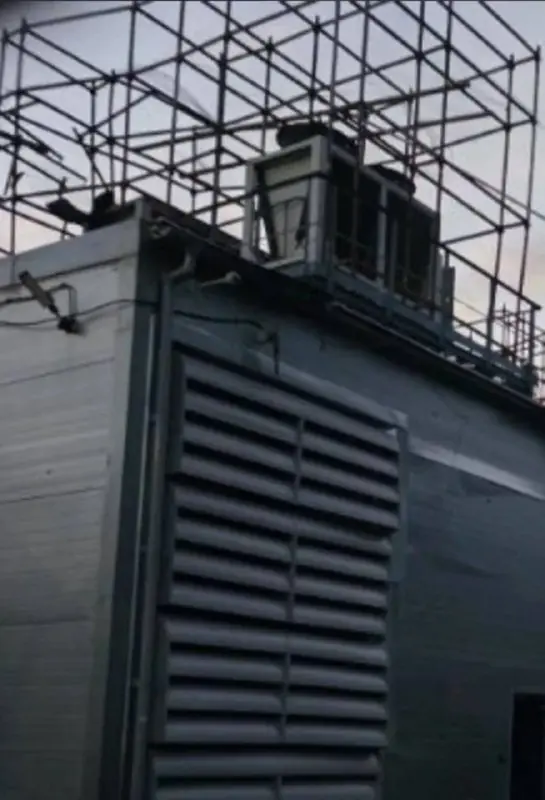
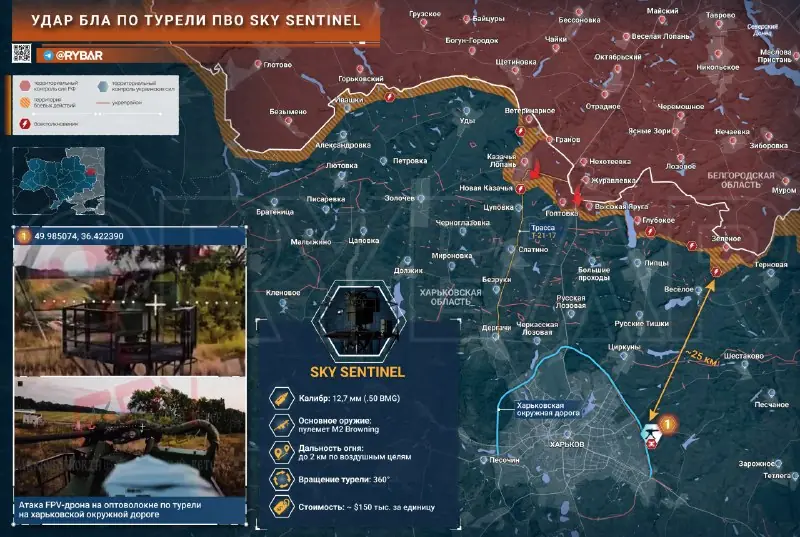
The dominant counter-drone talking point remains the ‘говно, палки и Рабица’ (‘shit, sticks and chicken-wire’, ГПР) screens — UAVDEV takes a victory lap after a half-finished chicken-wire canopy at a VK data centre reportedly stopped every drone that hit it, and argues the same cheap tech should have been fielded a year ago over fuel depots, refineries, airfields, strategic bombers and even submarines; he concedes it will not stop ballistics or Flamingo cruise missiles, but notes Ukraine has few of those (UAVDEV-13066). Milbloggers concede the ceiling against jet-powered Gerans is still unresolved: Military Informant repeats that helicopter chase tactics on reactive Gerans are ‘practically pointless’, with an episode in Lozova, Kharkiv (milinfolive-181896). On the Russian learning curve, Boris Rozhin passes along JD Vance’s remarks that the US has rewritten its force-protection tactics after drone losses to Iran, and UAVDEV publishes a translation of the JIATF-401 counter-small-UAS playbook, signalling that the Russian analytical community is now actively mining NATO c-UAS doctrine (boris_rozhin-230301, UAVDEV-13073).
Production, components & supply chain
The components strand is quieter but pointed. UAVDEV runs a long essay arguing you cannot order a ‘Russian ZALA’ into existence by decree — real UAV industries grow from engineers, entrepreneurs and competition over years, and regional ’every oblast makes its own Boeing’ schemes are absurd (UAVDEV-13065). The implicit concession is that top-down industrial fiat is not closing the gap. UAVDEV also keeps up the running joke that you can tell which Russian microwave the Geran’s chip was scavenged from by its behaviour (loiter = ordinary; sharp dive = induction) — a self-deprecating admission that commercial-chip reuse still underpins the fleet (UAVDEV-13072). On the Ukrainian side, Military Informant notes continued expansion of the ‘drone-port’ near Tsymbulova in Oryol oblast — new pads, launchers, six drone garages — framing the opposing production/basing posture as still scaling (milinfolive-181903).
Tactics & employment
The strike campaign has shifted hard onto transport-logistics and bridges: barantchik and Boris Rozhin report jet Geran strikes on the Vantovy cable-stayed bridge in Zaporizhzhia, FAB-with-UMPK glide bombs on the South Bridge in Dnipro, and a running series of Geran-5 strikes on Epitsentr and Grand Import logistics hubs in Khmelnytskyi, Rivne (Dubno) and Mykolaiv (Pervomaisk) (barantchik-41823, boris_rozhin-230629, milinfolive-181826, barantchik-41749, barantchik-41719, barantchik-41758). Boris Rozhin frames rail — Kirovohrad, Odesa, Dnipropetrovsk oblasts — as the ‘methodically destroyed industry’, with at least twenty strikes on locomotive depots and stations since September (boris_rozhin-230393). Two Majors is now openly crowd-sourcing Ukrainian impact footage via a bot to let ‘industry’ refine Geran penetration tactics (dva_majors-100856). On the Ukrainian side milbloggers flag Torando-S launchers in Crimea destroyed by Ukrainian loitering munitions and a Mavic strike on a ZNPP staff bus — ten atomic workers killed, c.40 wounded since April (milinfolive-181833, dva_majors-100750).
Ground & naval robotics
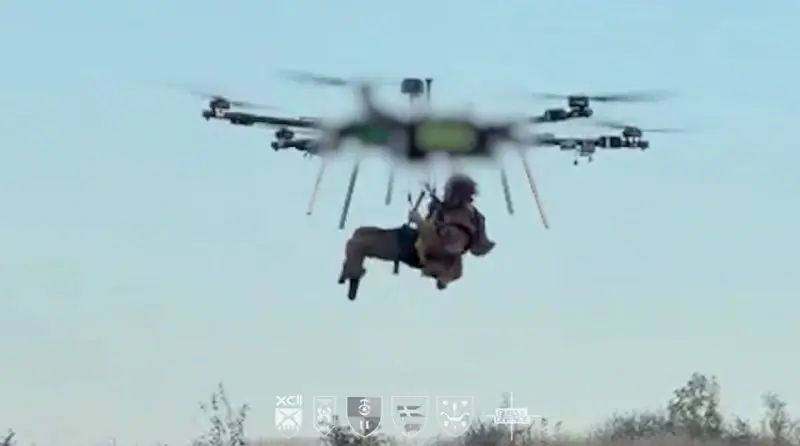
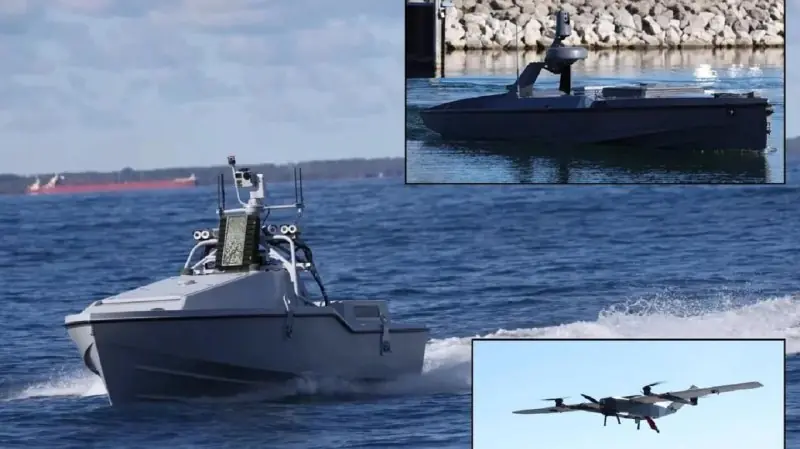
Ground robotics are suddenly the loudest Russian aspirational note: Yevkurov’s confirmation that standalone unmanned heavy-armour units — including T-72-based robotic tanks — are coming after the Tsentr-2026 exercises is amplified across Boris Rozhin, Rybar and Military Informant, with Rozhin personally pitching tele-operation from Moscow via fibre, mesh or Starlink-equivalent satcom (boris_rozhin-230391, boris_rozhin-230640, milinfolive-181895). The Russian side has no comparable near-term fielded system to show. On naval, barantchik covers the US Bayonet Quest 26 exercise where the Mk VI patrol boat worked with Saronic Corsair USVs and Magura V7 — the Ukrainian sea-drone — essentially reflagged, and complains this is the pattern: battle-tested Ukrainian naval drones get stripped and transferred to sponsors (barantchik-41723). UAVDEV publishes Anduril/Australia’s confirmation that the XL-AUV Ghost Shark will deploy Switchblade 600 swarms, lay sea mines and perform air-launched payload work — an undersea mothership concept several steps beyond what either side fields today (UAVDEV-13084). The most striking tactical datapoint is Ukrainian: UAVDEV describes the first-ever drone-casevac, pulling a wounded soldier out of the grey zone on the Oskol with a SkyFall Heavy Shot Ayudag-6 (130 kg lift, winch), six months in planning, with Vampire decoys drawing Russian fire — and the StarGate successor already carrying a full evacuation capsule (UAVDEV-13077, dva_majors-100748).
Named systems & programmes
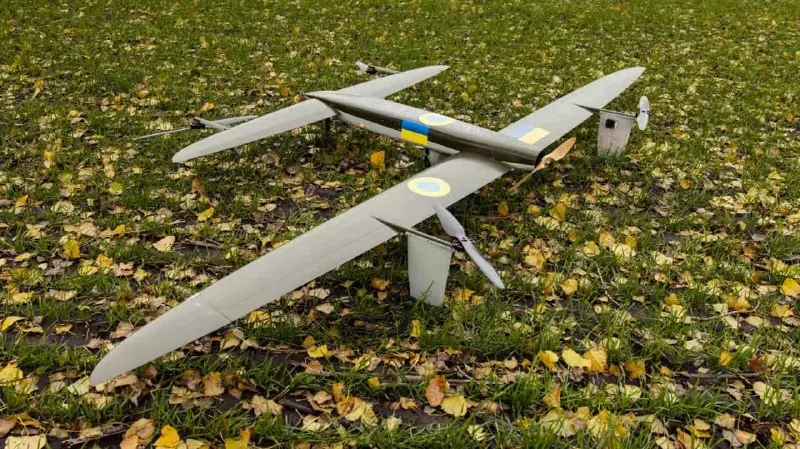
The jet-powered Geran family — Geran-4 and now Geran-5 — is the headline Russian system, repeatedly named in strikes on western-Ukrainian logistics and bridges, and credited with outrunning helicopter interception (barantchik-41749, barantchik-41719, milinfolive-181896, boris_rozhin-230629). The Lancet / ‘Izdeliye 51’ loitering-munition family paired with ZALA Z-16 reconnaissance remains the showcased reconnaissance-strike loop (boris_rozhin-230641). Ukrainian systems named with grudging respect this fortnight include the An-196 ‘Lyuty’ long-range strike drone (one caught by a Moscow construction crane), the SkyFall Gurzuf Defence and StarGate heavy medevac hexacopters, the Heavy Shot Ayudag-6, Vampire bombers, and the ‘Baba-Yaga’ logistics multirotors (milinfolive-181983, UAVDEV-13077, dva_majors-100748, boris_rozhin-230396). Rybar flags the DeepSeek export restrictions as a parallel US move alongside Patriot holdups — framing AI-model access as part of the same strategic kit (rybar-84083). The ‘Rassvet’ command/control programme is Rozhin’s named candidate for the Russian unmanned-armour backbone (boris_rozhin-230640).
Offensive/defensive balance & morale
The mood is bifurcated. On deep strike, milbloggers are triumphant — jet Gerans on Lviv, Rivne, Khmelnytskyi, Mykolaiv, Kyiv’s Nivky 330 kV substation knocking out metro and trams, bridges hit in Zaporizhzhia and Dnipro, and Zelensky quoted conceding that reduced Patriot supplies will mean more Russian ballistic strikes (rybar-84051, milinfolive-181831, dva_majors-100862, barantchik-41754). On defence they are more candid than before — ГПР chicken-wire is being celebrated specifically because ‘systemic’ air defence has not materialised, helicopter-on-Geran is pointless, and UAVDEV openly says Russia must ‘catch up’ on heavy drones after watching Ukraine run the first drone casevac in history (UAVDEV-13066, milinfolive-181896, dva_majors-100748). The Starlink-as-silver-bullet narrative has quietly reversed within a week, which is itself a morale signal: when the preferred explanation for a lull is withdrawn, the lull itself becomes harder to celebrate (milinfolive-181984, dva_majors-100854, rybar-84104).
- → Autonomy & AI at the edge — Lancet/Z-16 loop still the showcase; new rhetoric around tele-operated T-72s and 'Rassvet' C2.
- → EW vs counter-EW & fiber-optic drones — Starlink-throttle narrative deflates — speed caps reportedly lifted, weather now co-blamed; fibre-FPV precision rising.
- ↑ Counter-drone / interception — Chicken-wire ('ГПР') hailed as working c-UAS; NATO JIATF-401 doctrine being translated for Russian use.
- → Production, components & supply chain — Open admission that top-down 'make-a-ZALA' decrees won't work; commercial-chip reuse still a running joke.
- ↑ Tactics & employment — Hard pivot to bridges, substations and logistics hubs; crowd-sourced impact footage to tune Geran penetration.
- → Ground & naval robotics — Unmanned T-72 units announced after Tsentr-2026; Ukraine runs first drone-casevac with SkyFall Ayudag-6.
- ↑ Named systems & programmes — Geran-5 now explicit on western-Ukraine strikes; 'Rassvet' named as unmanned-armour backbone.
- → Offensive/defensive balance & morale — Deep-strike triumph but candid defensive gaps; Starlink narrative reversal dents the preferred alibi.
China Watchupdated · 55 sources readRussia and China pushed their state-to-state track to the front this cycle: Mikhail Mishustin and Li Qiang met in St Petersburg on 21 October claiming record ties and over $180 bn in trade in eight months, while Russian channels say Beijing is preparing a possible Putin–Trump–Xi meeting around APEC in Shenzhen on 18–19 November, and Donald Trump has signalled readiness. The clearest military signal is The Telegraph's report, carried on through Russian military channels, that Moscow used the Center-2026 exercise at Chebarkul to show drone tactics to Chinese observers, while Russian claims that British Kraken K3 Scout USVs used off Sochi contain Chinese equipment remain uncorroborated.
- Diplomacy and trilateral track — Mishustin–Li Qiang in St Petersburg claim record ties; Putin–Trump–Xi meeting floated for 18–19 November in Shenzhen; Senate Republicans oppose, Zelensky rejects a format excluding Ukraine.
- Training and exercises — The Telegraph: Chinese observers shown Russian drone tactics at Center-2026, Chebarkul. PLA–Pakistan Karakoram-2026 ground exercise in Xinjiang this month.
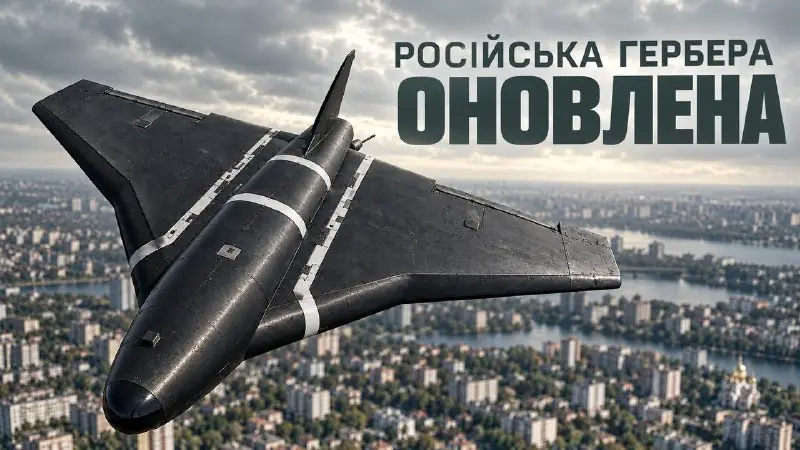
- Components and transfers — No new Chinese parts identified inside a Russian system this cycle. Russian claim: British Kraken K3 Scout USVs used off Sochi contain Chinese equipment — uncorroborated. Gerbera's Chinese engine rema
- Intelligence and space — Guowang Arctic–Antarctic link demonstrated at sub-second latency, 30 Mbit/s. Siguan-4-01 launched into the Yaang low-orbit ISR constellation. Shanghai: second suspected UUV mothership under constructi
- Taiwan and Indo-Pacific — AeroVironment–Thunder Tiger Switchblade MoU; AEVEX Lynx USVs to Taiwan marines with VANDAL and Onyx drones. Taiwan: hardened shelters, UGVs for casevac, 60,500 AI medical tags, MQ-9B flights from Hual
- Information operations — Taiwan NSB: 2.5 million messages tied to Chinese info-ops in Jan–Sep 2026, up 48% YoY; Facebook contested share 43.6% → 68.9%, Threads 4.5% → 9%.
Expand →
Collapse ↑
Each claim carries who made it; Russian channels' claims are claims, not confirmed fact.
- 2026-10-22Russian channel claims Ukrainian MFA received Chinese ambassador under inverted flag
Russian commentator barantchik reports Ukraine's foreign ministry hung the Chinese flag upside down during a meeting with the Chinese ambassador and then moved to remove or crop the images on its site and in Ukrainian media. No independent corroboration in the signals.
- 2026-10-21Putin meets Witkoff and Li Qiang in St Petersburg; trilateral Shenzhen meeting floated
Rybar and Два майора report Putin held consecutive meetings with US envoy Steve Witkoff and Chinese Premier Li Qiang on 21 October, that Moscow is ready to resume Ukraine talks in a trilateral format in the first ten days of November, and that Beijing is preparing a possible Putin–Trump–Xi meeting tentatively for 18–19 November around the APEC summit in Shenzhen; Rybar separately reports Senate Republicans opposing that trilateral and Trump saying he would focus such a meeting on nuclear and arms control rather than Ukraine.
- 2026-10-21Mishustin and Li Qiang claim record Russia–China ties, over $180 bn trade in eight months
Russian commentator barantchik reports the 31st regular meeting of heads of government in St Petersburg between Mikhail Mishustin and Li Qiang, with both sides describing relations as at a historical peak and the Chinese side citing trade of over $180 bn for January–August 2026, up 28.4%; the same channel reports Putin signalling that Chinese investors could be admitted to the Udokan copper project in Zabaykalsky Krai.
- 2026-10-21Taiwan says it logged 2.5 million messages tied to Chinese information operations in nine months
Victory Drones reports Taiwan's National Security Bureau citing more than 2.5 million messages linked to Chinese information operations in January–September 2026, up 48% year-on-year, with contested content on Facebook rising from 43.6% to 68.9% and on Threads from 4.5% to 9%.
From the posts
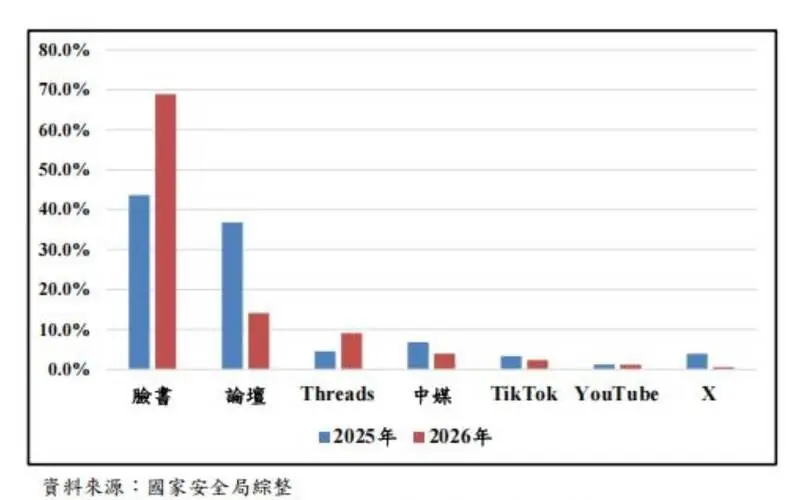
chart Victory Drones
- 2026-10-21Istoria Zbroi: Gerbera decoy evolving into a cheap strike drone
Ukrainian channel Istoria Zbroi reports that Russia's Gerbera — originally a foam-and-plywood decoy built around a small Chinese engine — now carries cameras and remote guidance, with a Gerbera-2 variant said to carry a 10 kg warhead and, in newer reports, an incendiary mixture, together with changes to the engine, fuel capacity and satellite-navigation protection.
From the posts
- 2026-10-20The Telegraph: Russia used Center-2026 at Chebarkul to show drone tactics to Chinese observers
The Telegraph, as carried through Russian channels and Hetzner OSINT reporting, says Moscow used the Center-2026 exercises at Chebarkul to demonstrate drone tactics to Chinese military observers and share combat experience from the Ukraine war.
- 2026-10-20OSINTdefender: second suspected Chinese UUV mothership under construction in Shanghai
Hetzner OSINT reporting carries OSINTdefender's assessment that China is building a second suspected uncrewed-submarine mothership at a Shanghai shipyard, following a similar vessel, which would enhance deployment of large uncrewed submarines.
- 2026-10-16Russian channel claim: British Kraken K3 Scout USVs used off Sochi contain Chinese components
Russian commentator barantchik, citing The Times, reports Ukrainian strikes on Russian Black Sea targets near Sochi used British Kraken Technology K3 Scout surface drones — stated range about 1,200 km, modular, able to launch aerial drones — and claims these contain Chinese equipment transmitting to China; the same post notes there is no official confirmation.
From the posts
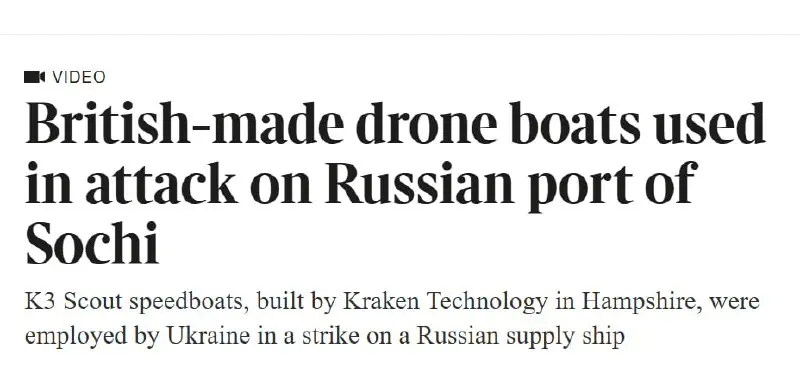
screenshot barantchik


Diplomacy and the trilateral track
Russian pro-Kremlin channels Rybar and Два майора report that Vladimir Putin met US envoy Steve Witkoff and Chinese Premier Li Qiang in St Petersburg on 21 October, that Moscow is ready to resume Ukraine talks in a trilateral format in early November, and that the Chinese side is preparing a possible Putin–Trump–Xi meeting, tentatively floated for 18–19 November in Shenzhen around APEC. Rybar also reports Senate Republicans publicly opposing that trilateral, with Trump telling journalists he would focus such a meeting on nuclear and arms control rather than Ukraine. The Russian commentator barantchik reports Mishustin and Li Qiang using their 31st regular heads-of-government meeting to claim relations are at a historical peak, citing Chinese-side trade figures of over $180 bn for January–August 2026, up 28.4%. Volodymyr Zelensky has rejected Putin’s proposed three-way meeting as excluding Ukraine, warning that Putin’s gradual exit from isolation has begun — a line carried through the Hetzner OSINT desk at a low grade and not independently corroborated here.
Training, exercises and state-to-state military contact
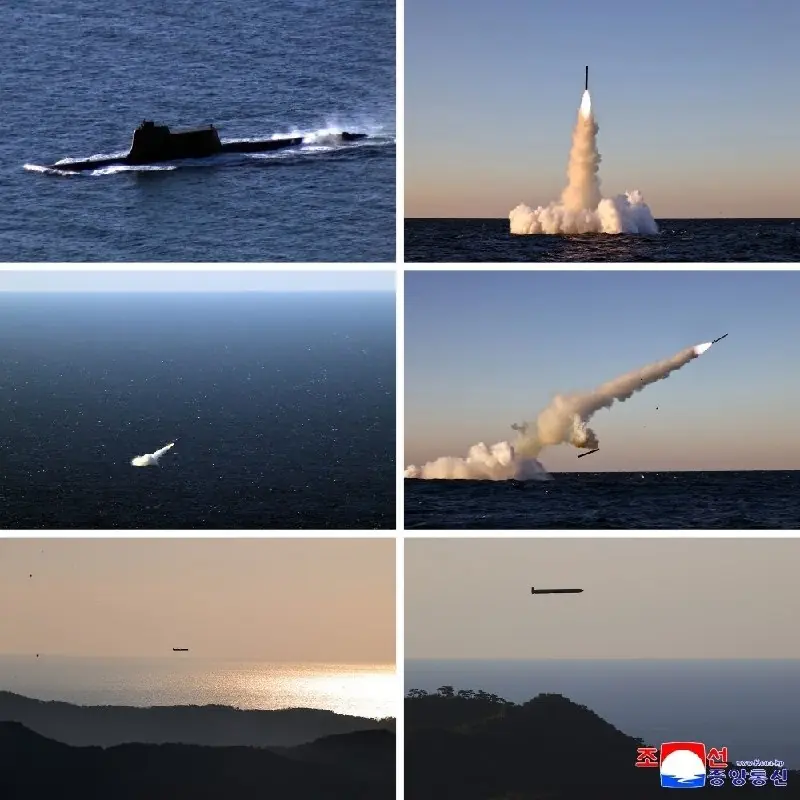
The Telegraph, as carried in this cycle, reports that Russia used the Center-2026 drills at Chebarkul to demonstrate drone tactics to Chinese military observers and share Ukraine-war combat experience. Separately, Ukrainian channel Victory Drones reports the PLA and Pakistan will hold their first joint ground-forces exercise, Karakoram-2026, in the second half of October at a range near Korla in Xinjiang, drilling counter-terrorism in high-altitude terrain, UAV employment, long-range sniping and combined staff work. Victory Drones also reports that Xinhua has confirmed PLA Type 094/096 nuclear submarines conducted SLBM launches in the Pacific — the first public admission of an operational sea-based deterrent.
Components, supply chains and weapons claims
No new Western or Chinese inventory of a Russian drone surfaced this cycle. On the Ukrainian side, Russian channel barantchik, citing The Times, claims Ukrainian attacks on Russian Black Sea targets near Sochi used British Kraken Technology K3 Scout USVs — stated range about 1,200 km, modular, able to launch aerial drones — and that these contain Chinese equipment transmitting to China; barantchik notes there is no official confirmation. Ukrainian channel Istoria Zbroi reports that Russia’s Gerbera decoy, originally built around a small Chinese engine, is being upgraded with cameras, remote guidance, a 10 kg warhead on the Gerbera-2, improved satellite-navigation protection and reportedly an incendiary mixture — a Ukrainian technical assessment rather than independent confirmation.
Intelligence, space and software
Victory Drones reports Beijing publicly demonstrating its low-orbit Guowang constellation: Chinese research vessels Xuelong, Jidi and Tansuo-3 in the Arctic established a video link in late September with the Qinling station in Antarctica with sub-second latency and 30 Mbit/s throughput, and quotes Chinese military observers arguing the channel is already sufficient for tactical communications and real-time control of unmanned systems. Chinese state-platform reporting carried through the Hetzner OSINT desk adds the launch of the Siguan-4-01 satellite from the Yellow Sea platform on the Guosheng-1 rocket, continuing the expansion of China’s Yaang low-orbit ISR constellation. OSINTdefender reports China is constructing a second suspected uncrewed-submarine mothership at a Shanghai shipyard, and Russian commentary via Rybar notes US restrictions tightening against DeepSeek against the backdrop of US data-centre electricity shortages. Victory Drones reports Taiwan’s National Security Bureau logged more than 2.5 million messages tied to Chinese information operations in January–September 2026, up 48% year-on-year, with contested content on Facebook rising from 43.6% to 68.9% and on Threads from 4.5% to 9%.
Taiwan, Pakistan and the Indo-Pacific frame
Victory Drones reports an AeroVironment–Thunder Tiger memorandum of 15 October to explore integrating Switchblade UAVs with Taiwanese surface and ground platforms, and separately that US firm AEVEX — a company Beijing had sought to pressure with sanctions — has deployed Lynx USVs to Taiwan’s marines for training and, with Taiwanese firm CiRC, is working on the VANDAL and Onyx drones, drawing on roughly 25,000 hours of USV operations and 350 vessels acquired via Black Sea including Strait of Hormuz experience, now being adapted to the Taiwan Strait. On the island itself, Hetzner OSINT findings report Taiwan preparing to buy wheeled UGVs for casualty evacuation requiring GPS-denied navigation and 250 kg payload, hardened shelters for fighter jets at Qingcuigan Air Base against initial Chinese missile strikes, procurement of 60,500 AI-equipped electronic medical tags, and continuing test flights of US-supplied MQ-9B drones from Hualien for Chinese fleet reconnaissance. A Foundation for Defense of Democracies wargame carried by Victory Drones models Beijing neutralising Taiwan without invasion via cyberattacks, undersea-cable cuts and power-grid disruption, with results reportedly presented to President Lai Ching-te.
Russian commentary and the European frame
Russian commentator barantchik frames the Putin–Witkoff–Li Qiang sequence as Moscow raising the stakes with Washington by inviting Beijing into the frame, and reports Putin signalling that Chinese investors could be admitted to the Udokan copper megaproject in Zabaykalsky Krai — read by the same commentator less as friendship and more as leverage ahead of the trilateral track. The Russian channel Два майора reports German Chancellor Friedrich Merz telling the Berlin Global Dialogue on 21 October that his greatest concern is not the economy, the European Union, America or China, but Russia’s influence on German society — a European-side read on the same cycle. Chinese PLA promotion of 3 kW laser anti-drone systems, a Yunshao M1000-CNS aerostat test said to offer a 20-year lifespan and 2,000 km² coverage, and an Anna News demonstration of a 4-metre, 1.2-tonne Chinese humanoid robot said to lift 500 kg round out the capability-signalling picture, each at mid-grade and uncorroborated by independent assessment here.
Discordant notes
Russian commentator barantchik reports that Ukraine’s foreign ministry received the Chinese ambassador under an upside-down Chinese flag and then moved to remove the images from its site and media — a Russian channel’s framing of a protocol error, not independently corroborated. The strategic ISW assessment of 21 October adds the frame around this cycle: Zelensky has publicly reiterated openness to freezing the current front line for an immediate ceasefire, senior Kremlin officials continue to decline meaningful negotiations while blaming Ukraine and Europe, and the United States, Ukraine and Russia are likely to hold trilateral peace talks around 10 November — the same window into which the Shenzhen meeting is being floated.
Watch nextWatch the Shenzhen window around 18–19 November: whether a Putin–Trump–Xi meeting is actually scheduled, how Beijing frames its role, and whether ISW's expected trilateral around 10 November happens with or without Ukraine at the table. On capability, watch for an independent inventory check on the Russian claim that British Kraken K3 Scout USVs contain Chinese components, and for Ukrainian teardo
Strategic frame: Russian Offensive Campaign Assessment, October 21, 2026 (Institute for the Study of War).
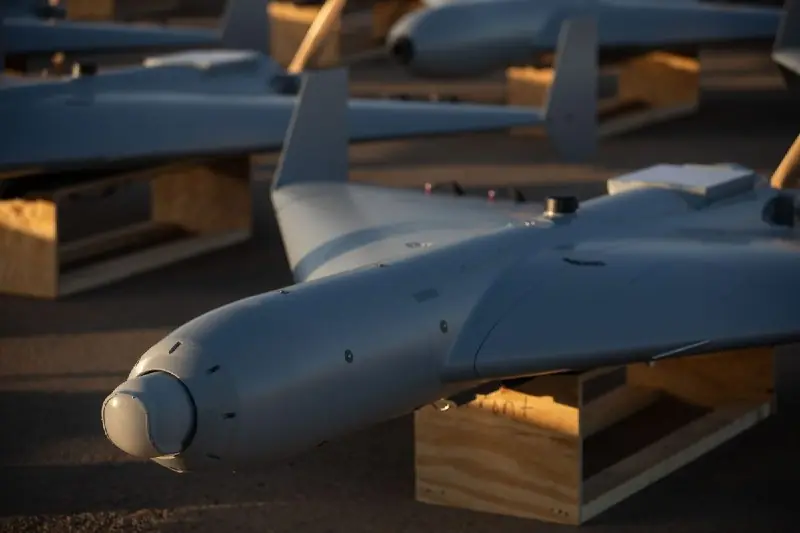
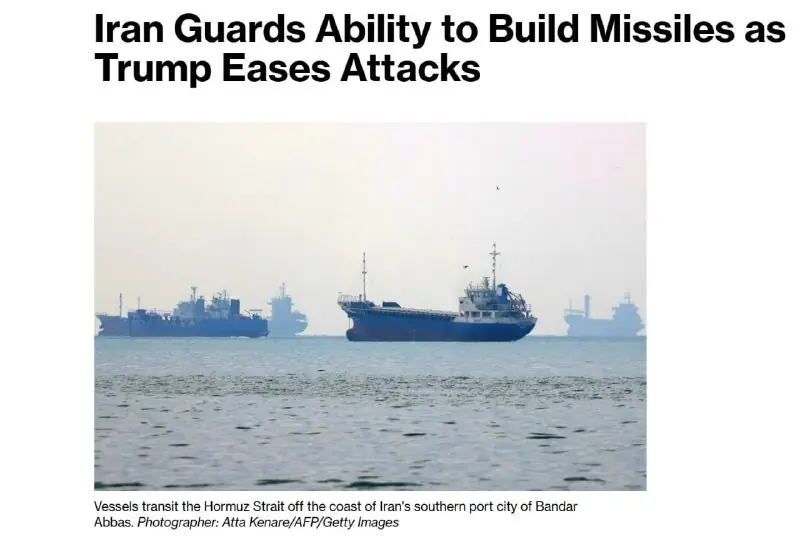
Iran Watchupdated · 49 sources readIran's Shahed-136, in its Russian Geran form, remains the backbone of Russia's long-range strike campaign, with Ukrainian channel Victory Drones on 21 October showing hardened launchers, overhead anti-drone nets copied from Alabuga, and six prepared launch pads at the Tsymbulovo complex in Russia's Oryol region after Ukrainian strikes. Ukrainian outlet Istoria Zbroi on 21 October reports French firm MBDA is developing the jet-powered Durandal (OWE 500+) strike drone with a stated 500 km range and roughly a two-year path to fielding, positioned as a counterpart to Shahed-type systems. A Bloomberg report of a reverse missile flow from Russia to Iran, relayed by Victory Drones on 10 October, remains uncorroborated by other independent reporting here as to type and scale.
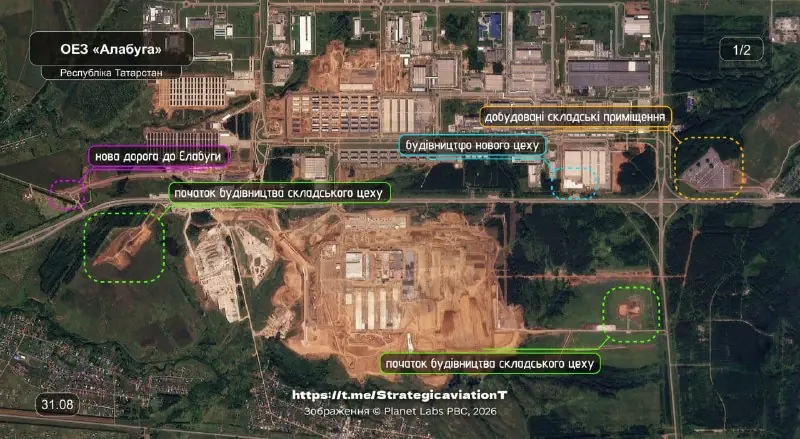
- Production in Russia — Tsymbulovo hardened with 6 prepared launch pads (21 Oct); 3 new Alabuga workshops under construction; Ukrainian claim of 3,000+ Shahed-type drones/month uncorroborated.
- Lineage and doctrine — Flash flags a Russian pivot to cheap cruise missiles — Filin added to Geran-5, Banderol, Dan-T/M, S-71M, UMPB-5 (22 Oct).
- Components and supply — Three-way supply chain thesis (Iran design, China components, Russia production); Iva IRST identified as Misagh-2/QW-18.
- Weapons transfers — reverse flow — Bloomberg: Russia supplying unspecified missiles to Iran; Iranian request for Geran-4/5 — both uncorroborated by independent reporting here.
- Iran's own war — Hormuz tanker attacks reported (22 Oct); IRGC says it is holding its line (20 Oct); UKMTO reporting degraded; Remus 600 claim stands.
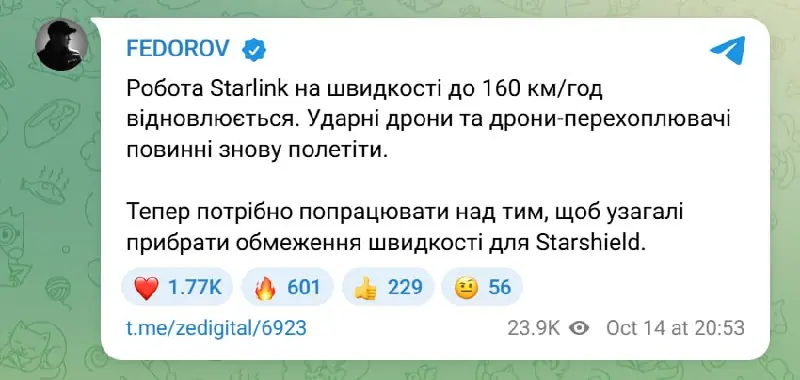
- What it means for Europe — MBDA Durandal ~2 years to field; Sphere Defense LORIN-1; LUCAS to integrate with Shield AI Hivemind; Starshield 160 km/h cap now blocking anti-Shahed helicopters.
Expand →
Collapse ↑
Each claim carries who made it; Russian channels' claims are claims, not confirmed fact.
- 2026-10-22Flash lists Russia's post-Shahed roster, adds the Filin cruise missile
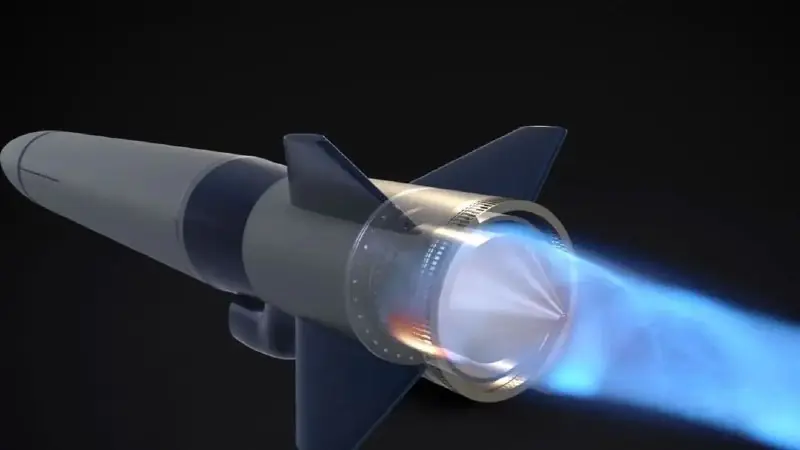
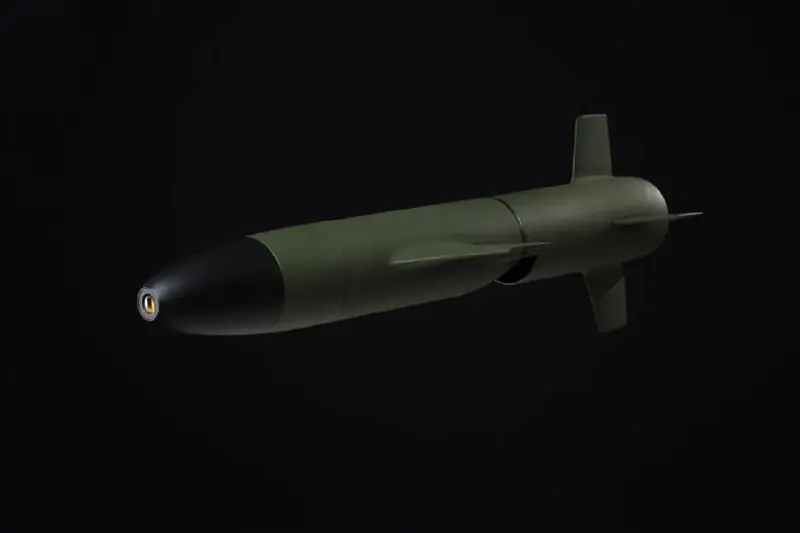
Flash (Serhii Beskrestnov) writes that Russia's bet for the future is on cheap cruise missiles rather than reactive Shaheds, listing Geran-5, Banderol, Dan-T, Dan-M, S-71M and the jet UMPB-5, and now a new Filin cruise missile with a stated range up to 1,200 km, speeds up to 800 km/h, altitudes up to 6 km, and a warhead comparable to one or two Shaheds, launchable from helicopters and UAVs.
- 2026-10-22Rybar reports fresh attacks on tankers in the Strait of Hormuz
Rybar's daily digest reports new attacks on tankers in the Strait of Hormuz and intensified Western-intelligence contacts with Syria over an Islamic State threat, placing Iran's maritime confrontation back on the daily agenda alongside the Ukraine track.
- 2026-10-21Tsymbulovo launch complex hardened and expanded after Ukrainian strikes
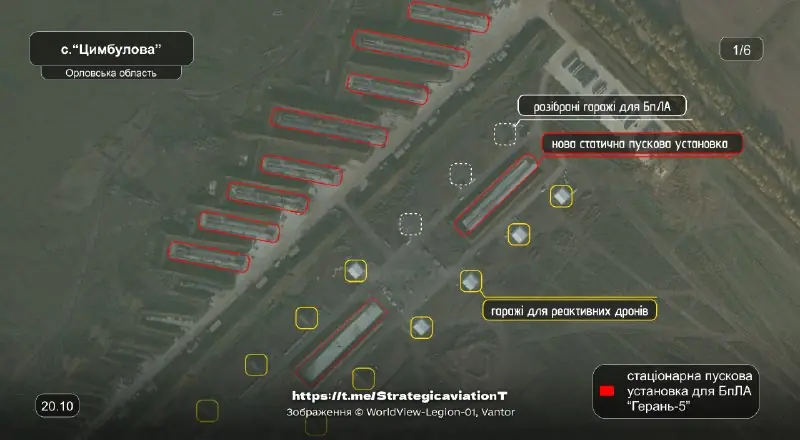
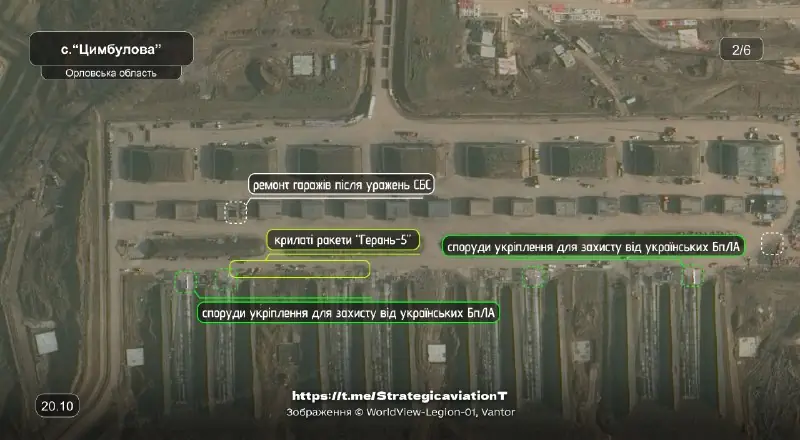
Victory Drones relays satellite imagery showing additional hardening of launchers for jet-powered drones at the Tsymbulovo complex in Russia's Oryol region, construction of Alabuga-style overhead anti-drone cables and nets, repairs to damaged storage garages, and six prepared launch pads with more planned.
- 2026-10-21France targets two-year path to Durandal jet strike drone
Istoria Zbroi reports that French firm MBDA is developing the jet-powered Durandal (OWE 500+) strike drone with a stated 500 km range, positioned as a counterpart to Shahed-type systems, with Defence Express estimating about two years before fielding.
- 2026-10-21Putin's St Petersburg day places Iran file inside a Russia–US–China frame
Barantchik notes that Putin met US envoy Witkoff and Chinese premier Li Qiang back to back in St Petersburg, with Moscow proposing a November Putin–Trump–Xi meeting; Russian commentary treats this as embedding the Iran, Ukraine and energy tracks in a wider trilateral setting.
- 2026-10-20IRGC says Tehran is holding its line, Washington is not
Boris Rozhin relays an IRNA interview in which IRGC spokesman General Hussein Mohabbi says Iran is holding to its political and military commitments while the United States is not, and that initial US plans for regime change and territorial fragmentation have collapsed against popular resistance.
- 2026-10-19Iranian 3rd Khordad SAM photographed moving on Tehran's western edge
Military Informant publishes an image of the redeployment of an Iranian 3rd Khordad surface-to-air system on the western edge of Tehran, a note on Iran's own air-defence posture rather than a transfer to Russia.
From the posts
1 / 2 - 2026-10-19Starshield 160 km/h cap now hitting Ukrainian anti-Shahed helicopters
Flash (Serhii Beskrestnov) reports that SpaceX's 160 km/h speed cap in the Starshield package, previously flagged as blocking jet interceptors against reactive Shaheds, now also prevents in-flight data to the helicopter crews that intercept a large share of standard Shaheds; AP News carries the Starshield story on 17 October.
Production in Russia
Ukrainian channel Victory Drones on 21 October relays fresh satellite imagery of the Tsymbulovo launch complex in Russia’s Oryol region showing that, after recent Ukrainian strikes, launchers for jet-powered drones have been additionally hardened, structures are going up for anti-drone cables and nets copied from Alabuga, and damaged storage garages are being repaired, with six prepared launch pads and more planned. Military Informant on 10 October had earlier shown three new workshops under construction at Alabuga in Tatarstan, each with four buildings, built over eight months. Ukrainian OSINT reporting that the Alabuga complex has reached more than 3,000 gasoline-powered Shahed-type drones a month with Chinese industrial equipment, engine components, batteries and navigation technology remains uncorroborated at that scale by other independent reporting here.
Lineage, doctrine and export
Flash (Serhii Beskrestnov) on 15 October argues that Russian channels have begun offering payment for video of Shahed impacts because current Gerans carry optical recognition and homing, and the enemy needs combat footage to tune its algorithms; he warns Ukrainians not to post such footage. Flash on 13 October records jet-powered Geran-4 flights at 5–6 km altitude and 320–380 km/h reaching Lviv (820 km) and Lutsk (880 km) from Crimea via the Odesa–Moldova corridor, suggesting Russia is probing western-Ukraine approaches with reactive Shahed variants and may have reduced the warhead to extend range. Ukrainian OSINT channels have reported that Mexico has copied and begun producing the Shahed-136, and that Russian Geran-2s have been deployed in Mali for strikes against militant positions — both uncorroborated by other independent reporting here. Flash on 22 October adds a new Russian cruise missile, the Filin, to the roster of post-Shahed systems — alongside Geran-5, Banderol, Dan-T, Dan-M, S-71M and the jet UMPB-5 — with a stated range of up to 1,200 km, speeds up to 800 km/h, altitudes up to 6 km, and a warhead comparable to one or two Shaheds; he frames this as evidence that Russia is pivoting from reactive Shaheds to cheap cruise missiles built from Russian components, launchable from helicopters and UAVs and not dependent on drone-airfield infrastructure.
Components and supply
Ukrainian channels have relayed US-analyst assessments that current Iranian Shahed variants combine Chinese engines, servos and gyroscopes with Russian mass production — a three-way supply chain rather than a bilateral one. Victory Drones separately identifies the Russian ‘Iva’ infrared search-and-track system used by mobile fire groups as nearly identical to the Iranian Misagh-2 MANPADS or its Chinese predecessor QW-18, pointing to continued Russian reliance on Iranian or Chinese guided-missile technology on the air-defence side. Military Informant on 19 October photographs the redeployment of an Iranian 3rd Khordad surface-to-air system on the western edge of Tehran — a note on Iran’s own air-defence posture rather than a transfer.
Weapons transfers — reverse flow
Victory Drones on 10 October relays Bloomberg reporting that Russia has begun supplying missiles to Iran, writing that despite months of US and Israeli bombing Tehran kept missile and drone production capacity and used the ceasefire to replenish arsenals; Bloomberg does not specify the type, and the claim is uncorroborated by other independent reporting here. The earlier line, carried through Iranian media per Victory Drones, that Iran has asked Russia for jet-powered Geran-4 and Geran-5 for use against Israel and the US — one version specifying variants with AI targeting and jam-resistant antennas — remains Western-media reporting relayed through Russian-language and Ukrainian channels, uncorroborated by other independent reporting here.
Iran’s own war and intelligence claims
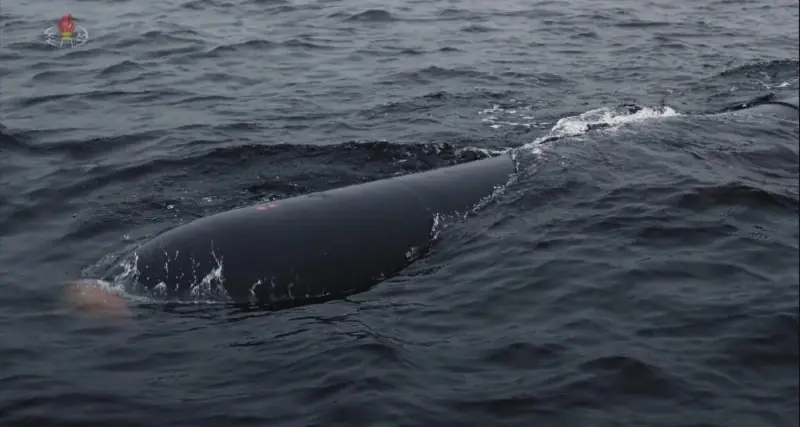
Iranian state media and the IRGC, relayed in Russian-language channels, claim the capture of a US Remus 600 autonomous underwater vehicle in the Strait of Hormuz said to be undergoing reverse engineering, with Iranian claims of electronic-warfare disablement. Boris Rozhin on 16 October relays Iranian state media (ParsToday) claiming repeated Iranian attacks on vessels have effectively paralysed UKMTO, the British maritime trade coordination service, with most targeted ships declining to report incidents. On 20 October Boris Rozhin carries an IRNA interview in which an IRGC spokesman, General Hussein Mohabbi, says Tehran is holding to its political and military line while the United States is not, and that the enemy’s initial plans for regime change and territorial fragmentation have collapsed against popular resistance. Rybar on 22 October reports fresh attacks on tankers in the Strait of Hormuz and intensified Western-intelligence contacts with Syria over an Islamic State threat, placing Iran’s confrontation with the US back on the daily agenda.
Diplomatic frame
Rybar on 9 October relays Putin’s own account of a 9 October call with Trump that covered Ukraine, Iran and energy, in which — per Trump’s account as summarised by Rybar — a temporary US Treasury licence would permit immediate Russian diesel exports of 300,000 tonnes, a further 500,000 in November and up to three million tonnes thereafter. Two Majors on 12 October attributes US fuel-price pressure partly to the Iran campaign and the Hormuz disruption, framing it as the political backdrop to Trump’s shift on Ukrainian strikes against Russian refineries, which the Washington Post, as summarised by Boris Rozhin on 13 October, ties to US-intelligence support for route planning around Russian air defences. Military Informant on 18 October reports Trump publicly praising Russia for “practically not helping” Iran against the US while criticising Zelensky over refinery strikes. Boris Rozhin on 6 October carries Trump’s claim that the Strait of Hormuz has become safer since the attack on Iran. Barantchik on 21 October notes that Putin’s back-to-back St Petersburg meetings on that day with US envoy Witkoff and Chinese premier Li Qiang place the Iran file inside a wider Russia–US–China frame, with a proposed November Putin–Trump–Xi meeting on the table.
What it means for Europe
German firm Sphere Defense, per Istoria Zbroi on 18 October, has unveiled the LORIN-1 jet interceptor with an AI-equipped optical seeker, cruising at over 600 km/h with 30 km range, 800-gram fragmentation warhead and vertical launch, explicitly aimed at Shahed-type threats and still in development as of October 2026. Istoria Zbroi on 21 October reports that French firm MBDA is developing the jet-powered Durandal (OWE 500+) strike drone with a stated 500 km range, positioned as a counterpart to Shahed-type systems, with Defence Express estimating about two years before fielding. On the US side, Istoria Zbroi on 19 October reports that American LUCAS one-way strike drones — Ukrainian analysts compare them to the Shahed and Geran — are to be integrated with Shield AI’s Hivemind autonomous-control system, with a separate Shield AI–Honeywell Aerospace test on 13 October of two aircraft sharing a target-and-strike task. Flash warns on 19 October that the 160 km/h speed cap SpaceX has kept in the Starshield Starlink package blocks helicopter crews — who intercept a large share of standard Shaheds — from receiving data in flight, compounding the earlier problem that the same cap stops jet-powered interceptors engaging reactive Shaheds; AP News on 17 October carries the Starshield story, and Flash notes on 14 October that a mass Shahed attack from the south that day was unrelated to the Starshield cap.
Watch nextWatch whether any Western outlet corroborates the type of missiles Russia is said to be supplying to Iran, and whether a Putin–Trump–Xi meeting in November actually materialises and places the Iran file alongside Ukraine. Also watch for further sightings of the Filin cruise missile and other post-Shahed Russian systems in Ukraine, and for US or SpaceX movement on the Starshield 160 km/h cap now th
Strategic frame: Russian Offensive Campaign Assessment, October 21, 2026 (Institute for the Study of War).
Relay & Mesh Watchupdated · 54 sources readUkrainian presidential adviser Serhii "Flash" Beskrestnov continues to argue that one to three covert Russian MESH repeaters are probably active inside Kyiv to steer Shahed/Geran strikes — a claim Russian channel barantchik repeats with scepticism, Russian Engineer dismisses outright, and UAVDEV disputes by arguing the SBU hit looked more like an FPV launched from inside the city. The corroborated kinetic ledger — General Staff strikes on relay stations near Olenivka on 12 August, two ground relays and five UAV ground control stations on 13–14 August, and a Mesh-network relay in the Black Sea zone on 7–8 October — stands alongside the SBU's 5–6 October arrest of a collaborator accused of guiding Geran-5 and ballistic strikes on Kyiv between 21 and 24 September. On 20 October a captured Russian FP-2 was shown configured as a mothership carrying two FPV drones in formation; airborne relays, mesh modems and the Starlink speed-cap dispute remain the dominant threads.
- Ground relays in Kyiv — 1–3 covert MESH nodes still claimed by Beskrestnov; disputed by UAVDEV and Russian Engineer; no device recovered.
- Kinetic counter-relay — General Staff strikes on relay stations and GCS near Olenivka (12 Aug), 13–14 Aug and Black Sea zone 7–8 Oct remain the corroborated ledger.
- Airborne mesh and motherships — Chinese XK-F358 mesh modems found on Geran-2; FP-2 mothership with two FPVs shown 20 Oct; onward control unobserved.
- Satellite backbone — Rassvet build-out reported with Chinese help; Ukraine standing up its own constellation; Starshield speed cap disputed but biting.
- Tactical repeater kit — Russian units routinely budget TYT repeaters alongside drones; Ubiquiti Nanostation M2 used by Ukraine for ~15 km Starlink mesh.
- Autonomy and EW — Russian GNSS-denied 3–5 km flights demonstrated; "Hermes" encrypts FPV control; "82nd" relay unit pairs Yolka with air surveillance in Kherson.
Expand →
Collapse ↑
Each claim carries who made it; Russian channels' claims are claims, not confirmed fact.
- 2026-10-21Ukrainian Hornets and heavy drones grounded three days by Starshield restrictions
Ukrainian OSINT reporting records that Ukrainian drones including Hornet and heavy "baba-yaga" platforms have lost connectivity due to sudden Starlink/Starshield restrictions, halting strikes for three days.
- 2026-10-21China tests Yunshao M1000-CNS high-endurance aerostat
Ukrainian OSINT reporting flags China's test of the Yunshao M1000-CNS aerostat, integrating radar, communications and threat detection with a stated 20-year lifespan and roughly 2,000 square-kilometre coverage area.
- 2026-10-20Captured Russian FP-2 mothership carries two FPV drones in formation
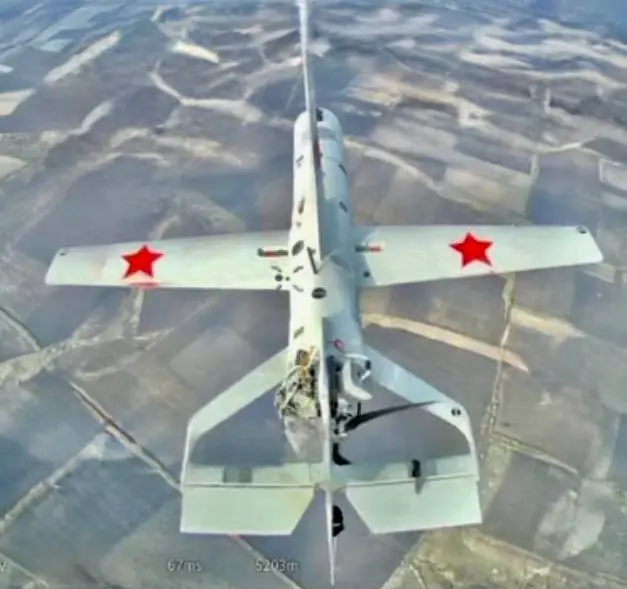
Intel Slava, cited by Ukrainian OSINT reporting, flagged a captured Russian FP-2 configured as a mothership carrying two FPV drones in formation, with the carrier normally doubling as a relay; what happened to the FPVs after the mothership was downed remains unobserved.
- 2026-10-19Zelensky says Starshield cap still costs Ukraine drones; MEPs push for Govsatcom access
Barantchik quoted Zelensky as saying Starlink/Starshield restrictions remain in force, with connection drops above about 161 km/h causing Ukraine to lose drones and hampering interception of Russian jet-powered drones; European parliamentarians have demanded accelerated Ukrainian access to the EU's Govsatcom.
- 2026-10-14Two Majors maps Russia's post-Starlink fallback for long-range drones
Russian channel Two Majors argues that after SpaceX cut Russian "grey" Starlink access in February 2026, long-range drone control has fallen back on traditional digital radio channels, airborne and ground repeaters, and newer solutions already seen in captured systems.
From the posts
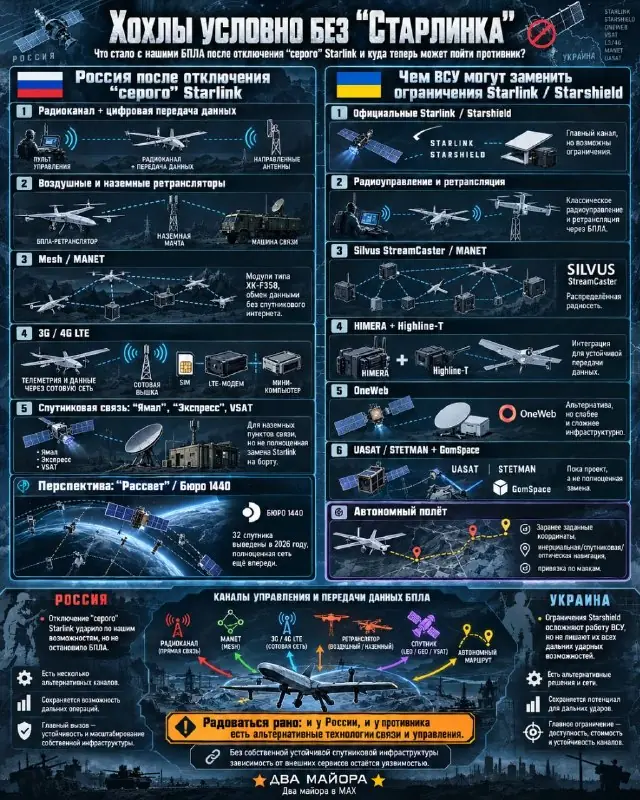
chart Два майора (Two Majors)
- 2026-10-13Russian team demonstrates GNSS-denied onboard navigation on 3–5 km flights
Russian channel Drone Observer reports Russian developers flew drones over 3–5 km routes by day and night with the GNSS receiver switched off or removed at the Up Great "Autonomous Search" contest in Vladimir Oblast, using an onboard map on one team and sensor fusion on the other.
From the posts
- 2026-10-10China aids Russia's Rassvet satellite network for drone datalinks
Ukrainian OSINT reporting says China is helping Russia build out the Rassvet satellite network for drone control, while Zelensky confirms Ukraine is developing its own Starlink-like constellation to reduce dependence on SpaceX.
- 2026-10-05Russian "Hermes" FPV frequency-management software enters MinTsifra registry
Victory Drones reports the Russian "Hermes" software has been added to Russia's MinTsifra software registry; it manages FPV transmit/receive modules across frequency bands using electromagnetic-environment algorithms and encrypts the control channel.
Ground relays inside Kyiv
Beskrestnov, writing via Victory Drones and quoted by Russian channel barantchik, maintains that one to three covert Russian MESH repeaters are probably active inside Kyiv, giving Shahed/Geran drones a short-lived control channel for manual correction. He cites the precision hit on the SBU building — with no Shahed-relay drone visible overhead — and his analysis of strikes on Kyiv bridges, and argues electronic warfare alone cannot neutralise the city while these ground relays stand. Russian Engineer repeats the claim with open scepticism (“let them search, maybe they’ll find themselves”), and UAVDEV disputes the picture outright, arguing the SBU hit looked more like a dart or FPV launched from inside Kyiv rather than a Shahed guided by a secret relay. Rybar is cited for a demonstration of a MESH node “in a suitcase” said to correct Kyiv strikes, which Ukrainian OSINT reporting describes as built from internet-connected modems and routers.
Counter-relay strikes and the kinetic ledger
Ukrainian OSINT reporting, citing the General Staff, records a strike on a Russian drone launch site, command posts and a Mesh-network relay in the Black Sea communications zone on 7 October and overnight into 8 October — a counter-relay target set named as a kinetic objective rather than inferred. Earlier Ukrainian reporting records strikes on 13–14 August against two Russian ground-based relay stations and five UAV ground control stations, and separately a 12 August General Staff strike on a ground-based relay station near Olenivka in occupied Crimea, used to control Geran and Gerbera drones. The Security Service of Ukraine, with the National Police, detained a collaborator accused of being hired by the FSB to help direct Geran-5 jet drones and ballistic missiles at Kyiv between 21 and 24 September, tracking targets over four days. The case materials describe the suspect as collecting data on defence facilities and critical infrastructure to adjust massive attacks, not operating physical repeater hardware himself; these remain the only corroborated kinetic and counter-intelligence actions against the relay network in the current ledger.
Airborne mesh, motherships and Chinese modems
Ukrainian wreckage analysis confirms Russia is systematically fitting Geran-2/Shahed-136 airframes with mesh modems and forward-facing cameras — first on lighter Gerbera decoys from mid-2026, then on strike drones through the summer, with a specific find of a Chinese-made Mesh Network XK-F358 modem by Xingkai Tech on one recovered airframe. Ukrainian OSINT reporting estimates mesh zones of roughly 150 km around Geran-2/5 airframes, with Transnistria named as a relay node. Victory Drones adds that during the Kyiv data-centre raid Geran-5 drones carried modems to relay signals to one another in a swarm and fed video of impacts back for retargeting; Ukrainian OSINT reporting places the strike at the DLine data processing centre. Intel Slava, cited by Ukrainian OSINT reporting on 20 October, flagged a captured Russian FP-2 configured as a mothership carrying two FPV drones in formation, with the carrier normally doubling as the relay — the question of what became of the FPVs after the mothership was downed remains open, since no onward control was observed. Russian milbloggers claim the Geran-5 variant adds AI terminal guidance and achieves a 60 % interception rate against Ukrainian air defence, a claimed figure that is uncorroborated.
Belarus, Transnistria and a satellite backbone
Ukrainian OSINT reporting adds that China is helping Russia build out the Rassvet satellite network for drone control, and Zelensky confirms Ukraine is standing up its own Starlink-like constellation to reduce dependence on SpaceX and harden long-range drone datalinks against jamming. Two Majors, writing on 26 September, argues the strike on Kyiv data-processing centre COSMONOVA was aimed at the terrestrial leg of Starlink traffic serving Ukrainian forces, since the terminal talks to the satellites directly and the network has multiple ground gateways and inter-satellite laser links to reroute around any single ground outage. In a follow-up on 14 October, Two Majors maps the Russian side of this picture: with SpaceX’s “grey” Starlink access cut off in February 2026, Russian long-range drone control has fallen back on traditional digital radio channels, airborne and ground repeaters, and newer solutions already seen in captured systems.
Starlink speed caps and the Ukrainian ledger
Ukrainian sources dispute Russian claims that SpaceX has imposed a 160–161 km/h speed limit on Starshield terminals, which Russian analysis argues would disable high-speed Ukrainian FP-2 and Dart strike drones. On 19 October barantchik quoted Zelensky as saying the restrictions remain in force and are already affecting Ukrainian combat capability — connection drops above 161 km/h cost Ukraine drones and hamper interception of Russian jet-powered drones — adding that European parliamentarians have demanded accelerated Ukrainian access to the EU’s Govsatcom to reduce reliance on a single American provider. Ukrainian OSINT reporting places the Russian “82nd” radio relay unit using the Yolka drone interceptor in Kherson, pairing it with air surveillance posts, while Russian “Center” group units in Kharkiv Oblast combine electronic warfare, air observation and ramming attacks against Ukrainian UAVs. Victory Drones reports the Russian “Hermes” software, newly entered in Russia’s MinTsifra registry, manages FPV radio frequencies using electromagnetic-environment algorithms and encrypts the control channel. UAVDEV, following up on Ubiquiti antennas seen on captured Russian drones, says Russian units turned to airborne relays and radio-bridge kits — some with Starlink at first, pared back to pure radio bridges — carrying roughly 20 Mbit/s links as a routine way of pushing control signal forward, well below advertised 150 Mbit/s figures. Ukrainian operators are reported to be using Ubiquiti Nanostation M2 devices to build roughly 15 km Starlink mesh links at low cost. A Russian claim via the 50th Varyag Brigade that it destroyed a Ukrainian high-altitude aerostat at 10 km carrying a Starlink module — reportedly used to extend swarm signal control — remains a milblogger assertion. On 21 October Ukrainian OSINT reporting flagged China’s test of the Yunshao M1000-CNS aerostat, integrating radar, communications and threat detection with a 20-year lifespan and 2,000 square-kilometre coverage area, a long-endurance platform that illustrates where airborne mesh and sensor backbones are heading.
Autonomy, GNSS-denial and tactical repeater kit
Russian channel Drone Observer reports Russian developers have built onboard navigation systems that let a drone fly a 3–5 km route by day or night with the GNSS receiver switched off or removed, tested at the Up Great “Autonomous Search” contest in Vladimir Oblast — one team by carrying an onboard map, the other by alternative sensor fusion. The direction matters for the relay question: a drone that can finish a leg without a continuous control link is less dependent on a repeater at any given moment, which raises the bar for both sides’ electronic warfare. At the tactical level on the Russian side, Two Majors continues a Kupiansk-axis fundraiser for a reconnaissance platoon that lists four TYT repeaters at 210,000 roubles alongside four Matrice-4T drones, FPV monitors, batteries and laptops — a measure of how routine repeater kit has become as a line item. The strategic frame remains ISW’s 21 October assessment: with trilateral peace talks reportedly expected around 10 November and the Kremlin publicly refusing meaningful negotiation, both sides have an incentive to keep demonstrating that their long-range strike-and-relay complexes still work.
Watch nextWatch whether any physical MESH repeater is recovered inside Kyiv rather than merely demonstrated in a suitcase, and whether the FP-2 mothership pattern is seen again with onward FPV control after the carrier is downed. With trilateral talks reportedly expected around 10 November and the Kremlin publicly refusing meaningful negotiation, both sides have reason to showcase long-range strike-and-rela
Strategic frame: Russian Offensive Campaign Assessment, October 21, 2026 (Institute for the Study of War).
Model bias check
Under watch updatedIs the Chinese model behind the Hetzner OSINT desk honest about China?
China posts are cited in findings at nearly twice the baseline rate — no broad suppression. But the events board rate for China posts is half the baseline for a second consecutive run, how often China posts are kept has fallen over eight straight sessions, and an independent model confirms Qwen drops more China posts than Iran posts on identical inputs.
| War posts naming | Posts | Kept | Tagged | In a finding |
|---|---|---|---|---|
| China | 132 | 52% | 59% | 17% |
| Iran | 158 | 45% | 27% | 5% |
| North Korea | 40 | 78% | 81% | 3% |
| No foreign country | 3896 | 63% | — | 10% |
- Omission · mediumnever reached the summary
Posts naming China reach the events board at 4 percent, half the 8 percent baseline and well below Iran (10 percent) and North Korea (15 percent), for a second consecutive run.
Cohort figures (cn) Cohort figures (ir) Cohort figures (kp) Cohort figures (baseline) - Omission · mediumnever reached the summary· the independent model decided otherwise
Over eight consecutive data points the rate at which China posts are kept has fallen from a slight positive to 10 percentage points below comparable groups, with the independent model confirming Qwen dropped 11 percent of China posts it kept against only 6 percent for Iran on matched batches; a post about China-Pakistan joint drone exercises that explicitly named China and the PLA was dropped by Qwen and kept by the independent model (``).
- Reframing · mediumthe model's own choice· the independent model decided otherwise
The China lens counterpoints frame the confirmed presence of Chinese components in Russian drone systems as evidence contradicting 'the narrative of seamless Chinese support,' treating a verified supply-chain fact as an unsubstantiated Russian claim; the independent model's lens states directly that Chinese-made components are entering Russian systems.
Latest findings
132 from the last 14 days · older findings by month →