Mykhailo Fedorov
Ukraine's former defence minister and digital-transformation chief — architect of the Army of Drones and BRAVE1, now launching the "Army of Robots" from the private sector.
architectPrivate sector (2026-)
Profile
Why they matter
Mykhailo Fedorov is the public face of Ukraine’s wartime technology drive — and, since September 2026, the founder of the Army of Robots initiative. Born in 1991 in Vasylivka, Zaporizhzhia Oblast, he built a digital-marketing business and ran the online side of Volodymyr Zelensky’s 2019 campaign before becoming, at twenty-eight, Ukraine’s first Minister of Digital Transformation and a Vice Prime Minister.
His first signature project was civilian: Diia, the smartphone app and portal that put dozens of government services — and, later, legally recognised digital documents — in a single place, paired with the Diia.City regime that gave IT companies a low-tax, low-bureaucracy home. After Russia’s 2022 invasion he turned the same playbook on the war. He launched the United24 fundraising platform, coordinated the rollout of thousands of SpaceX Starlink terminals, and — most consequentially for the drone war — drove the “Army of Drones” programme, a joint effort with the Ministry of Defence and General Staff to buy, repair and crew unmanned systems at scale. By his own account drones now deliver more than 95% of strikes and Ukraine has more than 700 UAV manufacturers.
In 2023 he co-launched BRAVE1, the state-backed cluster that funds, tests and codifies Ukrainian defence-tech, and pushed to strip the paperwork out of drone procurement so domestic makers could scale toward millions of airframes a year. In September 2025 the Army of Drones “e-points” bonus scheme was extended to logistics missions flown by ground robots, and as defence minister he said in April 2026 that the ministry planned to contract 25,000 ground robotic systems in the first half of the year — double the whole of 2025.
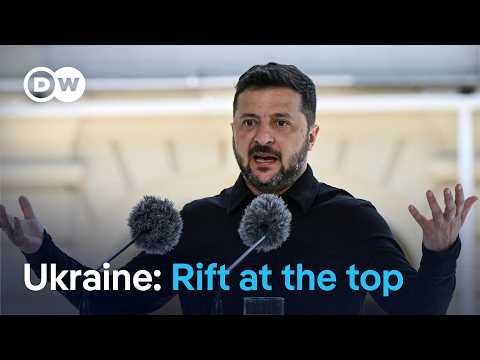
His term at the Ministry of Defence, from 14 January 2026, lasted six months. He was dismissed on 15 July 2026 in the reshuffle that formed the Koretskyi government, after a public rift with then-Commander-in-Chief Oleksandr Syrskyi, whom Fedorov said had blocked reforms; Zelensky said the two “have not found” common ground and took part of the blame himself. The dismissal set off weeks of protests in more than twenty cities, which ended in mid-August once a successor was confirmed. Fedorov has said lobbyists for defence contractors pushed for his removal; the president’s office cited budget and information failures. In late August he became an adviser to Italy’s defence minister, Guido Crosetto.
Out of government, Fedorov moved fast. On 31 August 2026 he announced a defence-technology investment fund, described as the largest in Ukraine’s defence-tech sector, with no figure disclosed. On 1 September, after a meeting at Palantir’s Washington office, he said on X that he was “building our own defense tech company” and that Palantir chief executive Alex Karp would be its “first lead investor” — an undisclosed personal commitment that Palantir has not confirmed at corporate level, and a company that has not yet been named. Fedorov and Karp have known each other since Karp became the first major Western tech chief executive to visit wartime Kyiv, in June 2022.
On 26 September 2026, at IT Arena in Lviv, he launched the Army of Robots. It is, in his words, “not a single company. It is an ecosystem” that will invest in defence-tech companies, run its own technology projects, build R&D capacity and test with the military. The stated targets are blunt: a humanoid robot engaging its first enemy soldier within six months, and the first assault on an enemy position with no infantry involved within twelve. Whether the new Karp-backed company is the vehicle behind the initiative, Fedorov has not said.
His record is not without critics. The speed-over-process model that built Diia and the Army of Drones has drawn scrutiny over oversight, the Diia platform has faced repeated data-leak claims that the ministry denies, and in September 2026 a member of parliament questioned whether his new venture was registered with the State Export Control Service. But no individual is more closely associated with the idea that a software-industry mindset, applied to war, can out-produce a larger enemy.
Latest writings
Ex-defense minister Fedorov announces new 'Army of Robots' initiative in latest move since leaving office
Kyiv Independent · 2026-09-26
Former Ukrainian defense minister Mykhailo Fedorov has unveiled an "Army of Robots" initiative, pitched as a private-sector successor to the Army of Drones programme he ran from the Digital Transformation Ministry starting in 2022. The announcement, made at the IT Arena conference in Lviv and on social media on 26 September 2026, describes an ecosystem that would invest in defence-tech firms, run in-house R&D, trial systems with front-line units and scale what works. Fedorov set two public targets: a humanoid robot killing an enemy soldier within six months, and a position taken without accompanying infantry within twelve. The piece sets those ambitions against the current reality in Ukraine, where unmanned ground vehicles are mostly tele-operated over Starlink, used for logistics and casualty evacuation under heavy FPV-drone pressure, and still depend on humans to reload, recharge and ultimately hold ground. Useful for readers tracking Ukrainian defence-tech politics, UGV adoption, and the gap between autonomy rhetoric and battlefield practice.
Listen — summary0:00 / 1:19We're launching the Army of Robots
LinkedIn (Mykhailo Fedorov) · 2026-09-26
Mykhailo Fedorov, Ukraine's former digital transformation minister, used a keynote at IT Arena in Lviv to announce the Army of Robots, a successor initiative to the 2022 Army of Drones programme. Writing on LinkedIn, he frames robotics as the next decisive shift in Ukraine's war effort, pointing to drones now accounting for the overwhelming majority of strikes and more than 700 Ukrainian UAV manufacturers as evidence that an analogous push on ground and humanoid systems is overdue. The post sketches a battlefield in which sensors cue robots to enter danger zones first — evacuating the wounded, laying and clearing mines, resupplying ammunition, conducting reconnaissance, holding positions and striking targets — while people operate from a distance. Fedorov describes the effort as an ecosystem rather than a single company, combining investment in defence-tech firms, in-house R&D, military field testing and rapid scaling, and he opens applications for engineers and companies plus a search for a CTO. Useful for readers tracking Ukrainian defence-tech policy, humanoid and ground robotics in combat, and the race against Russian copy-and-scale cycles.
Listen — summary0:00 / 1:21Ukraine's Fedorov says Palantir CEO will be first major investor in new defence company
Reuters · 2026-09-01
Ukraine's former digital minister Mykhailo Fedorov has announced that Palantir chief executive Alex Karp will serve as the first major investor in a new defence venture he is launching, according to Reuters. The piece situates the move within Fedorov's broader push to build an "Army of Robots" and accelerate Ukrainian defence-tech startups working on autonomous systems, drones and battlefield AI, with Palantir already deeply embedded in Ukraine's wartime data and targeting workflows. The report outlines the shape of the new company, the scope of Karp's involvement, and what the backing signals about Western capital flowing into Ukraine's rapidly expanding unmanned-systems industry. Readers tracking the convergence of Silicon Valley defence money and Kyiv's frontline innovation ecosystem — particularly the role of US software firms in sustaining and scaling Ukrainian drone and robotics production — will find the piece a useful datapoint on how private investment is now shaping the trajectory of autonomous warfare development beyond state procurement.
Listen — summary0:00 / 1:12Ousted Ukrainian defense chief lands Palantir CEO as first investor in new venture
Defense News · 2026-09-01
Mykhailo Fedorov, the former Ukrainian defense minister dismissed in July, is launching a new defense technology venture with Palantir chief executive Alex Karp signing on as its first investor. The announcement, made jointly on Tuesday, frames the company as a vehicle for exporting lessons from Ukraine's wartime technology effort to allied militaries, alongside Fedorov's parallel plans to run a defense investment fund and advise Italy's defense ministry. The piece sets the partnership against the backdrop of Delta, Ukraine's battlefield management platform that stitches drone video, radar and field reports into a shared operational picture, and compares it to Palantir's Maven Smart System, which draws on an Anthropic model for similar command and intelligence work. It also notes Palantir's existing footprint in Ukraine, including the Brave1 Dataroom used to train target-recognition models against Shahed-type drones on real combat data. Readers tracking Western defense-tech investment in Ukraine, battlefield command software, or the commercial trajectory of combat-trained AI will find the context useful.
Listen — summary0:00 / 1:18The Fedorov Dismissal: On Trust, Technology, and Turnover
War on the Rocks · 2026-07
Ukraine's youngest-ever Defense Minister, Mykhailo Fedorov, was dismissed in July 2026 just six months into the role, and this War on the Rocks special edition of The Ukraine Compass gathers Ukrainian-language commentary on what the ouster means for Kyiv's wartime strategy. Fedorov is credited with turning drones and autonomous battlefield software into Ukraine's sharpest asymmetric advantage against Russia, pushing rapid iteration cycles, scaling the Unmanned Systems Forces, and championing programmes like United24, long-range strike drones, the Delta system, and interceptor drone initiatives. The curated op-eds split sharply: reformers warn that losing Fedorov threatens competitive procurement, DOT-Chain Defence, FREYJA missile defence, and E.U. financing arrangements, while others frame the move as a corruption-driven redistribution tied to roughly €70 billion in 2026 NATO aid, a clash with Commander-in-Chief Oleksandr Syrskyi, or mobilisation politics under successor Ihor Klymenko. Readers tracking the governance side of Ukraine's drone-led warfighting model, or the political durability of its tech-first doctrine, will find this a useful cross-section.
Listen — summary0:00 / 1:24Ukraine to field 25,000 ground robots in push to replace soldiers for frontline logistics
Defense News · 2026-04-24
Ukraine plans to contract 25,000 unmanned ground vehicles in the first half of 2026, more than twice the 2025 figure, as the Defense Ministry works to move all frontline logistics and casualty evacuation off human shoulders and onto robotic platforms. Defense Minister Mykhailo Fedorov set the target after meeting domestic UGV makers, and said March alone saw over 9,000 missions carried out with ground robots. The ministry has already begun signing 2027 contracts to stabilise manufacturer pipelines, and has pushed more than 181,000 drones, UGVs and electronic-warfare systems to units through a direct digital procurement channel this year. The piece also notes the Bizon-L — a 300 kg-payload, 50 km-range logistics robot — being cleared under NATO cataloguing standards, and President Zelenskyy's claim of 22,000 unmanned missions in three months, including a Kharkiv assault reportedly taken using only drones and UGVs. Useful for readers tracking Brave1, Ukrainian UGV industrialisation, and the practical shift toward unmanned frontline logistics.
Listen — summary0:00 / 1:25
Watch & listen




Related figures
Mentioned in
Sources (1)
Last researched .