Hornet
Low-cost fixed-wing AI strike drone used by Ukraine to bust Russian logistics trucks deep behind the front line.
Droneby Swift BeatIntroduced 2025 · Updated 2026
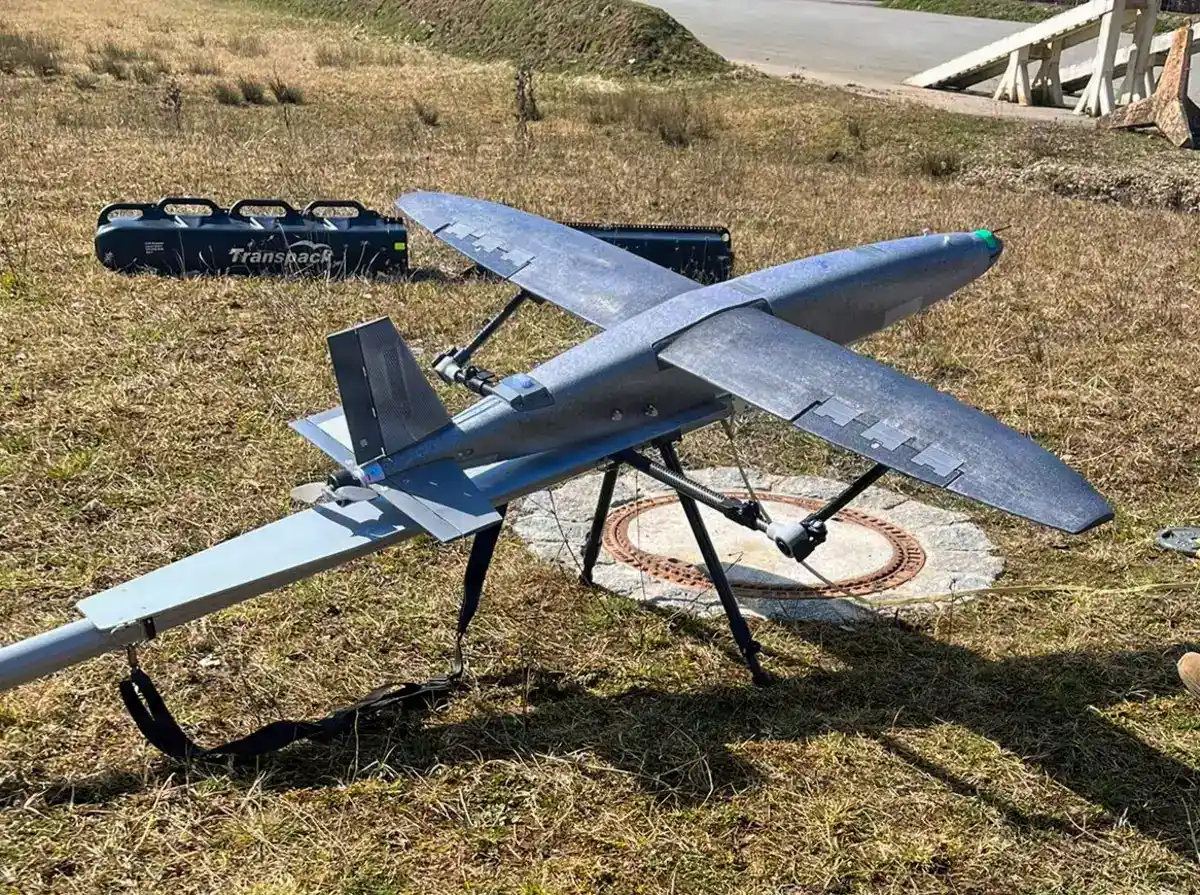 Hornet kamikaze drone — the fixed-wing AI strike UAV supplied to Ukraine through Eric Schmidt's Swift Beat / Perennial Autonomy.
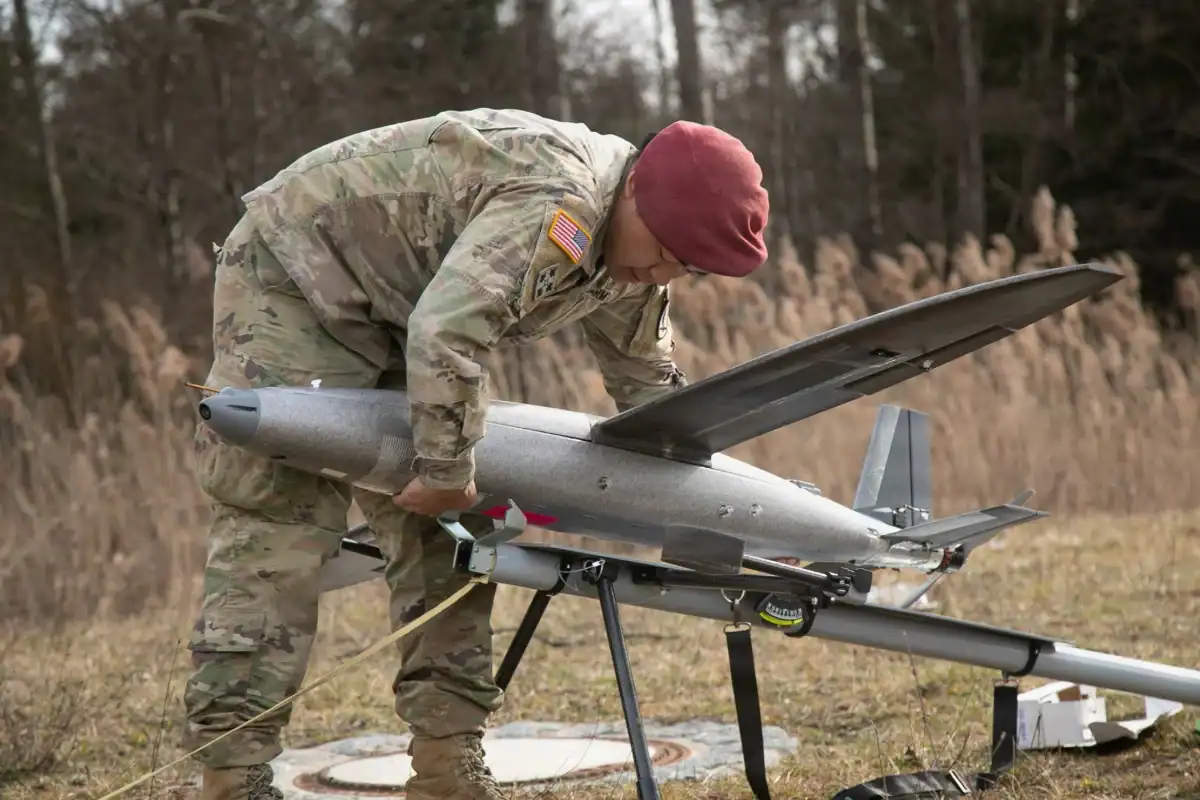 Preparing a Hornet kamikaze drone for catapult launch.
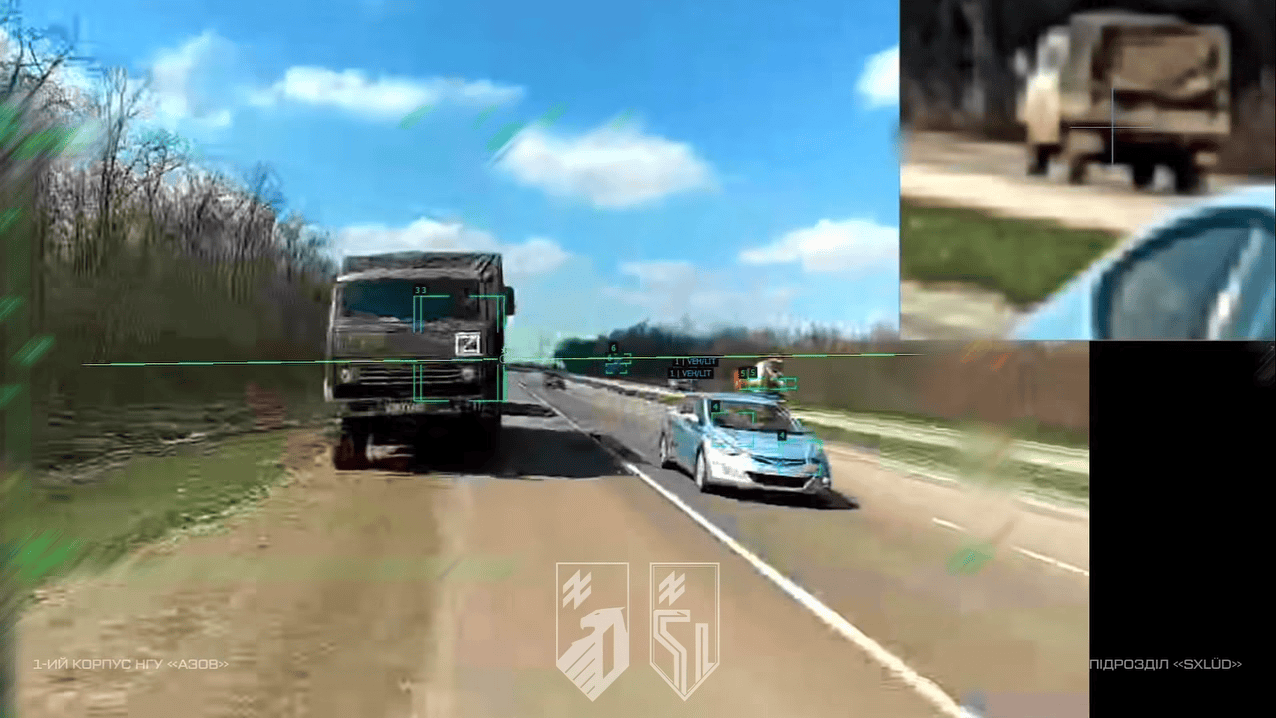 A Russian truck struck by a Hornet kamikaze drone.
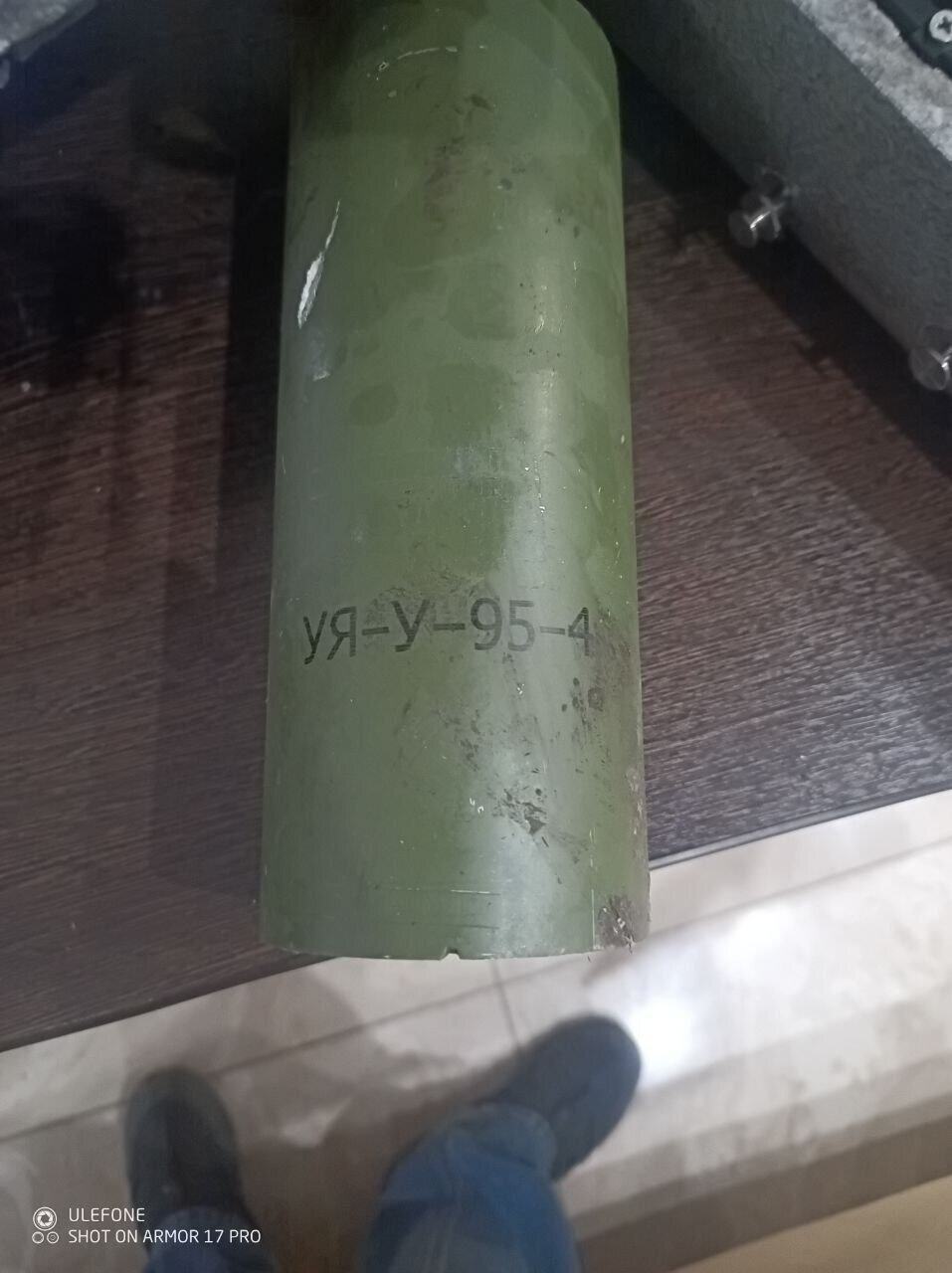 A Hornet warhead recovered by Russian forces — part of the reverse-engineering Russian channels have published.
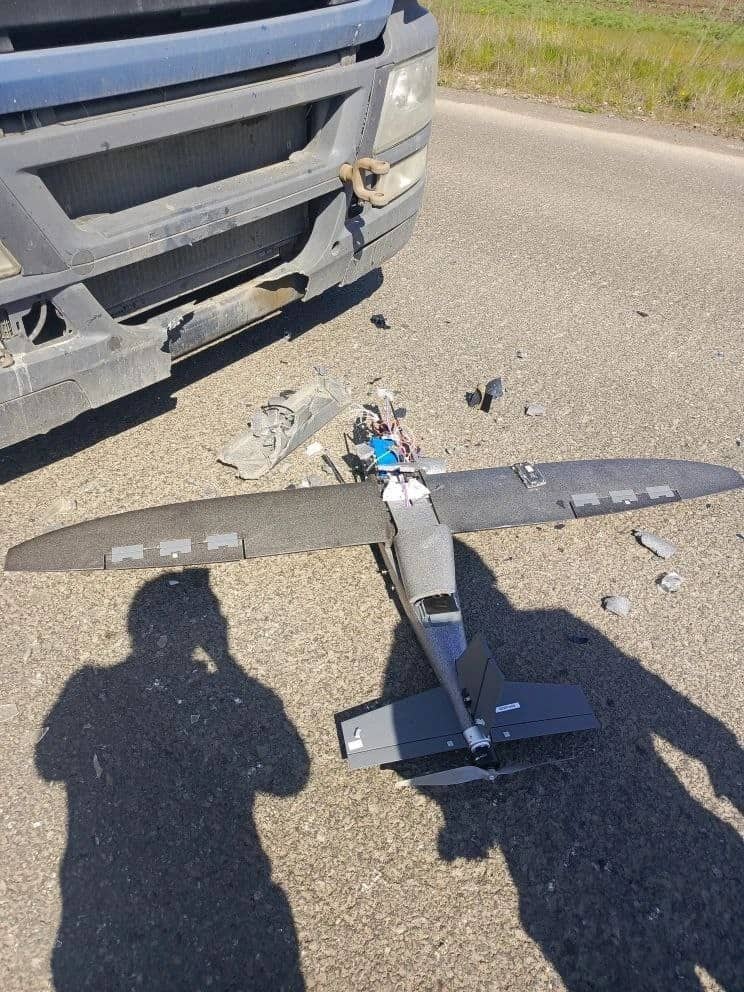 Wreckage of a Hornet that failed an attack on a Russian truck in occupied territory.
Photos: Militarnyi (militarnyi.com). · Azov, via Militarnyi (militarnyi.com). · Open sources, via Militarnyi (militarnyi.com).
Videos

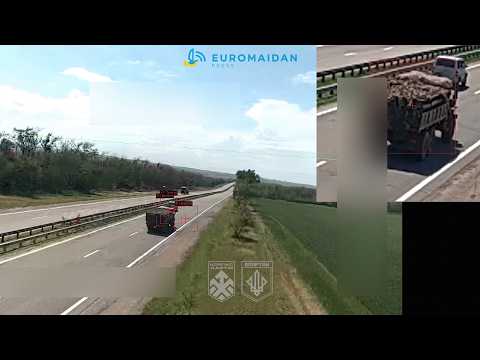
The Hornet is a low-cost fixed-wing strike drone built by Swift Beat, the Ukraine-focused venture backed by former Google chief executive Eric Schmidt and tied in reporting to its sister firm Perennial Autonomy. Through 2025 and 2026 it became the weapon Ukrainian crews lean on for “road-cutting”: one-way attacks on the Russian trucks, fuel tankers and supply convoys that keep the front fed. Built largely of polystyrene, with a roughly 2.2-metre wingspan and a take-off weight near 15 kilograms, the Hornet is launched from a pneumatic catapult and then flies on a near-silent electric propeller — quiet enough that Russian troops often report hearing nothing until impact. Reported unit cost is around $6,000.
Its defining feature is autonomy in the terminal phase. A downward-facing camera locks onto a target and stabilises the dive, while AI optical-electronic recognition lets the drone pick out and finish a Russian truck or armoured vehicle even after the link to its operator is severed. Navigation is visual and inertial rather than satellite-dependent — the trait Russian observers nicknamed “Martian,” in the mistaken belief it drew on NASA’s Mars technology — which is what lets the Hornet keep flying through the GPS jamming that grounds many other drones. A France 24 Observers review of strike footage put its success rate above 80 percent, with most documented hits landing more than 80 kilometres behind the line.
The hardware tells a second story: it is built from commodity parts and open-source software. Captured airframes show the Hornet uses the widely available RTL8812EU Wi-Fi chip and runs open-source firmware — WFB-NG combined with OpenIPC — a digital video-link stack that many Russian drone detectors struggle to see.
That commodity basis is also why so much is known about the drone. Russian technical Telegram channels, among them UAVDEV and others, have recovered downed Hornets, photographed the warheads, modules and airframe, and published part lists and firmware repository links. The effect is a kind of open battlefield marketplace, where each side studies the other’s components in near real time — a dynamic that has done little to slow the Hornet’s spread along Russia’s supply roads.
Combat experience
Sources
- united24media.com/latest-news/ukraine-deploys-ex-google-ceo-backed-ai-hornet-drones-against-russian-logistics-18044 (2026-06-22) — United24 Media — Eric Schmidt-backed Swift Beat Hornet (Project Eagle); AI identifies/classifies/prioritises targets with operator approval; Azov 1st Corps strikes on Kamaz/Ural trucks up to ~65 km inside occupied territory; ~100 km range, ~5 kg warhead, sub-EUR5,000.
- militarnyi.com/en/articles/american-hornet-destroying-ru-logistics/ (2026-06-22) — Militarnyi — deep technical profile; Perennial Autonomy / Swift Beat; ~15 kg, 2.2 m wingspan, 1.4 m length, cruise 100-120 km/h, dive to 200 km/h, range 130-160 km, ~4.5 kg cumulative-fragmentation warhead; downward auto-lock-on camera, hybrid satellite/inertial-optical visual navigation; Russian examination of recovered wreckage.
- en.defence-ua.com/weapon_and_tech/whats_special_about_the_hornet_uav_that_ukrainians_using_to_destroy_russian_logistics_where_did_it_come_from_and_what_are_its_key_features-18597.html (2026-06-22) — Defense Express — Swift Beat LLC, July 2025 Ukraine cooperation; ~15 kg, 2.2 m wingspan; visual navigation independent of satellite; deployed at 50-150 km; 1.5 kg / 4 kg warheads.
- www.forbes.com/sites/davidhambling/2026/05/22/why-russians-are-in-despair-over-truck-busting-martian-drones/ (2026-06-22) — Forbes / David Hambling — "Martian" nickname from Russian belief it uses NASA Mars navigation; visual terrain-matching navigation defeats GPS jamming; basic version ~$6,000; Ukrainians call them "road-cutters." (Direct fetch blocked; corroborated via reprints and search.)
- www.france24.com/en/europe/20260601-ukraine-kamikaze-drone-partially-operated-ai-attacking-russian-convoys (2026-06-22) — France 24 Observers — partial AI guidance lets it independently select and recognise a Russian truck even without operator link; polystyrene build, 2-m wingspan, >100 km range, $6,000, 4.5 kg payload, 200 km/h; 9 of 13 strike videos >80 km from front; success rate above 80%.
- fiskovec.substack.com/p/the-battlefield-is-a-marketplace (2026-06-22) — Substack (Fiskovec) — Russian channels (UAVDEV, Quadro Code) analysed captured Hornets; identified RTL8812EU Wi-Fi chip and WFB-NG + OpenIPC open-source firmware ("most Russian drone detectors simply cannot see these encrypted signals"); published photos, chip IDs and firmware repo links; Brave1 Market / eBaly feedback-loop "marketplace" context.
- Telegram channel, Russian side:t.me/UAVDEV/10987 (2026-06-22) — Russian Telegram (UAVDEV) — build-detail post on a recovered Hornet (components / part breakdown).
- Telegram channel, Russian side:t.me/UAVDEV/10993 (2026-06-22) — Russian Telegram (UAVDEV) — follow-up build-detail post on the Hornet (chips / firmware references).
- Telegram channel, Russian side:t.me/barantchik/33472 (2026-06-22) — Russian Telegram (barantchik) — photos / commentary on a captured Hornet.
- Telegram channel, Russian side:t.me/rybar/78877 (2026-06-22) — Russian Telegram (rybar) — photos / analysis of the Hornet drone.