FP-5 Flamingo
Ukrainian deep-strike cruise missile — claimed 3,000 km range and 1,150 kg warhead; demonstrated reach so far ~1,400 km.
Missile / loitering munitionby Fire PointIntroduced 2024 · Updated 2026
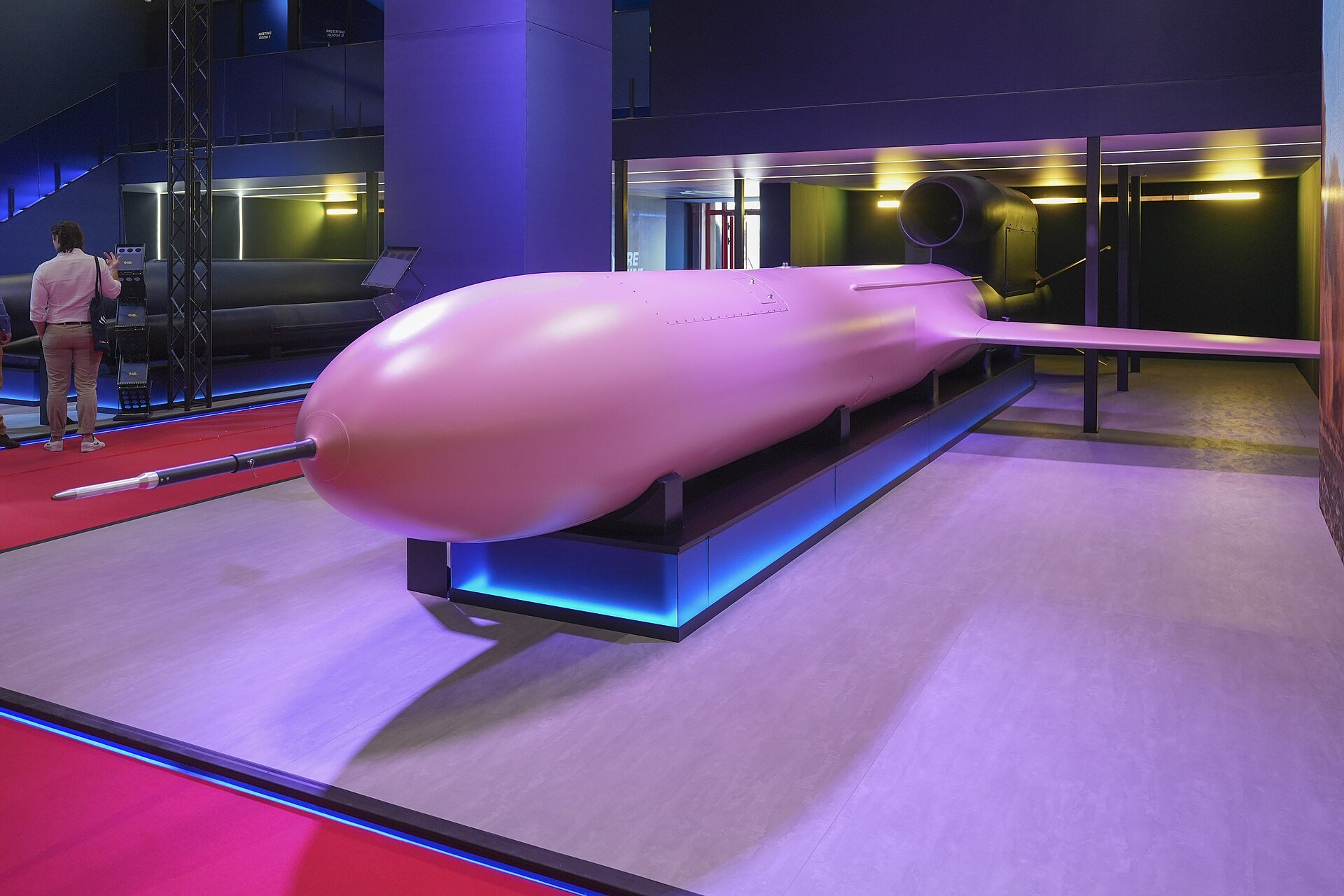
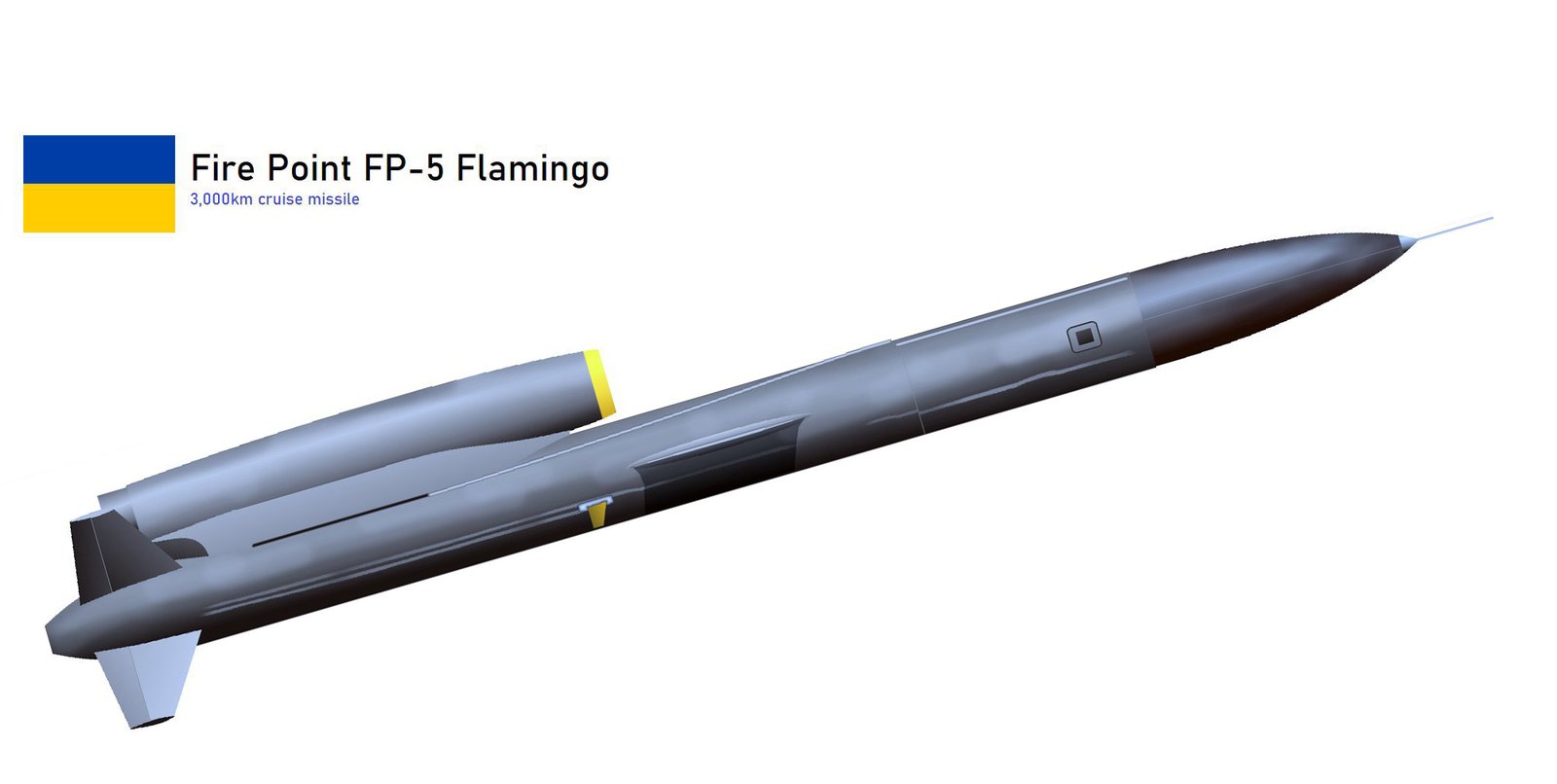

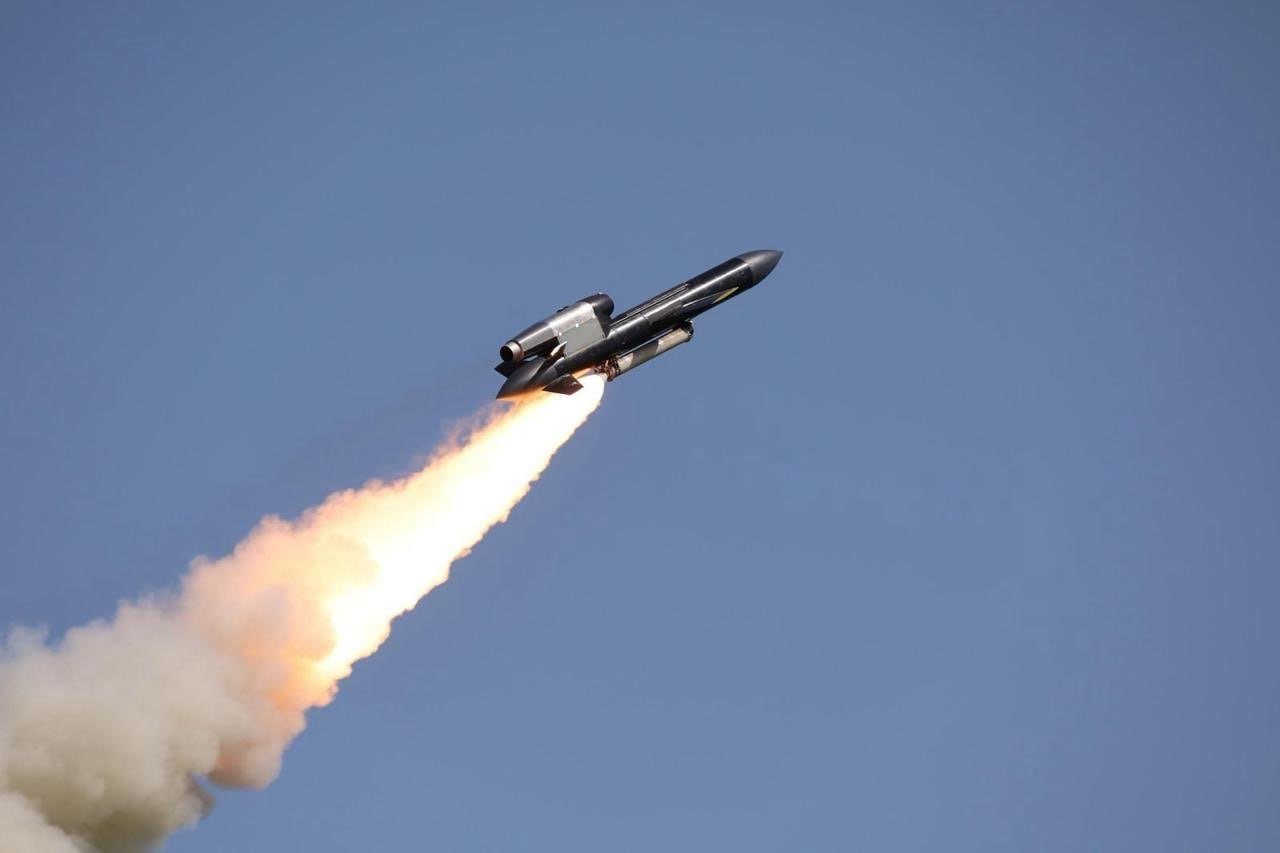
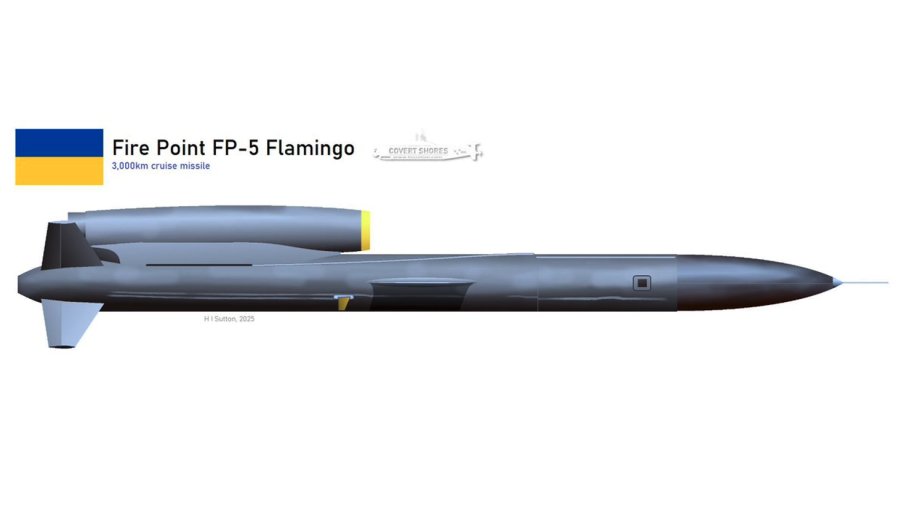
Photos: Krzysztof Popławski · esut.de · www.foxnews.com · euro-sd.com · www.intellinews.com
The FP-5 Flamingo is the largest cruise missile yet produced by Ukraine — a subsonic, ground-launched strike weapon manufactured by Fire Point in Kyiv. The company gives it a 1,150-kilogram warhead, a launch weight near 6,000 kilograms and a maximum range of 3,000 kilometres, figures that would place it among the largest and longest-reaching ground-launched cruise missiles in the world. Public production began in 2024 and, through 2025, the Flamingo became Ukraine’s longest-reach domestic strike capability.
The 1,150-kilogram warhead is the headline number. A Western Tomahawk-class cruise missile carries roughly 450 kilograms; the Shahed-136 / Geran-2 strike drone that Russia has used against Ukrainian infrastructure carries 30–50 kilograms. The Flamingo’s payload puts genuinely hardened targets — large refineries, command bunkers, ammunition-storage facilities — into the engagement envelope.
The strategic point of the platform is sovereignty. Ukraine’s Western-supplied long-range systems — Storm Shadow / SCALP, ATACMS, JASSM-ER — have all come with supplier-imposed restrictions on range and target set. A domestically produced missile means the Ukrainian general staff alone decides what is struck.
The open question is how much of the advertised performance the Flamingo actually delivers. Serial production began at roughly 30 missiles a month in mid-2025, rose to about 50 a month, and reached approximately three a day by early 2026 at a reported unit cost around €600,000 — short of the seven-a-day target Fire Point had set for late 2025, with engines (salvaged AI-25 turbofans) the principal bottleneck. Of roughly 23 publicly known launches catalogued by open-source analysts by mid-2026, about six were assessed to have reached their target areas and two confirmed as direct hits; the longest attributed strike, the Votkinsk ballistic-missile plant in February 2026, was about 1,400 kilometres inside Russia — well below the advertised 3,000 kilometres. Analysts at the IISS found no evidence the missile uses advanced terrain-matching guidance such as TERCOM or DSMAC, assessing it instead as reliant on satellite navigation with jam-resistant antennas and the open-source ArduPilot autopilot.
Fire Point itself was founded in 2022 and has scaled the FP-1 long-range drone, the FP-2, the Flamingo, and the FP-7 and FP-9 ballistic missiles in rapid succession. In 2026 Germany’s Diehl Defence entered negotiations to produce the Flamingo in Germany, and the company began planning a missile-fuel plant in Denmark — signs that the platform’s significance now extends beyond Ukraine’s own deep-strike campaign.
Combat experience
Effectiveness
The Flamingo’s strategic significance is that it reduces Ukraine’s dependence on Western-supplied long-range strike capability — Storm Shadow / SCALP, ATACMS, JASSM — each of which has come with supplier-imposed restrictions on range and target set. A domestic cruise missile sidesteps those restrictions: the Ukrainian general staff decides what gets struck.
The headline caveat is verifiability. Independent analysts (IISS) found no evidence the missile uses advanced terrain-matching guidance (TERCOM/DSMAC), assessing it as reliant on satellite navigation and the open-source ArduPilot autopilot, and the demonstrated range and confirmed-hit rate fall well short of marketing figures. Production rates and unit cost are company self-reported, not independently audited. In 2026 Germany’s Diehl Defence entered talks to produce the Flamingo in Germany.
Sources
- en.wikipedia.org/wiki/Fire_Point_(Ukrainian_firm) (2026-05-02) — Encyclopedic entry on Fire Point — confirms FP-1 / FP-2 / FP-5 / FP-7 progression.
- kyivindependent.com/ (2026-05-02) — Kyiv Independent — ongoing reporting on long-range strike use through 2025.