
Relativity Space
3D-printed reusable rocket company now led by Eric Schmidt, positioning its Terran R launcher for commercial and national-security missions.
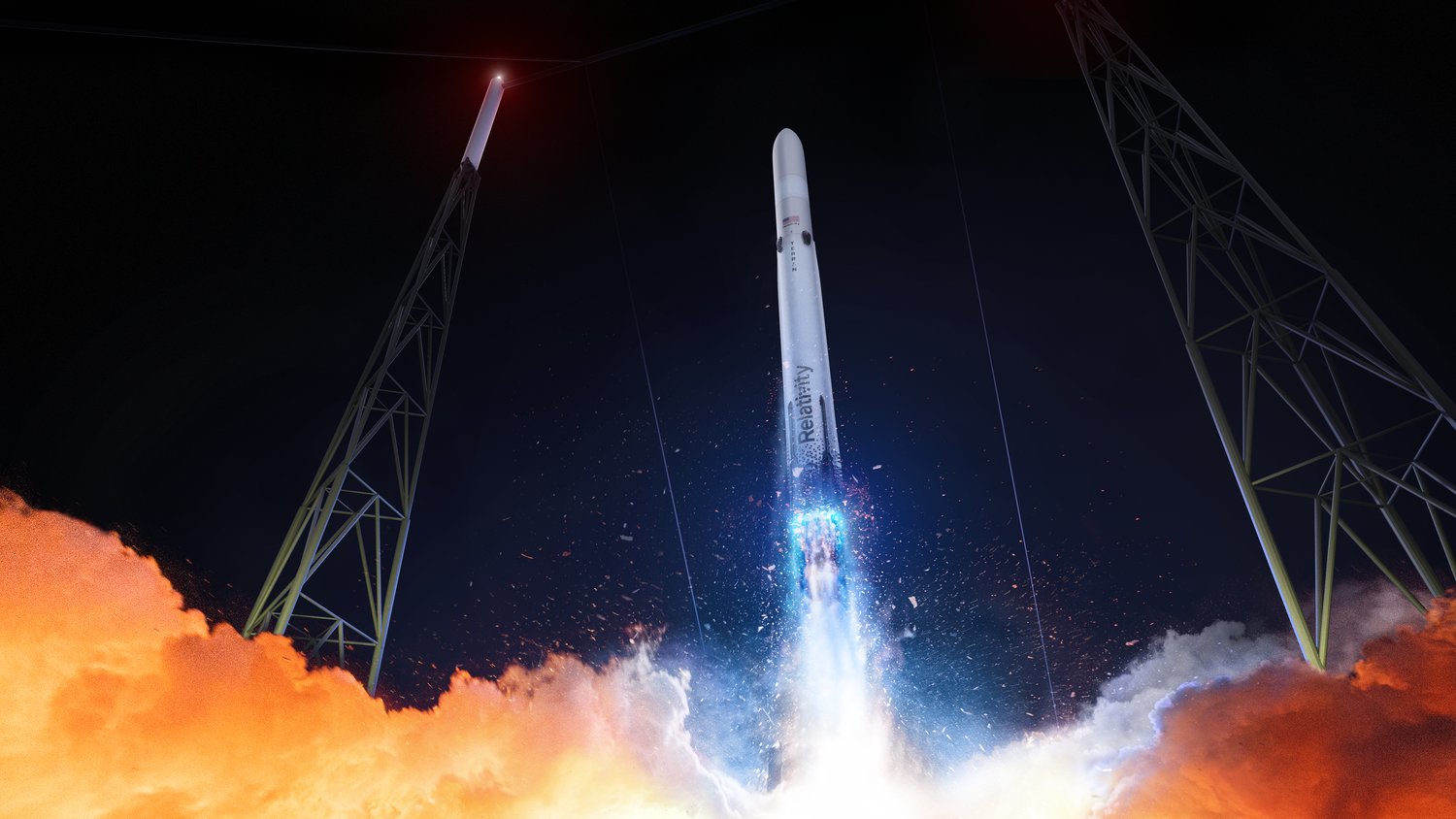
Relativity Space is a Long Beach, California launch company that became a national-security story in March 2025, when Eric Schmidt — the former Google chief executive who chaired the US AI national-security commission — took over as CEO and majority investor, the first operating role he has held since leaving Google. Co-founder Tim Ellis, who started the company in 2015 with Jordan Noone, moved to the board. Schmidt’s arrival came as Relativity was straining for cash, and it folded one of the most prominent figures in defence-tech policy into a private rocket maker.
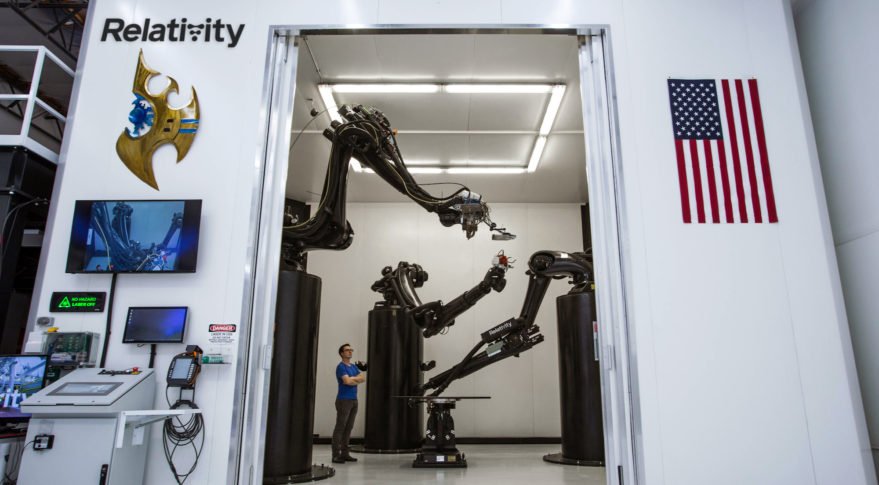
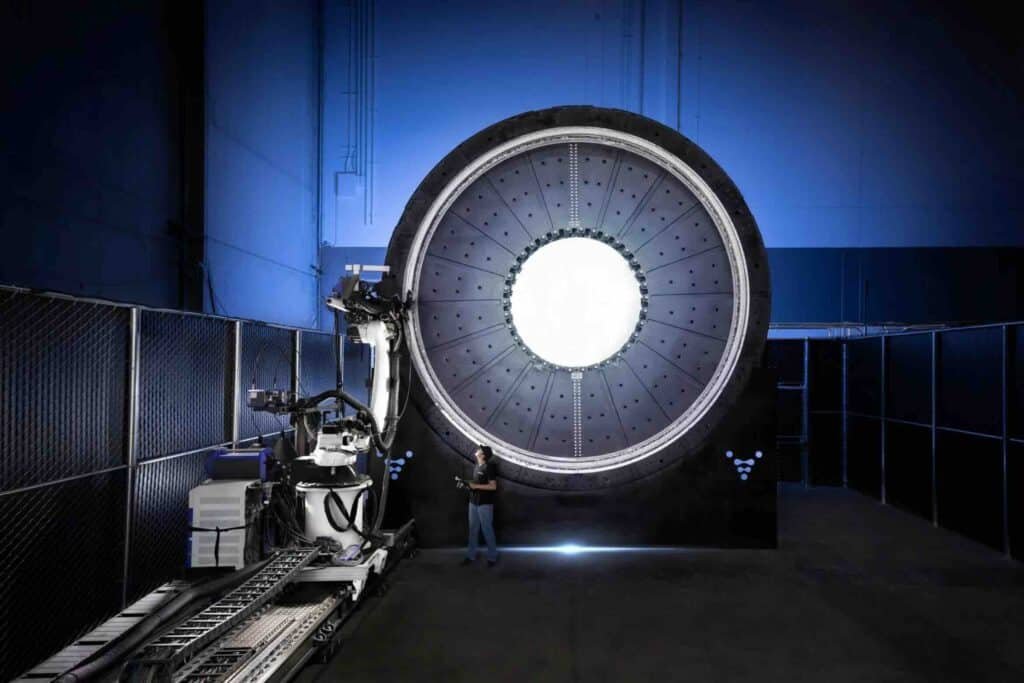
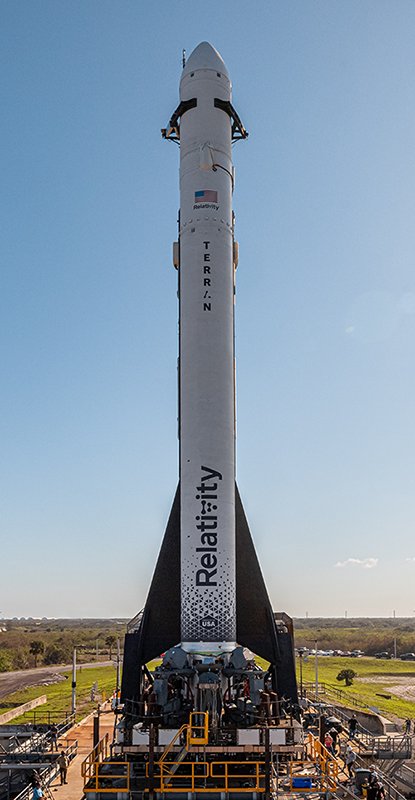
The company’s distinguishing bet is manufacturing. Relativity builds rockets using large-scale 3D printing, automation and software-driven production, an approach it argues lets it iterate hardware far faster than conventional aerospace. Its first vehicle, the 3D-printed Terran 1, flew once in 2023 and reached space but not orbit. The whole company is now organised around Terran R, a two-stage, partially reusable medium-to-heavy-lift rocket designed to compete with SpaceX’s Falcon 9 and Falcon Heavy — roughly 23,500 kg to low Earth orbit when the booster is recovered, powered by thirteen in-house Aeon R engines, with a first flight targeted for no earlier than 2026 from Cape Canaveral Space Force Station. Relativity reports a launch backlog of nearly $3 billion.
The warfare-AI tie here is honest to acknowledge: Relativity is primarily a commercial launch provider, and its own materials frame Terran R around broad commercial and scientific missions rather than weapons. What pulls it into national-security relevance is twofold. Schmidt himself — through the National Security Commission on Artificial Intelligence and his Ukraine drone venture — has spent years arguing the US must out-build adversaries in autonomous systems and space, and he has publicly cast his Relativity work in that frame. And launch capacity is itself becoming a contested military resource: the Pentagon and Space Force are pushing reusable, responsive launch that can put assets on orbit in hours, and a second heavy-lift provider reduces dependence on a single supplier. Relativity already counts government entities among its customers.
- Stack
- additive-manufacturing
- robotics-automation
- Collaboration
- dual-use
Products
Hardware
Terran R
Two-stage, partially reusable medium-to-heavy-lift launch vehicle built with large-scale 3D printing; ~23,500 kg to low Earth orbit reusable, first flight targeted no earlier than 2026.
Gallery
Photos: Relativity Space · www.space.com · manufactur3dmag.com · spinoff.nasa.gov
Sources
- spacenews.com/relativity-names-eric-schmidt-as-ceo-as-it-updates-terran-r-development/ (2026-06-22) — SpaceNews (March 2025) — Schmidt named CEO and controlling investor, Ellis to the board, founded 2015 by Ellis and Noone, Terran R reusable and ~$3B backlog.
- en.wikipedia.org/wiki/Relativity_Space (2026-06-22) — Wikipedia — Long Beach HQ (former Boeing C-17 plant), 2015 founding, March 2025 Schmidt takeover and controlling interest, 3D-printing/automation production model, Terran 1's 2023 flight.
- en.wikipedia.org/wiki/Terran_R (2026-06-22) — Wikipedia — Terran R two-stage partially reusable, 23,500 kg to LEO reusable / 33,500 kg expended, 13 Aeon R engines, first launch NET 2026 from Cape Canaveral Space Force Station LC-16.
- www.relativityspace.com/about (2026-06-22) — Company "About" page — frames Terran R for a "wide range of missions," lists government entities among customers, and cites Schmidt's "experience in technology and national security."
- techcrunch.com/2025/03/10/eric-schmidt-joins-relativity-space-as-ceo/ (2026-06-22) — TechCrunch (March 2025) — Schmidt's first CEO role since Google, controlling stake amid 2024 cash shortfalls, Terran R targeting 2026 against Falcon 9/Heavy.