What the Geran-5 is made of
32 documented parts and 53 photos, from recovered wreckage and the reporting on it. Each part gives its marking, maker and country where known, and links the record it comes from. The system itself: Geran-5.
11 open questions, 6 with an indication of the answer ↓
What we know about the Geran-5
The Geran-5 is a jet drone shaped like a small cruise missile: a long tube of a fuselage, a straight wing, and a tail with a fin at each tip. HUR’s teardown of the first recovered example, published on War & Sanctions on 19 January 2026, gives a length of 6.5 m, a wingspan of 3.2 m, a take-off weight of up to 850 kg and a 90 kg warhead. The skin, wings and tail are carbon fibre over a frame of aluminium profiles and steel (ArmyInform), and HUR compares the layout with Iran’s Karrar.
Engine and launch. A Chinese Telefly TF-TJ2000A turbojet of 200 kgf, sold by its maker as a model-aircraft engine, flew in a pod on top of the first examples. From September 2026 interceptor footage shows it moved inside the rear fuselage, fed by an intake on top (Militarnyi). HUR lists a separate launch engine without a type; the drone leaves a fixed rail about 80 m long.
Navigation. A Russian Kometa-M12 anti-jam satellite receiver with a 12-element antenna and a MINSOO V3 inertial unit. The later K5 version adds “Susanin”, an optical system that compares camera images of the ground with pictures stored before launch; HUR said in October 2026 that it is used on the K5, and Serhii Beskrestnov reported on 10 October that it had been found on the Geran-5. HUR has not yet published a K5 teardown.
Links. A Raspberry Pi tracker with two 3G/LTE modems and antennas laminated into the skin reports the drone’s position over mobile networks, and a Chinese Xingkai XK-F358 mesh radio relays control and video between drones. In the 27 September strike on Kyiv’s Inkom business centre, Beskrestnov says, a second jet drone circling at about 3 km relayed the Geran-5’s signals and filmed the hit (Telegram).
Electronics. The flight computer and the power unit are each built around a Texas Instruments TMS320F28335 processor. Of the 16 foreign parts HUR identified, most are American (Texas Instruments, CTS, Monolithic Power Systems), four are Chinese and one is German; a CTS clock dated September 2025 shows that Western chips were still reaching the line months before the first Geran-5 was shot down.
Not known. No firmware has been published for any of its computers; the filling of the warhead, the type of launch engine and the true wingspan (3.2 m on HUR’s portal, “up to 5.5 m” in other reporting) are open; and HUR’s component list shows no camera, although a Russian claim says the Geran-5 films its own strikes (below).
What it costs
Every price is given three ways: in roubles, in dollars at the market exchange rate, and as the relative cost for Russia: the dollars price scaled down to Russian price levels, which are about a third of American ones. Each figure names its source.
Figures for the whole Geran-5
Reported whole drone, estimated unit price · Reported figure, 2026
- Roubles
- ₽9 million
- Dollars, market rate
- $115,000
- Dollars, relative cost for Russia
- $41,000
Stated as US$115,000: The drone's overall price is estimated at around $115,000, compared to older piston-engined models, estimated at as little as $30,000.
The article names no estimator.
Reported whole drone, approximate unit cost (Geran-5 and Banderol each) · Reported figure, The Wall Street Journal (as relayed), 2026
- Roubles
- ₽7.8 million
- Dollars, market rate
- $100,000
- Dollars, relative cost for Russia
- $35,000
Stated as US$100,000: Both weapons are estimated to cost around $100,000 each, while US-made Tomahawk cruise missiles and comparable high-end systems cost more than $2 million.
The Wall Street Journal's estimate as reported by UNITED24, which gives the same figure for the Banderol.
Reported whole drone, unit cost estimate · Reported figure, Boris Rozhin (Colonel Cassad), 2026
- Roubles
- ₽3.9 million
- Dollars, market rate
- $50,000
- Dollars, relative cost for Russia
- $18,000
Stated as US$50,000: 90 000 дронов "Герань-5" при оценочной стоимости в 50 000 долларов за 1 дрон
A figure given by a Russian Telegram channel, without a source.
Telegram channel, Russian side:Boris Rozhin (Colonel Cassad) ↗
The parts with a known price
5 of the 27 parts on one recovered unit have a published price. Added up, they come to about:
- Roubles
- ₽3.4 million
- Dollars, market rate
- $43,000
- Dollars, relative cost for Russia
- $43,000
This is our sum of the prices below (2026 prices), a floor rather than the price of the weapon: the airframe, assembly and most parts carry no figure. Imported parts make up 100% of it at market prices, and count at the market price in the relative cost.
The priced parts
- Digital signal processor ₽1,600 · $20.69 · $20.69 imported
- USB to UART Bridge Controller ₽96 · $1.22 · $1.22 imported
- Digital signal processor ₽1,600 · $20.69 · $20.69 imported
- Turbojet engine TELEFLY TF-TJ2000A ₽2.7–3.1 million · $35,000–40,000 · $35,000–40,000 imported
- Modem Mesh Network XK-F358 ₽450,000 · $5,700 · $5,700 imported
How the prices are worked out
Each figure is first given as its source states it. A price in dollars, yuan or euros is converted into roubles at the average market exchange rate of its year (for 2026: Bank of Russia official rate, average Jan–Sep 2026). The dollar price at the market rate is those roubles converted back, which is what the item costs someone paying in dollars.
The third price is the relative cost for Russia. Prices inside Russia are far lower than the exchange rate suggests: in 2025 a dollar fetched 83.7 roubles on the market, but 29.6 roubles bought in Russia what a dollar bought in the United States, according to the World Bank's purchasing-power-parity factor. Russian price levels were therefore about 35% of American ones, and the third price is the market-rate price scaled down by that share. It is a comparison, not money paid: it shows how much smaller the burden is when the work is paid at Russian prices, which is why a rouble budget goes about 2.8 times further than its dollar value suggests.
The factor measures prices across the whole economy, not the price of weapons. It fits Russian wages and locally made parts best. Imported parts, such as Chinese engines and radios, are paid for in hard currency, so for them the market price is the real cost and their third price equals it. A figure for a whole weapon mixes both, so its relative cost understates the imported share.
Economists who compare defence budgets make the same point. Michael Kofman and Richard Connolly put Russia's effective military spending at $150–180 billion a year at purchasing-power parity, against the roughly $60 billion a year a market-rate conversion suggests. War on the Rocks, 2019 ↗
Peter Robertson of the University of Western Australia built a price index for military spending itself and found Russia's real budget to be more than three times its market-rate value. University of Western Australia, 2021 ↗
Prices are not adjusted for inflation: each is converted at the rates of its own year, which is shown with it. Sources for the rates: World Bank, official exchange rate (LCU per US$, period average), World Bank, PPP conversion factor, GDP (LCU per international $), Bank of Russia, official exchange rates.
Where the parts were made
- United States of America 9
- Texas Instruments, CTS Corporation, Monolithic Power Systems
- People's Republic of China 4
- Telefly Telecommunications Equipment Co., Limited, Xingkay Tech, Yantel Corporation, Nanjing Qinheng Microelectronics Co., Ltd. (WinChipHead, WCH)
- Russian Federation 2
- VNIIR-PROGRESS JSC, ALABUGA OEZ PPT JSC
- Germany 1
- Infineon Technologies
Sources
- HUR War & Sanctions: Geran-5 UAV · українською
- Open Source Munitions Portal — munition identification records for this system
- Telegram, news and web reporting — each row names the post or article it comes from
Ukrainian pages read alongside the English: same items, markings and text.
Specifications (HUR)
- Length
- 6,5 m
- Take-off weight, max.
- 850 kg
- Weight of the warhead
- 90 kg
- Wingspan
- 3,2 m
Geran-5 UAV
Jammer-proof satellite navigation system "Kometa-M12"
Завадозахищена супутникова навігаційна система "Комета-М12"
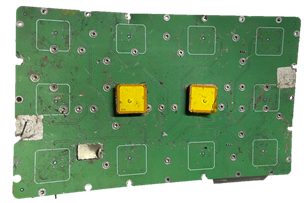
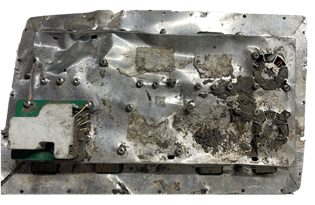
Borscht (Tracker V3) Tracker with 3G/LTE modems and a Raspberry Pi microcomputer
Трекер Борщ (Tracker V3) з 3G/LTE модемами та мікрокомп'ютером Raspberry Pi
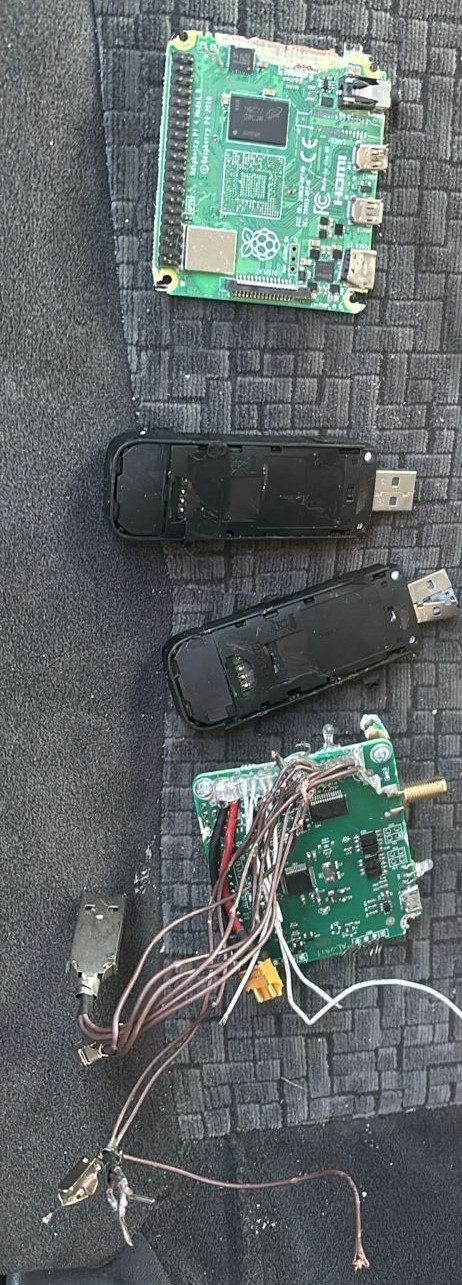 Raspberry Pi board (top), two USB LTE modems with SIM slots, hand-wired interface board with RF connector
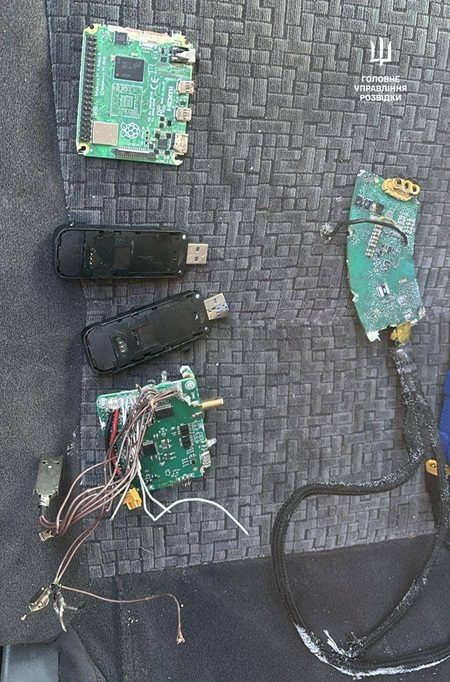 The tracker's parts as first released, with the antenna cable
Photos: HUR War & Sanctions · HUR (Defence Intelligence of Ukraine)
Flight Controller Unit (FCU)
Польотний контролер (FCU)
Г5
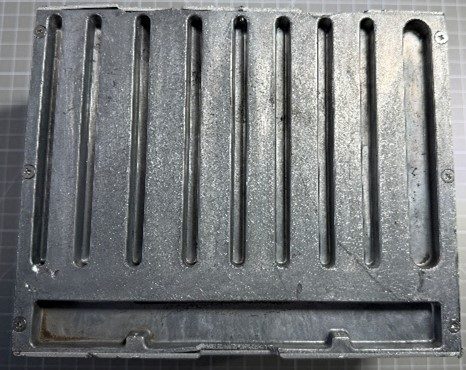
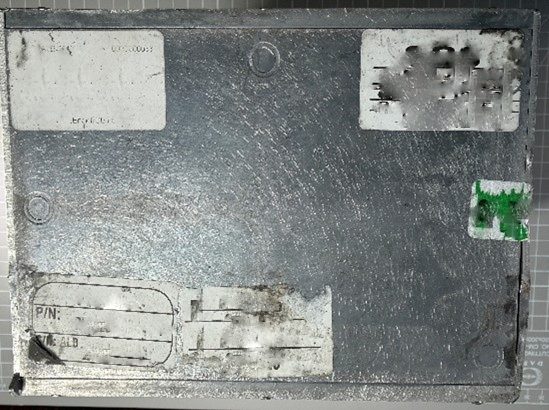
Photo: HUR War & Sanctions
- Satellite navigation system receiver board
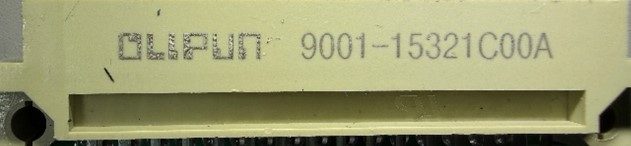
- OLIPUN
90001-15321C00A
Connector
A board connector by OLIPUN, maker not identified by HUR.record ↗
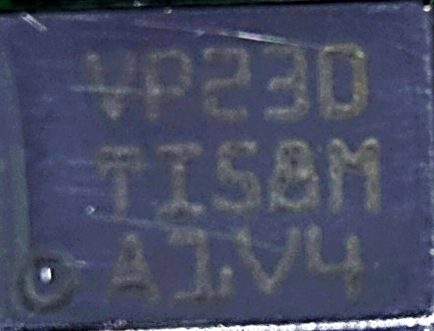
- VP230
TI58M
A1V4
CAN transceiver
A Texas Instruments CAN bus transceiver (SN65HVD230 family): it connects the flight computer to the other units over the CAN bus, the standard wiring in cars and drones.record ↗
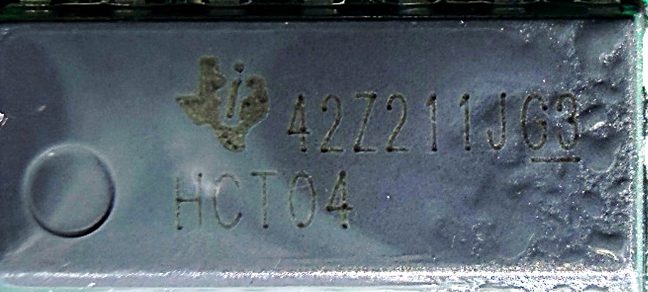
- 42Z211JG3
HCT04
6-channel inverter
A Texas Instruments 74HCT04 hex inverter, a basic logic chip.record ↗
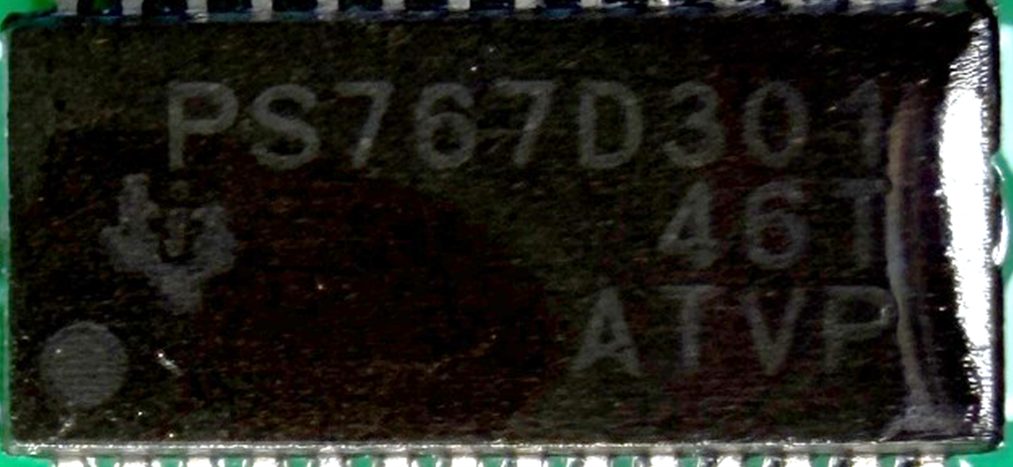
- PS767D301
46T
ATVP
Voltage regulator
A Texas Instruments dual low-dropout voltage regulator (TPS767D301 family) supplying clean power to the processor.record ↗
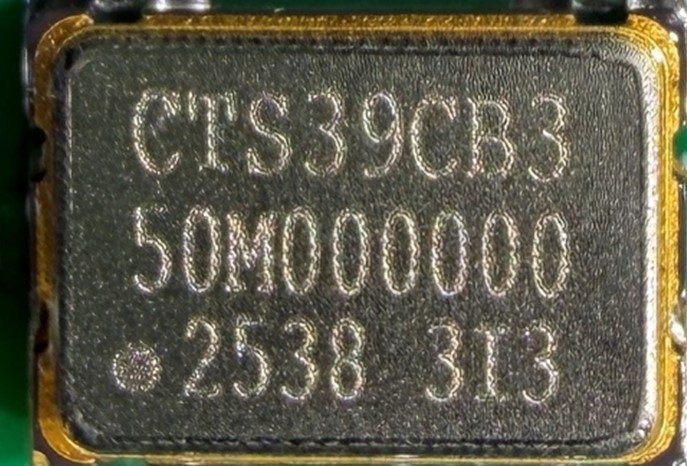
- CTS39CB3
50M000000
2538 3I3
Clock generator
A 50 MHz clock oscillator from CTS Corporation. Its date code 2538 means week 38 of 2025: made in September 2025, about four months before HUR documented the first Geran-5 wreckage in January 2026, so American chips were still reaching the production line that recently.record ↗
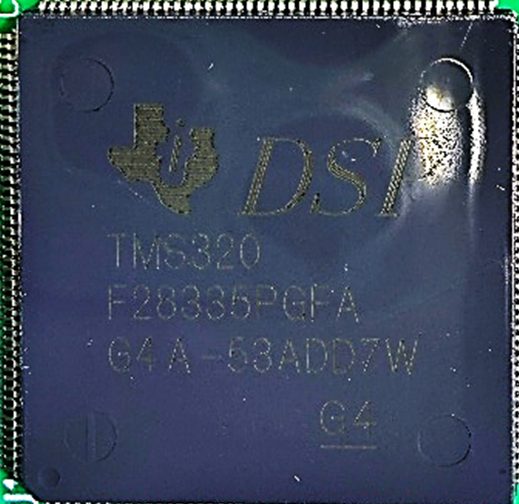
- DSP
TMS320
F28335PGFA
G4 A 53ADD7W
G4
Digital signal processor
The flight computer’s processor: a Texas Instruments TMS320F28335, a 150 MHz C2000 real-time controller with a floating-point unit, widely used in motor drives and industrial control.record ↗Part page →
₽1,600
$20.69
$20.69 imported: market price applies
US$20.69, price list, 2026 · Texas Instruments product page ↗
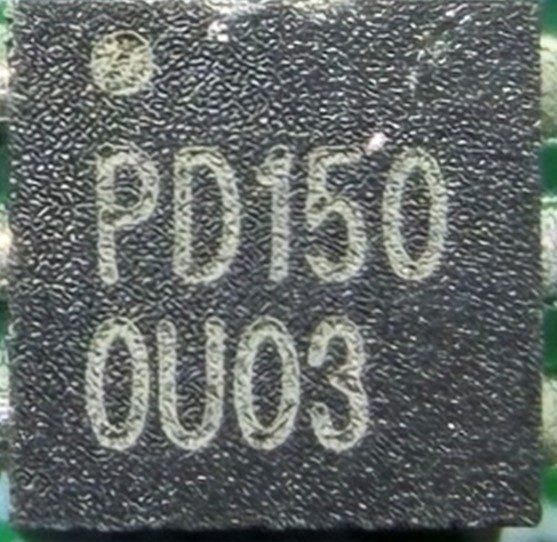
- PD150
0U03
Power divider/combiner
A Yantel RF power divider: it splits one antenna signal between two receivers, or combines two into one.record ↗
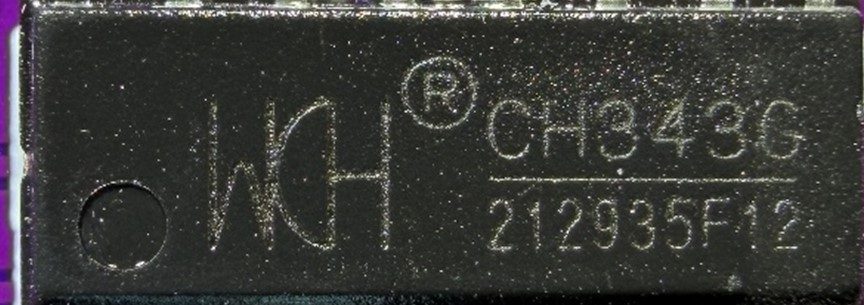
- WCH
CH343G
212935F12
USB to UART Bridge Controller
A USB-to-serial bridge chip from WCH (Nanjing Qinheng), a cheap Chinese part common in hobby electronics; it gives the board a USB port, used for loading software and settings.record ↗Part page →
₽96
$1.22
$1.22 imported: market price applies
US$1.22, price list, 2026 · LCSC Electronics ↗
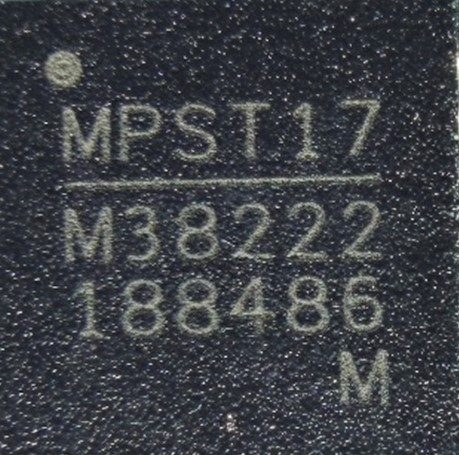
- MPST17
M38222
188486
M
Synchronous step-down converter
A step-down voltage converter from Monolithic Power Systems, turning the supply voltage into the lower voltages the chips run on.record ↗
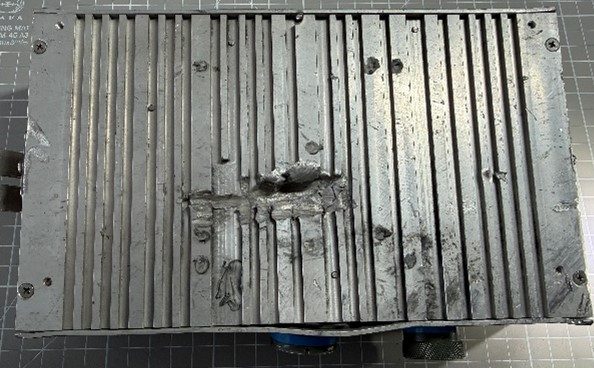
Power distribution unit (PDU)
Блок розподілу потужності (PDU)
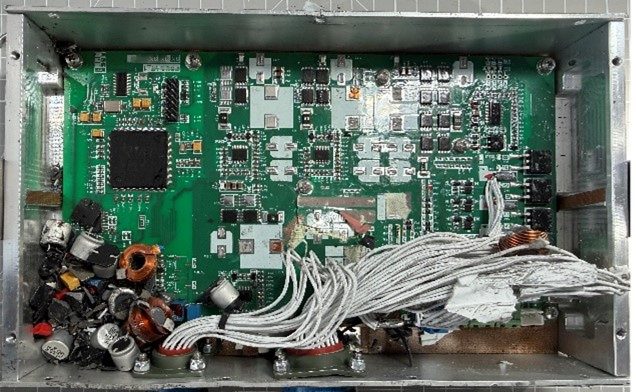
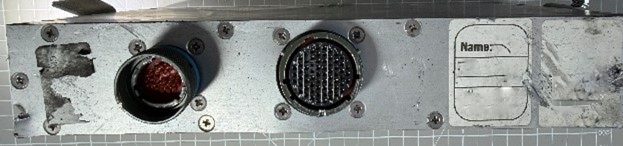
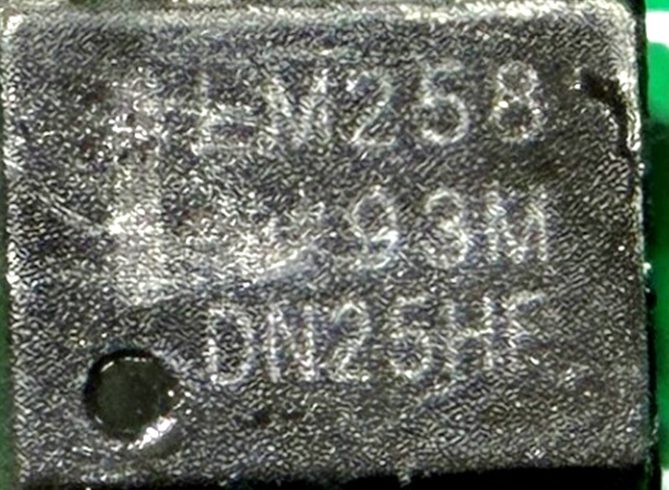
- LM258
93M
DN25HF
Operational amplifier
A Texas Instruments LM258 dual operational amplifier, most likely measuring current or voltage on the power board.record ↗
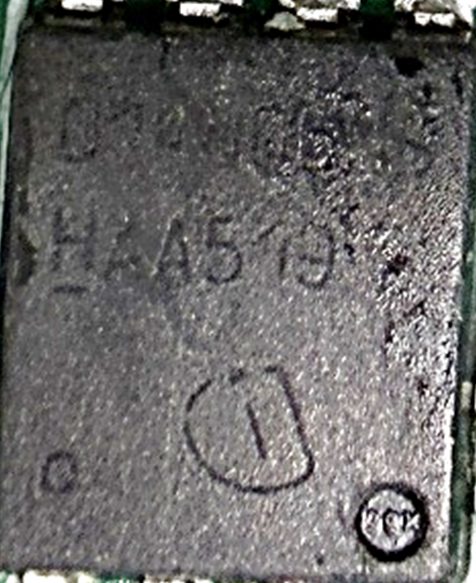
- 014N06NS
HAA519
Transistor
An Infineon OptiMOS power transistor (014N06NS: 60 V, about 1.4 mΩ), switching battery current to the drone’s systems. The only German part HUR found.record ↗
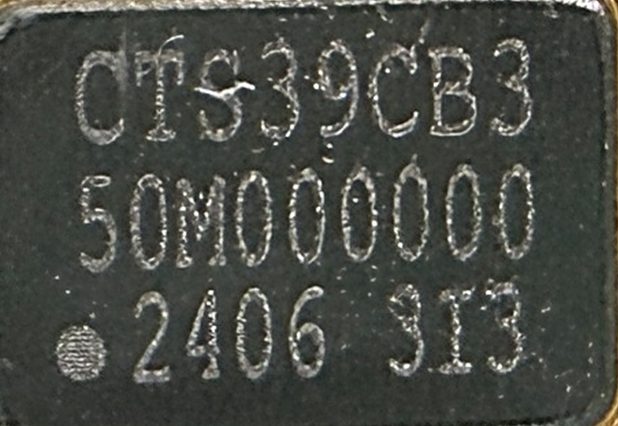
- CTS39CB3
50M000000
2406 3I3
Clock generator
A 50 MHz CTS clock oscillator with date code 2406: week 6 of 2024. (HUR’s text says “February (43rd week)”; February is right, the week number is a slip.)record ↗
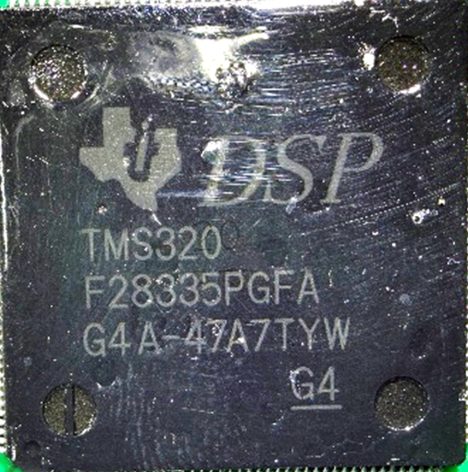
- TMS320
F28335PGFA
G4A-47A7TYW
G4
Digital signal processor
The power unit’s processor: a second Texas Instruments TMS320F28335, from a different production lot than the flight computer’s.record ↗Part page →
₽1,600
$20.69
$20.69 imported: market price applies
US$20.69, price list, 2026 · Texas Instruments product page ↗
On-board power supply based on Li-ion 18650 batteries
Бортове джерело живлення на основі Li-ion акумуляторів 18650
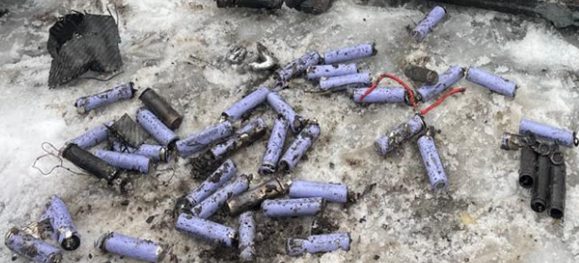
Photo: HUR War & Sanctions
Warhead BCh-90
Бойова частина БЧ-90
 Warhead casing in the wreckage
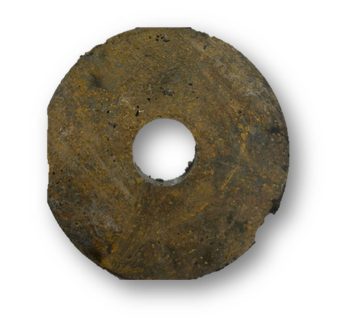 Round steel plate with a central hole, from the warhead
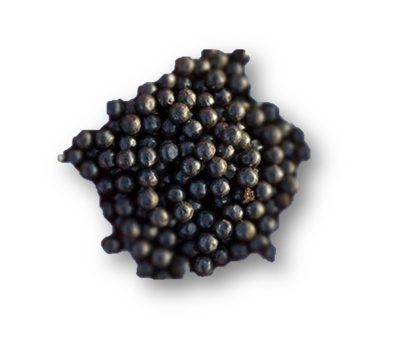 Pre-formed steel balls: the warhead's fragments
 Steel balls from the warhead on snow at the crash site
Photos: HUR War & Sanctions · HUR (Defence Intelligence of Ukraine)
3G/LTE antennas
3G/LTE антени
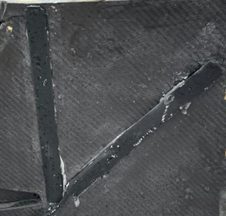
Photo: HUR War & Sanctions
Launch engine
Стартовий двигун
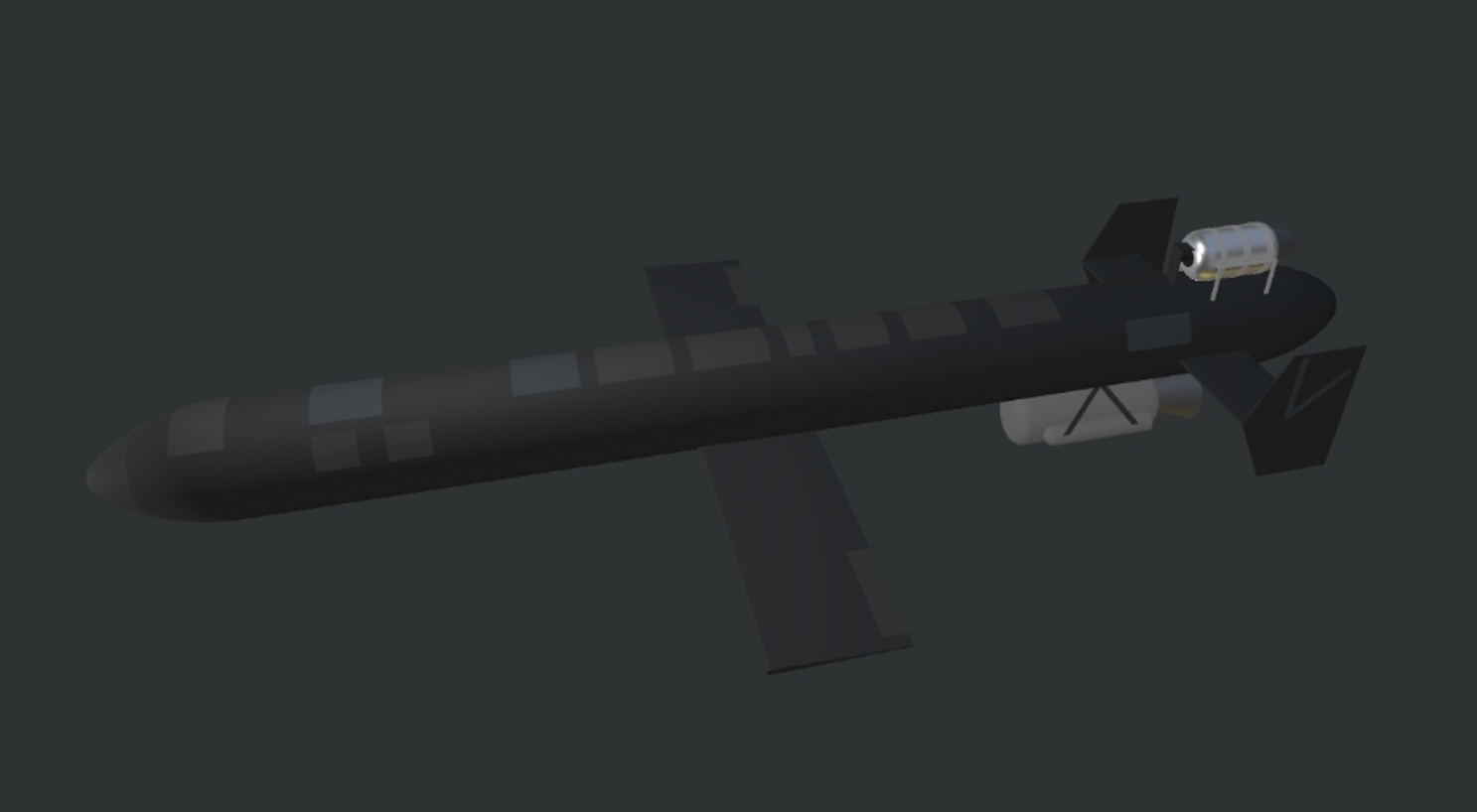 HUR's 3D model of the Geran-5, with the turbojet pod on top of the tail and a second, unlabelled cylinder slung under the rear fuselage
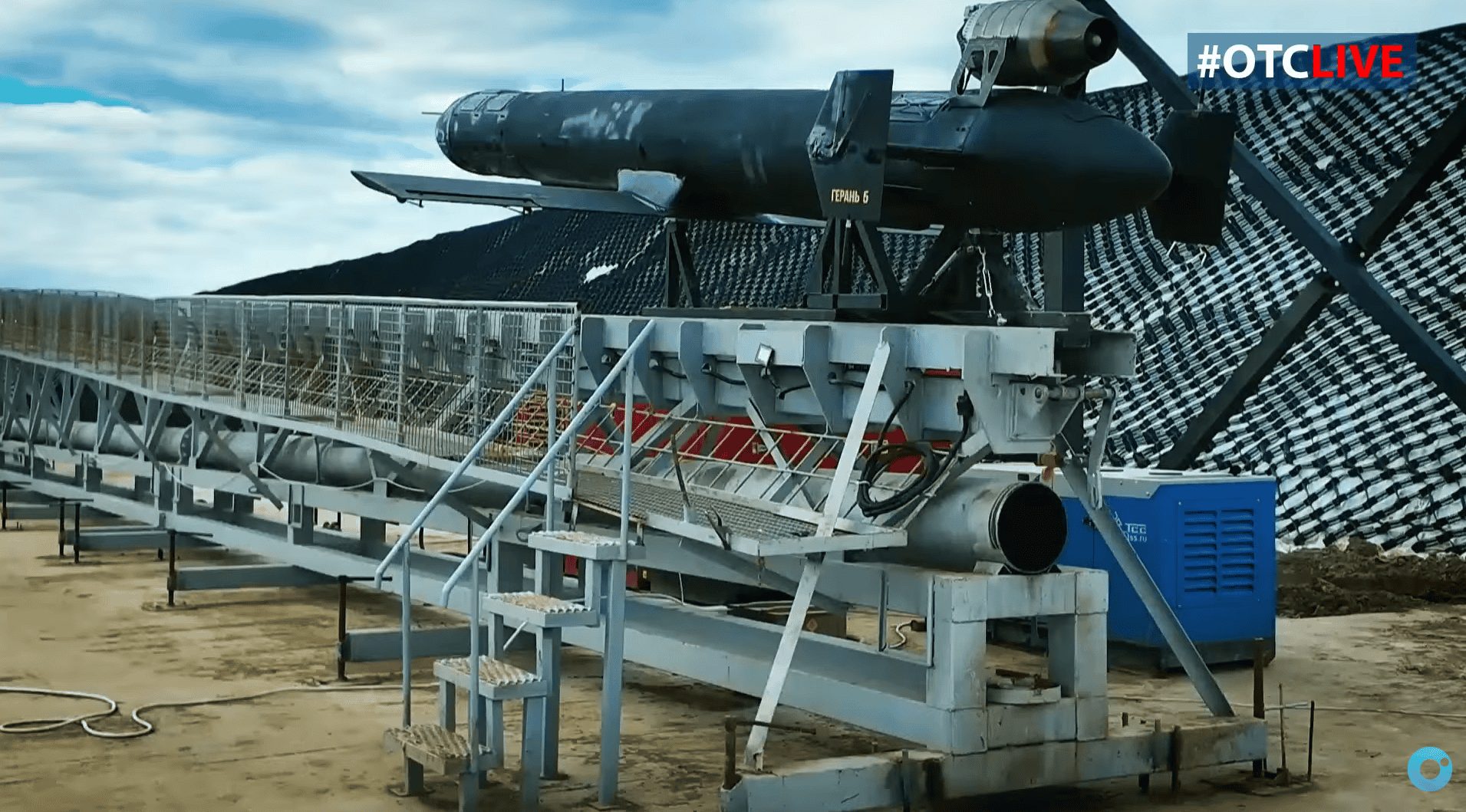 A Geran-5 on the carriage of its rail launcher, with a wide tube running beneath the rail, in Russian television footage of 9 May 2026
Photos: HUR War & Sanctions 3D model, via Militarnyi · Russian TV (OTS LIVE), 9 May 2026, via Militarnyi
Inertial navigation system MINSOO V3
інерціальна навігаційна система MINSOO V3
probably, type SADRA MINSO
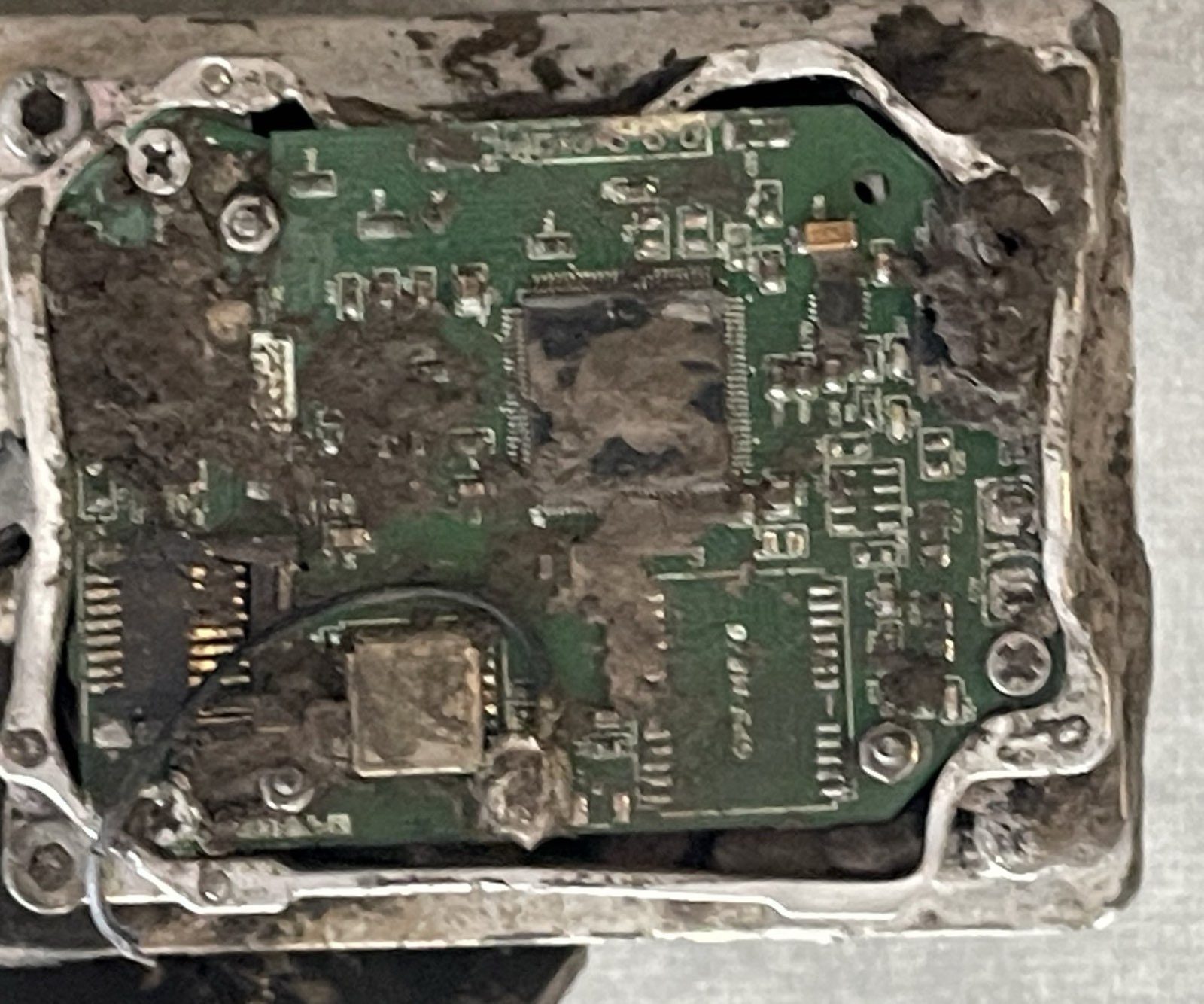
Photo: HUR War & Sanctions
Air pressure measurement unit (ADU)
Блок вимірювання повітряного тиску (ADU)
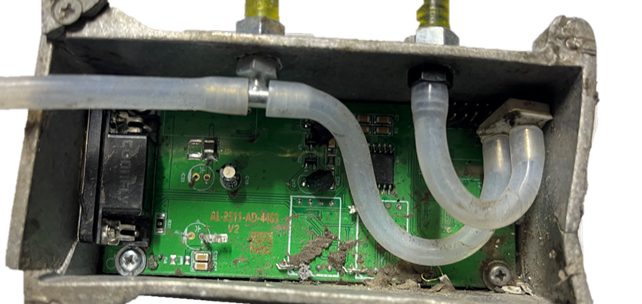
Photo: HUR War & Sanctions
Launch bar AV. Panel
Панель запуску AV. Panel
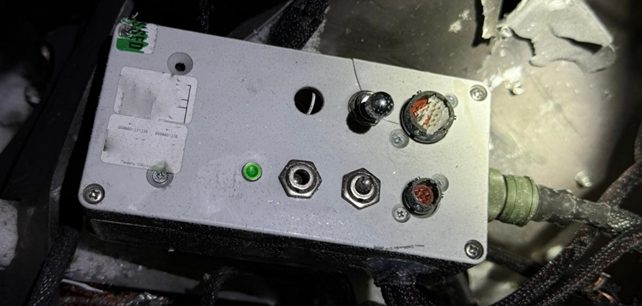 Launch interface panel with switches, connectors and indicator light, still in the airframe
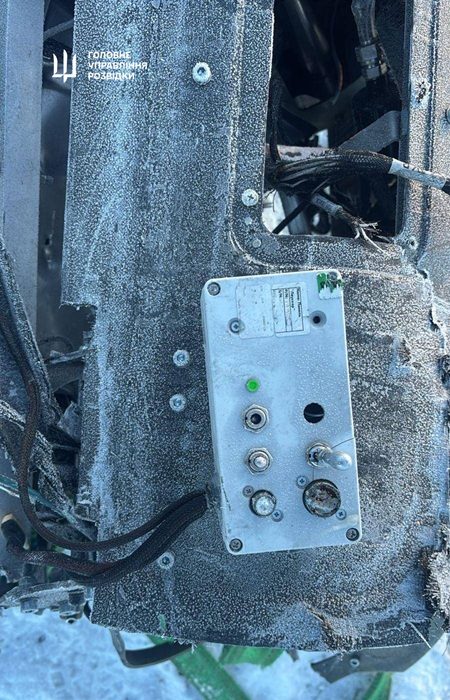 The launch interface panel in the torn airframe
Photos: HUR War & Sanctions · HUR (Defence Intelligence of Ukraine)
Turbojet engine TELEFLY TF-TJ2000A
Турбореактивний двигун TELEFLY TF-TJ2000A
0000000060
Part page: Telefly TF-TJ2000A →
₽2.7–3.1 million $35,000–40,000 $35,000–40,000 imported: market price applies US$35,000–40,000, official statement, 2026 · Euromaidan Press, citing an RBC-Ukraine interview ↗ · 3 more prices on the part page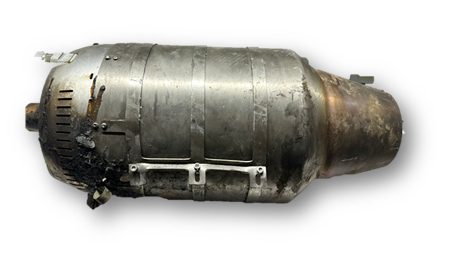 Telefly TF-TJ2000A turbojet: intake left, nozzle right
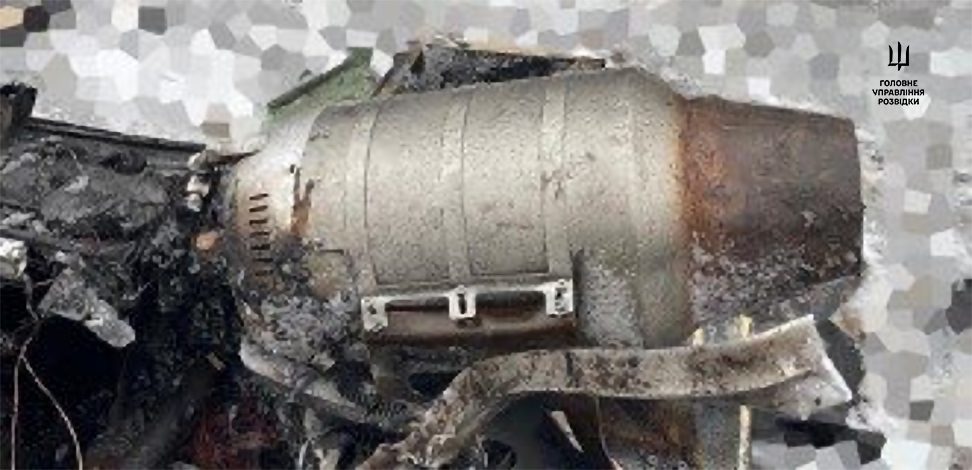 The turbojet in the wreckage, as first photographed
Photos: HUR War & Sanctions · HUR (Defence Intelligence of Ukraine)
Servo drive
Сервопривід
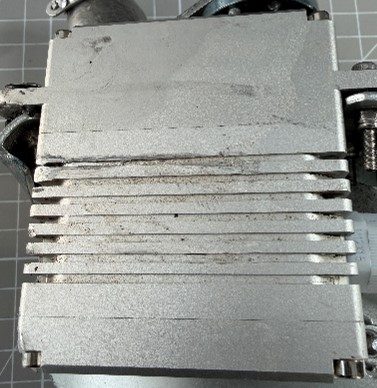 Servo in a finned aluminium housing
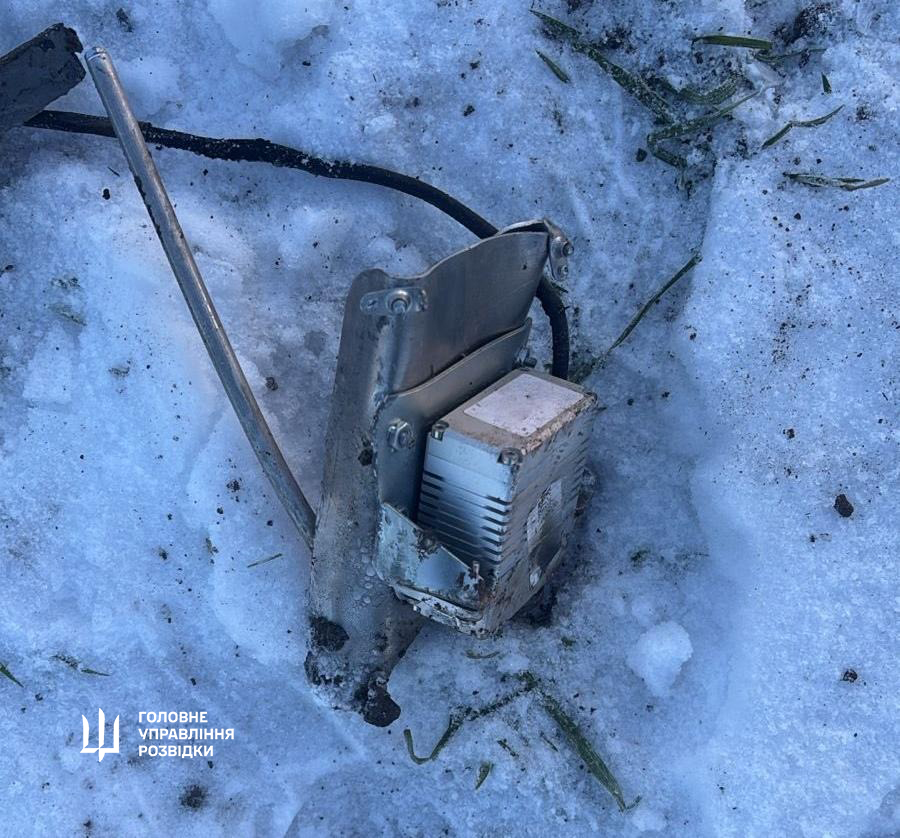 At the crash site, a finned actuator housing of the same pattern, still on its bracket with a rod and cable
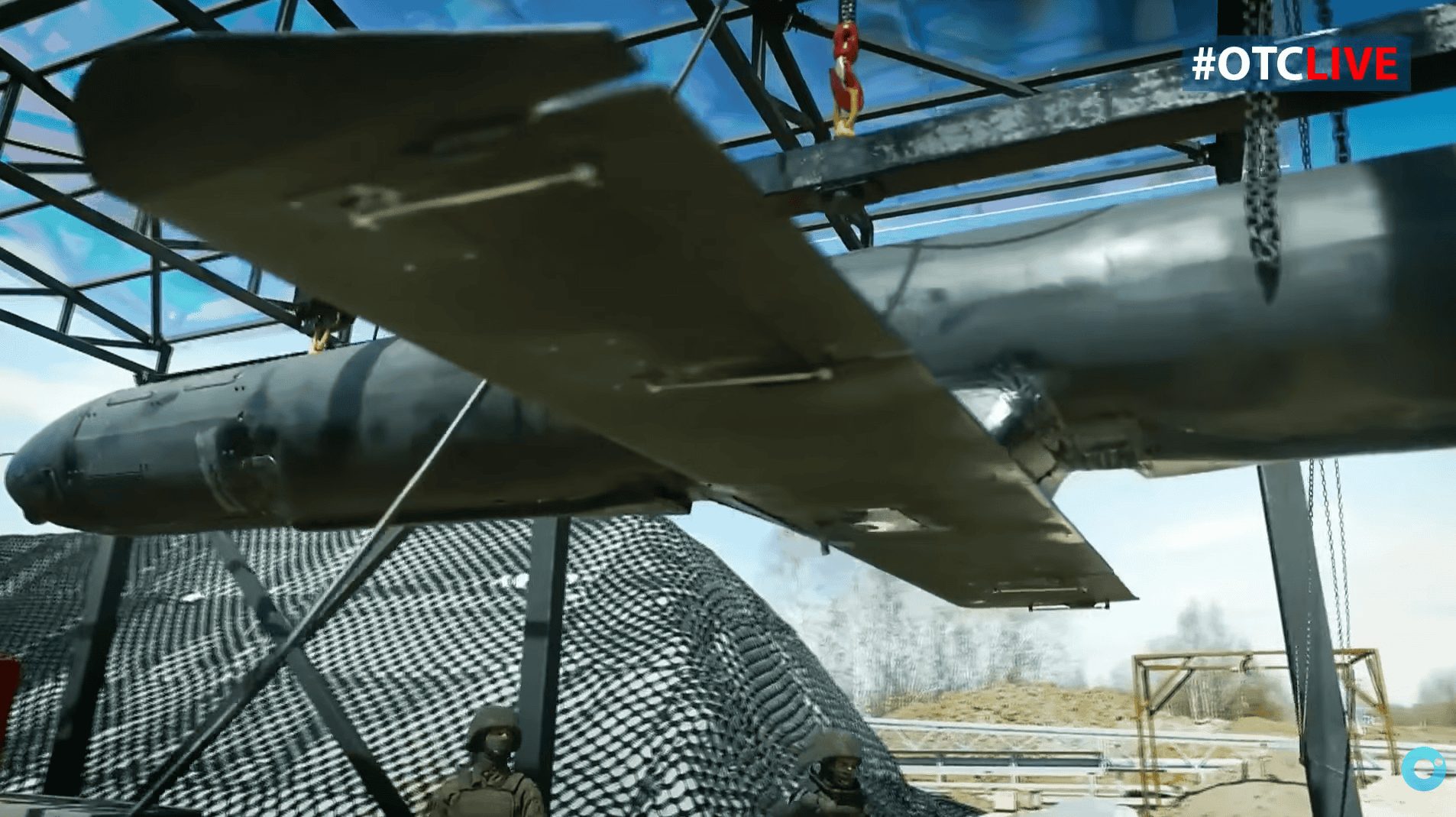 The underside of the wing at a launch site, with two pushrods running out to the control surface
Photos: HUR War & Sanctions · HUR (Defence Intelligence of Ukraine) · Russian TV (OTS LIVE), 9 May 2026, via Militarnyi
Modem Mesh Network XK-F358
Модем Mesh Network XK-F358
Part page: Xingkai XK-F358 mesh radio →
₽450,000 $5,700 $5,700 imported: market price applies CN¥19.5 million for 500 units, invoice or document, 2026 · The Insider (with Nordsint) ↗ · 3 more prices on the part page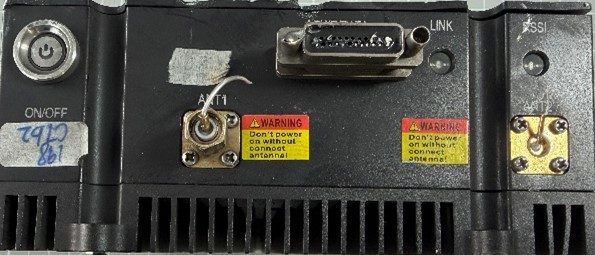 Front panel: antenna connectors, LINK and RSSI lights, data connector, handwritten marking
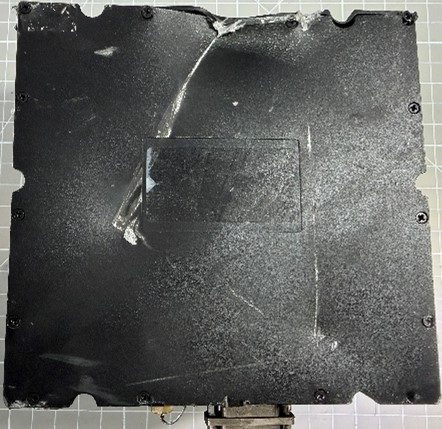 Cracked cover plate of the modem
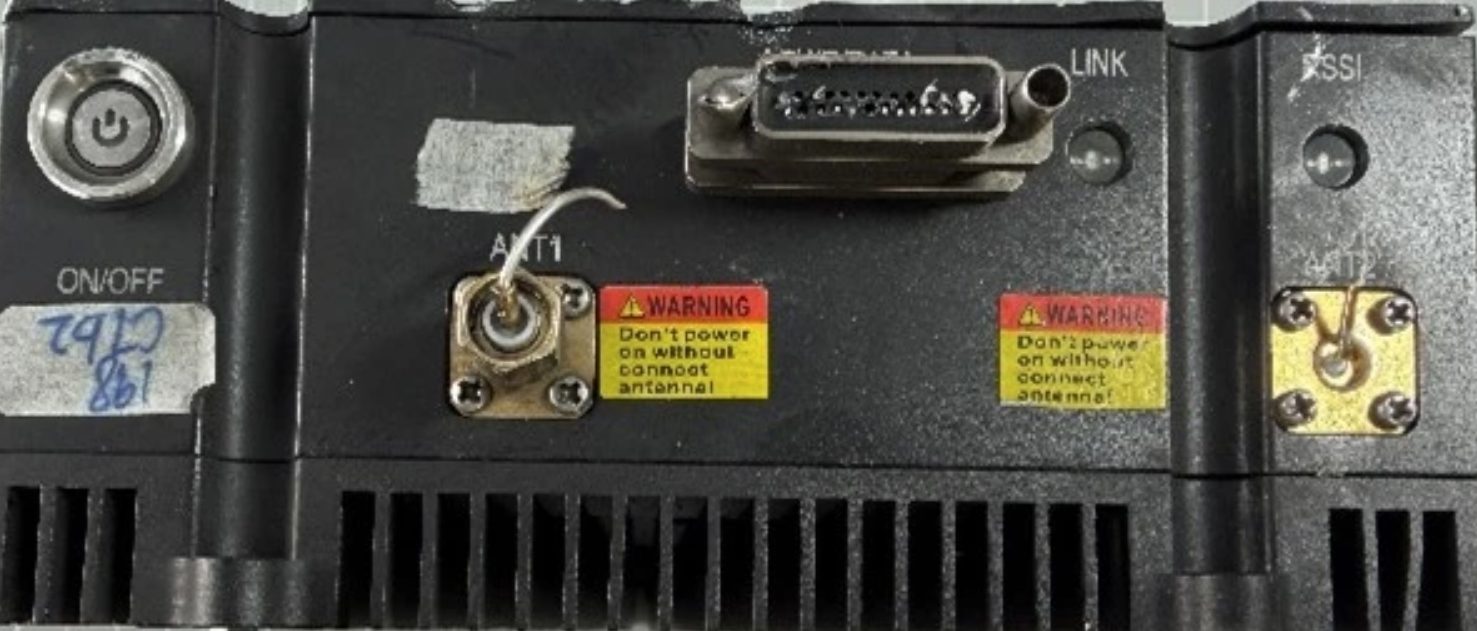 The XK-F358 from the Geran-5, front panel: power button, two SMA antenna sockets, the PWR/DATA connector and LINK and RSSI lights
Photos: HUR War & Sanctions · HUR via Militarnyi
From other sources
Airframe
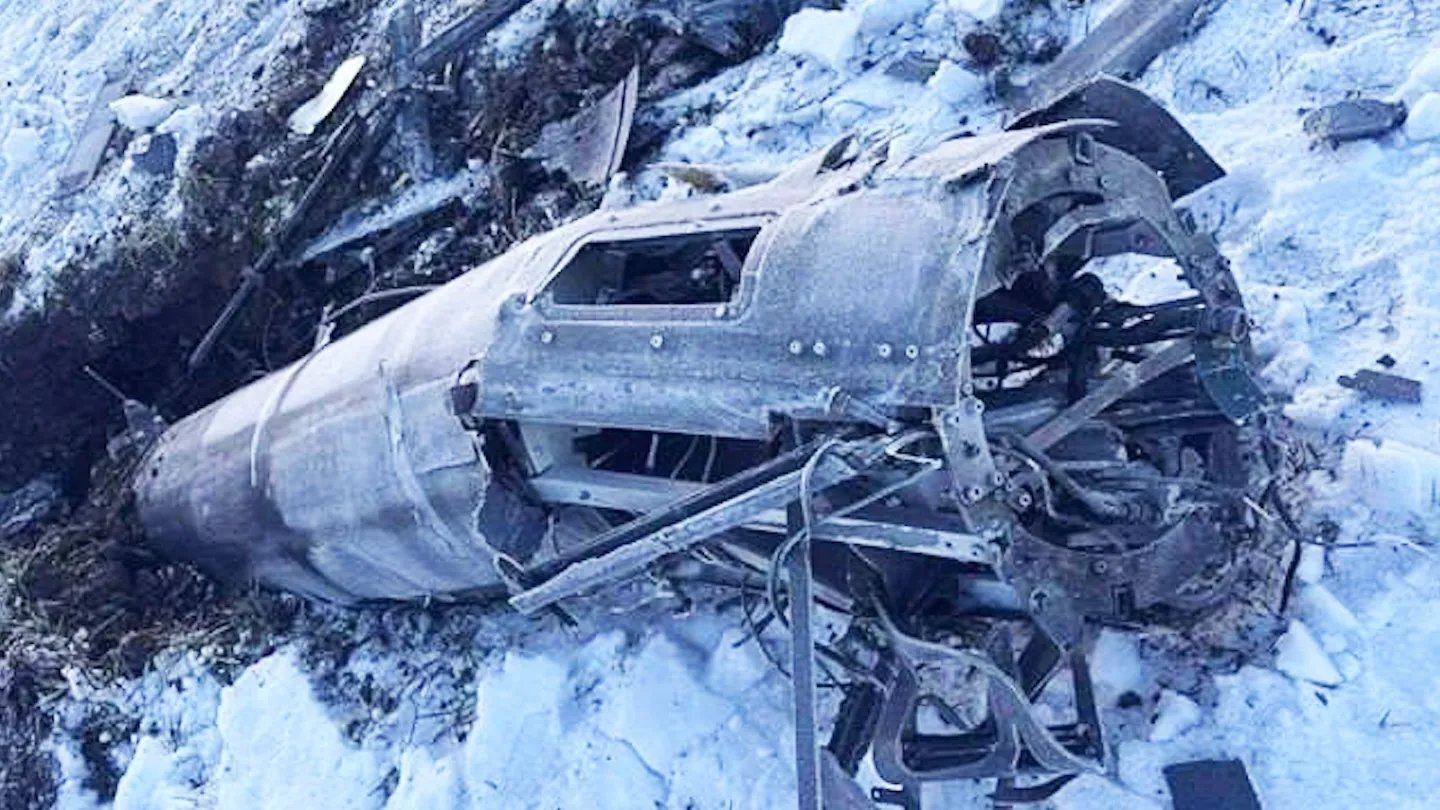 The tubular fuselage in the snow, with an access hatch and the internal frame exposed at the broken end
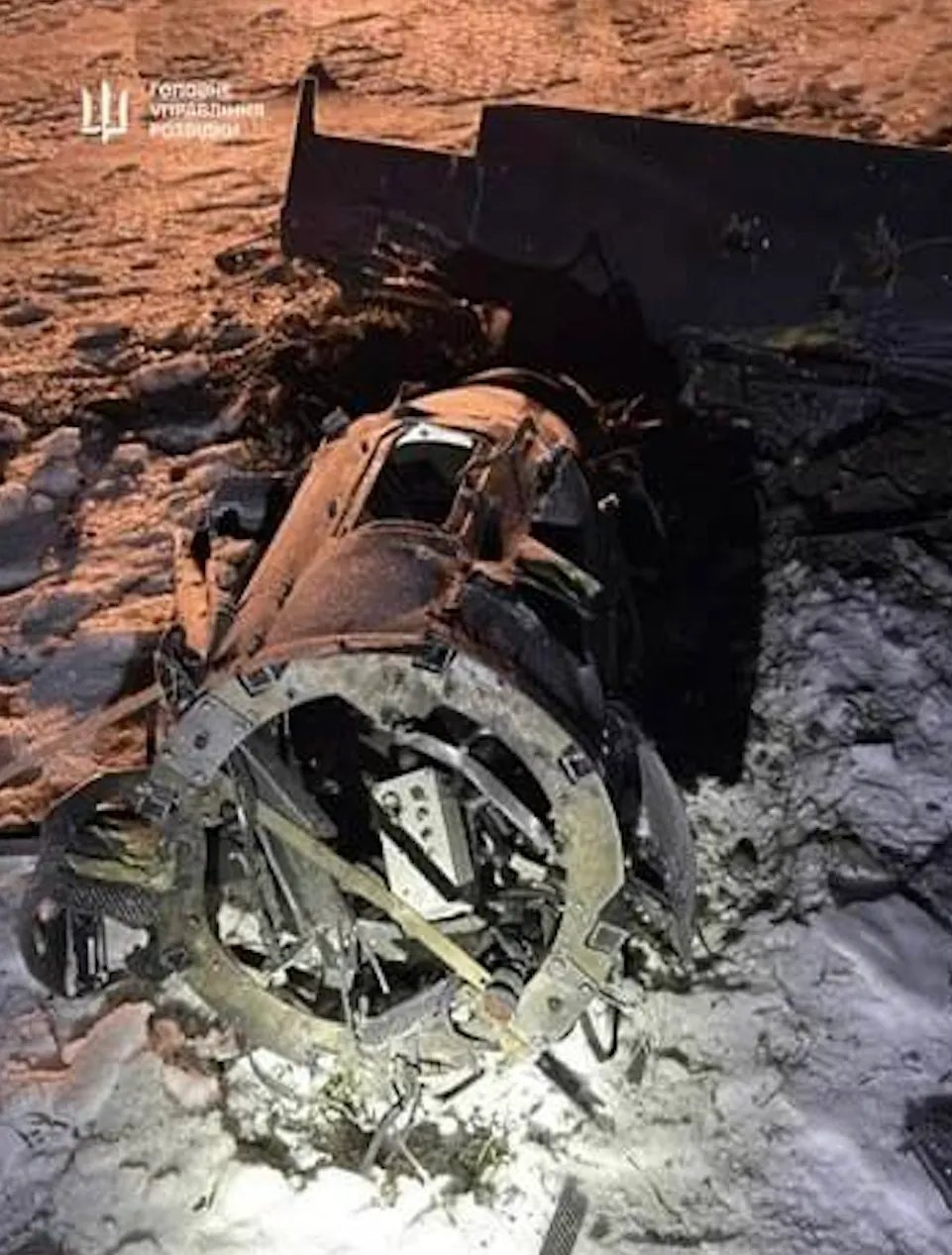 A fuselage section at night, its ring frame and internal struts torn open
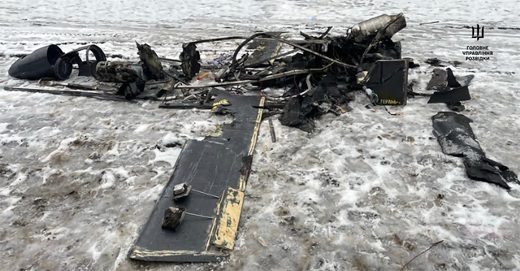 Wing and tail sections laid out on snow
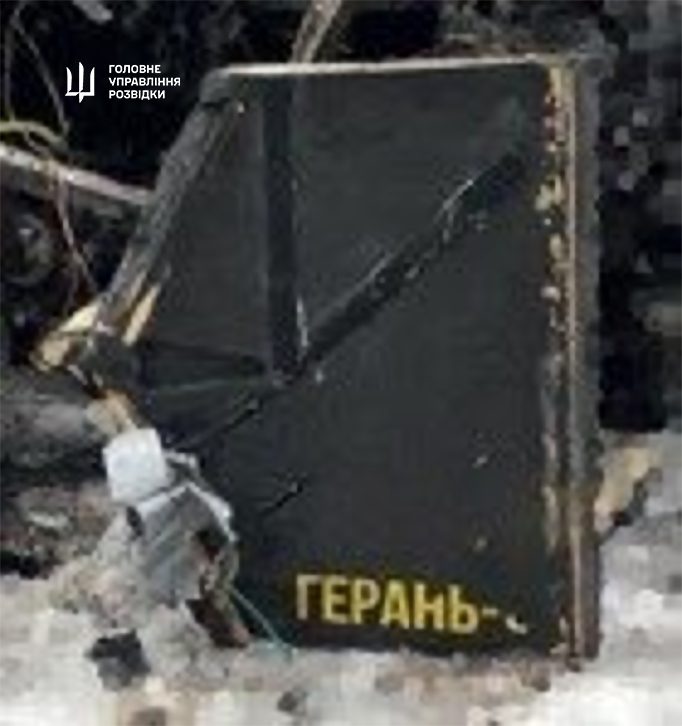 Tail fin of the first recovered example, stencilled "ГЕРАНЬ-"
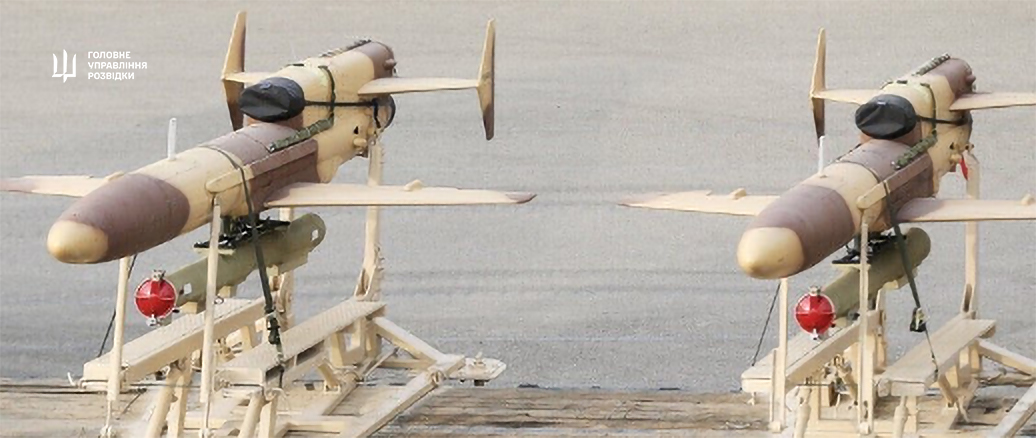 For comparison, from HUR's release: two Iranian Karrar drones on their launch trolleys
Photo: HUR (Defence Intelligence of Ukraine)
Engine installation (external pod, later internal)
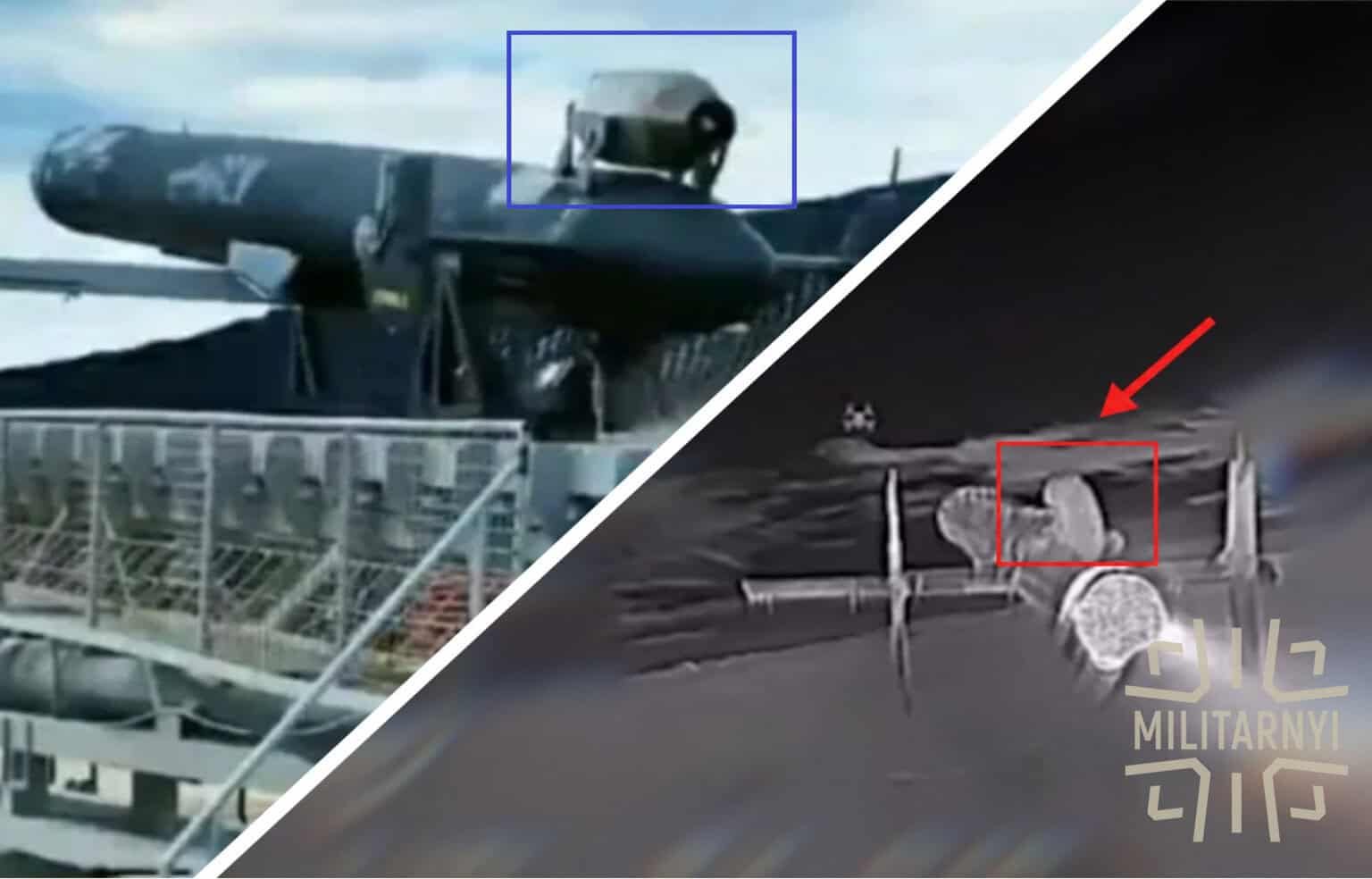 The first layout with the engine pod on top (left) and the later airframe with the engine inside (right)
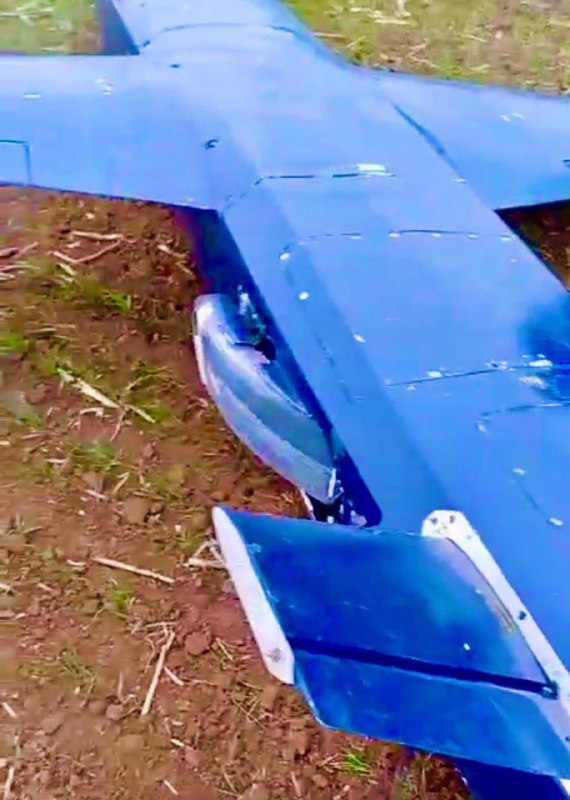 Published with the report of the "Geran-5 K5-K", 22 October 2026, a blue-painted airframe on the ground with a scoop-shaped air intake on the fuselage
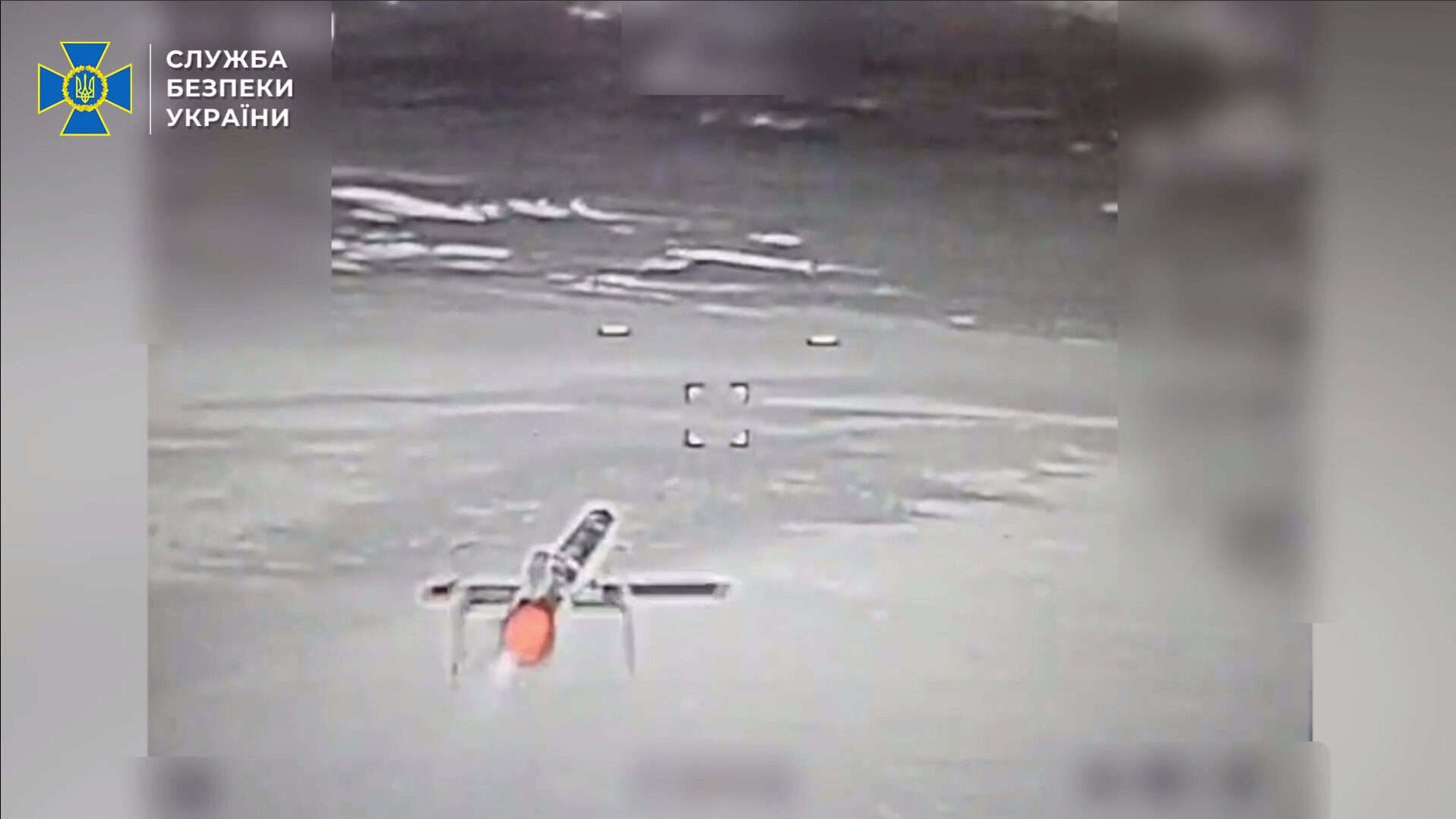 The internal-engine airframe in the sights of an SBU interceptor, 19 September 2026
Photos: Militarnyi · Serhii "Flash" Beskrestnov (t.me/serhii_flash) · Security Service of Ukraine (SBU) via Militarnyi
Flight controller "Susanin" (K5 version)
Польотний контролер «Сусанін»
Блок FCU Г5 K5-K Сусанин
Telegram channel:Serhii "Flash" Beskrestnov record ↗
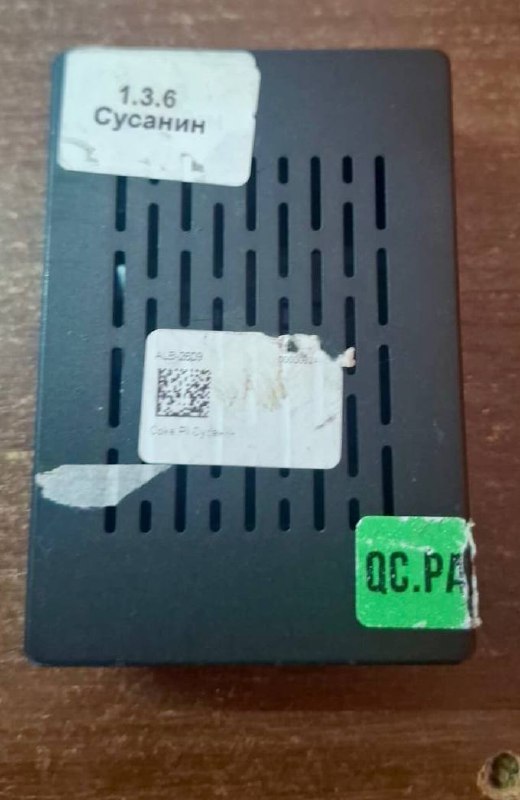 A vented case labelled "1.3.6 Сусанин", published with the 10 October report
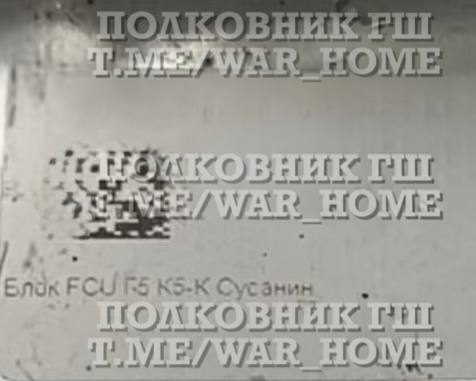 Label on a recovered unit, "Блок FCU Г5 K5-K Сусанин"
Photos: Serhii "Flash" Beskrestnov (t.me/serhii_flash) · Colonel GSh (t.me/war_home)
Optical correlation module (K5 version)
Модуль ОЕКС (DSMAC)
Telegram channel:Colonel GSh record ↗
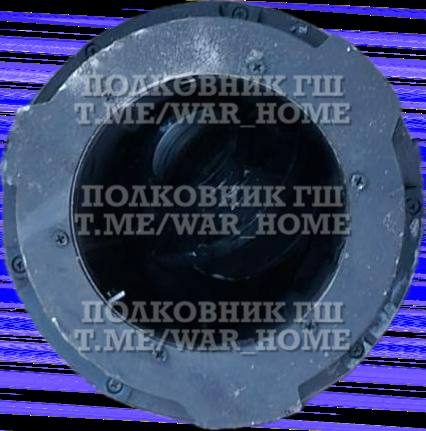
Photo: Colonel GSh (t.me/war_home)
Onboard camera for strike video recording
Telegram channel:Victory Drones record ↗
Open questions
What has not been published about the Geran-5, and where the available evidence points: measurements from published photos, the physics, the parts its relatives carry, and the trade in the parts themselves. An indication is not a confirmation. Each one shows how it was reached; last reviewed 2026-10-23.
What gets the Geran-5 off its rail — a booster on the drone, or a powered launch carriage?
Moderate indicationStrongest indication A powered carriage (catapult) accelerates the drone along the rail and drops away after release.
Indication, not confirmed.
HUR lists a “launch engine” for the Geran-5 without a type, maker or photo. The Russian Defence Ministry’s footage of 9 May 2026 points the other way from the obvious answer: the drone rides a carriage down a rail of about 80 m, and Russian reports of the footage say the “acceleration trolley” falls away after take-off. No rocket plume is visible at the start. The rail length fits that reading: a booster on the drone keeps pushing after it leaves the rail, which is why a Shahed needs only a few metres, while a carriage has to bring the drone to flying speed before the rail ends. HUR’s own 3D model, however, shows a cylinder slung under the rear fuselage, and HUR uses “launch engine” (стартовий двигун) for rocket boosters elsewhere, so a booster for other launch sites, or a gas generator that drives the catapult, remains possible.Parts that would fit
- Pneumatic or gas-pressure rail catapultFits the separating carriage, the hold-back chain, the tube under the rail and the absence of a plume. No maker identified.
- Rocket-propelled launch sledWould also drop away at the rail end; the footage shows no exhaust from the carriage, which argues against it.
The evidence and the working (9)
Leading A powered carriage (catapult) accelerates the drone along the rail and drops away after release.
“На кадрах дрон, напоминающий крылатую ракету, стартует с длинной направляющей, после чего от него отделяется разгонная тележка.”
In the footage the drone, resembling a cruise missile, starts from a long guide rail, after which the acceleration trolley separates from it.
A Russian outlet describing the Defence Ministry's own footage.
“Росія вперше показала ударний реактивний безпілотник «Герань-5» та його пуск із катапульти.”
Russia has shown the Geran-5 jet strike drone, and its launch from a catapult, for the first time.
“the launch system for this type of drone is about 80 meters long”
The channel says the 80 m launchers serve the jet Geran-3/4 and Geran-5 and are about three times the size of the launchers for ordinary drones.
- Frame-by-frame reading of the 9 May clip (OTS LIVE, 60 frames a second). Before launch the drone sits on a black V-legged carriage on a grey sled, held by a strut and chain under the rear fuselage (a hold-back, typical of catapults); no cylinder hangs under the fuselage. At release there is no flame or smoke column, only sparks along the rail top as the carriage runs. From standstill the drone covers about 4 m in about 0.35 s (scale: the 6.5 m fuselage spans about 340 pixels): a = 2s/t² = 2 × 4 / 0.35² ≈ 65 m/s², about 6.7 g. At the far end the carriage is still under the drone as it leaves the rail and tumbles away 0.2–0.4 s later. A long flanged tube runs under the whole rail, which would fit a pneumatic or gas-driven catapult; it could also be part of the structure.
- Exit speed needed. Wing area: 3.2 m span × an estimated 0.45–0.6 m chord ≈ 1.4–1.9 m². Stall speed Vs = √(2mg / ρ·S·CL); with m = 850 kg, ρ = 1.225 kg/m³, S = 1.6 m² and CL = 1.3, Vs = √(2 × 850 × 9.81 / (1.225 × 1.6 × 1.3)) ≈ 81 m/s; over the full range of S and CL (1.2–1.4) 72–90 m/s. Over an 80 m rail (v² = 2as) that takes 31–51 m/s² (3–5 g) for 1.8–2.3 s: a push of 26–43 kN on 850 kg and 59–77 kN·s of impulse. The turbojet gives 1.96 kN, about 4–6% of it. The measured 4–7 g at the start is of the same order. A carriage has to do all of this before the rail ends; an on-board booster would not need a rail this long.
Would fit: Pneumatic or gas-pressure rail catapult; Rocket-propelled launch sled
Possible A jettisonable solid rocket booster under the rear fuselage, as on the Shahed-136 and Karrar.
“Стартовий двигун”
Launch engine
HUR lists it as a separate module of the Geran-5, with no type, maker or photo. On its Kalibr, Zircon and Iskander records the same term names a rocket booster.
“Den Experten zufolge kann Geran-5 mit einem Feststoffraketenbooster vom Boden aus gestartet werden”
According to the experts, the Geran-5 can be launched from the ground with a solid-fuel rocket booster.
Israeli analysts, writing before any launch footage existed.
- HUR’s 3D model of the Geran-5 (published January 2026) draws a second cylinder on struts under the rear fuselage, below the turbojet pod, where a Shahed carries its booster.
- The drone on the 9 May launcher has no cylinder under its rear fuselage, and the start shows no rocket plume. A booster large enough would be heavy: 59–77 kN·s at a specific impulse of 200–230 s takes 59,000 / (220 × 9.81) to 77,000 / (220 × 9.81) ≈ 27–36 kg of propellant, a motor of roughly 50–70 kg delivering 30–50 kN for about 2 s.
Would fit: Solid rocket booster of the Shahed-136 / Geran-2 type
What would settle it A photo or description of HUR's part 5149, a recovered launch carriage, satellite or ground imagery of the rail end (an arrester, or spent carriages downrange), or wreckage showing booster mounting lugs under the rear fuselage.
Does the Geran-5 carry a camera that films its strikes, and is it wired to the mesh radio?
Moderate indicationStrongest indication The Geran-5 itself carries no strike camera; strike video comes from a second drone flying as a relay.
Indication, not confirmed.
No camera that films the strike has been documented on the Geran-5. HUR’s component list for the first recovered example has none, and in the one strike whose video has been explained — Kyiv’s Inkom business centre on 27 September — Serhii Beskrestnov says the footage came from a second jet drone circling at about 3 km as a mesh relay. The K5 and K5-K versions do carry an optical sensor, but HUR describes it as part of a navigation system that matches the ground below against stored pictures. Nothing published connects that camera to the XK-F358 radio. The radio could carry it: the Gerbera’s XK-F358 has an Ethernet controller and transformer inside, and the Geran-2 version that carries an XK-F358 also carries an IP network camera.The evidence and the working (10)
Leading The Geran-5 itself carries no strike camera; strike video comes from a second drone flying as a relay.
“Він виконував функцію МЕШ ретранслятора радіосигналів для «Герань-5» і водночас знімав (та одразу передавав) відео атаки”
It worked as a mesh relay of radio signals for the Geran-5 and at the same time filmed (and immediately transmitted) video of the attack.
Beskrestnov, an adviser on radio technology to Ukraine's defence minister, on the second jet drone over the Inkom strike.
Telegram channel:Serhii "Flash" Beskrestnov ↗
- HUR’s Geran-5 record of 19 January 2026 lists 16 modules and components; none is a camera, a lens or a video board. HUR does list a camera when it finds one: the Honpho TS130C-01 in the August 2026 Geran-4, an IP camera in the Geran-2 with R-60 missiles, a gimbal camera in the Gerbera.
“Дополнительно они осуществляют видеофиксацию поражения объектов, что позволяет проводить объективную оценку результатов удара в реальном времени”
In addition they film the hits, which allows an objective assessment of the strike results in real time.
A Russian claim; it does not say which drone holds the camera, so it fits the two-drone account as well.
Telegram channel:Victory Drones, relaying a Russian claim ↗
Possible The K5 and K5-K carry a camera, but as the eye of the Susanin navigation system, not for strike video.
“Аналогічна система також використовується на нових БпЛА “Герань-5” версії К5.”
A similar system is also used on the new Geran-5 drones of the K5 version.
Said of the optical-electronic correlation system HUR found in the updated Geran-4, which compares images from an optical sensor with reference images.
Telegram channel:Defence Intelligence of Ukraine (HUR) ↗
“Особливістю ракети є система оптичної навігації, збільшена дальність, швидкість і висота польоту.”
The missile's distinguishing features are an optical navigation system and greater range, speed and altitude.
On the "Geran-5 K5-K".
Telegram channel:Serhii "Flash" Beskrestnov ↗
Unlikely A camera on the Geran-5 streams video over the XK-F358 mesh radio through its Ethernet port.
“RTL8201F”
A Realtek 10/100 Ethernet controller on board 2 of the XK-F358 found in a Gerbera, with a Pulse H0013NL Ethernet transformer on board 1 (HUR component 5415). The radio has a real Ethernet port.
“Probably Hikvision DS-2CD1343G2-LIUF”
The camera of the Geran-2 version that carries an R-60 missile, which also carries an XK-F358 (HUR part 5066). The Hikvision model is a network camera with an Ethernet (PoE) connection — the pattern a camera-over-mesh build would use.
“支持数据传输:高清视频、文件传输、IP数据传输等;”
Supports data transmission: HD video, file transfer, IP data transmission, etc.
The same page lists one Ethernet port (ETH*1) among the data interfaces.
- The front panel of the Geran-5 unit has no RJ45 socket: its only data connector is a two-row J30J-25-type “PWR/DATA” plug (about 25 contacts at 1.27 mm pitch, measured against the 12.7 mm SMA flanges; the maker marks the same connector “J30J-25ZKP” in its own photos). Ethernet, power and serial lines would all run through that one plug and a breakout harness, so any IP camera would sit on the harness, out of sight in a photo of the radio alone.
- In HUR’s October 2026 list for the updated Geran-4 — the airframe whose Susanin system HUR says the K5 shares — the interfaces around the flight controller are serial and CAN (a CH343G USB-to-serial bridge, VP230 and MCP2542 CAN transceivers, a MAX3232 RS-232 driver), and there is no Ethernet controller, transformer or camera row. A navigation camera there most likely reports position corrections over serial or CAN, not video over Ethernet. HUR adds that the other units are unchanged from earlier Gerans, so this is not conclusive.
Would fit: Hikvision DS-2CD1343G2-LIUF; Honpho TS130C-01
What would settle it A HUR component list for the Geran-5 K5 or K5-K, a photo of the optical module's cable and connector (an RJ45 or M12 Ethernet plug against a serial or CAN connector), or an underside photo of a K5-K airframe showing any camera window.
Which frequency band do the XK-F358 mesh radios recovered from Geran-5s use?
Moderate indicationStrongest indication The maker’s default band, 1,300–1,500 MHz.
Indication, not confirmed.
No band has been published for a radio recovered from a Geran-5, and the unit HUR photographed carries no band label. Several things point to the maker’s default of 1,300–1,500 MHz. Xingkai sells the radio for that band, made to order anywhere from 70 MHz to 6 GHz. Serhii Beskrestnov has tied 1,300–1,500 MHz to “one Chinese modem” since 2025, and says the mesh radios on the Molniya, Shahed and Gerbera share one band and one Chinese maker. The other main band he reports, 3,200–3,400 MHz, he attributes to a modem from another maker. The antennas themselves would settle it — a quarter-wave whip at 1,400 MHz is about 54 mm long, at 3,300 MHz about 23 mm — but none has been photographed with a Geran-5.Parts that would fit
- Xingkai band options (L 1,000–1,200 / 1,300–1,500 MHz; S 1.6–1.8 GHz and others) Shenzhen Xingkai TechnologyThe maker lists UHF, L, S and C-band versions of the same radio; nothing in its photos shows the housing or label changing with the band.If: A band ordered to measure, such as 3,200–3,400 or 1,600–1,800 MHz.
The evidence and the working (6)
Leading The maker’s default band, 1,300–1,500 MHz.
“1300-1500MHz(70MHz~6GHz可定制)”
1,300–1,500 MHz (70 MHz to 6 GHz to order)
The working frequency the maker lists; the same figure is on its XK-F358 page.
“Противник не обмежився одним китайським модемом діапазону 1300-1500МГц, а почав застосовувати радіомодеми інших діапазонів.”
The enemy has not stopped at one Chinese modem in the 1,300–1,500 MHz band, and has begun using radio modems in other bands.
Telegram channel:Serhii "Flash" Beskrestnov ↗
“В цілому я б сказав, як 40% 1300-1500 і 60% 3200-3400.”
Overall I would say 40% at 1,300–1,500 and 60% at 3,200–3,400.
The two main bands he sees on Russian drone mesh radios, without naming the drone type.
Telegram channel:Serhii "Flash" Beskrestnov ↗
- Pairing the reports: Beskrestnov ties 1,300–1,500 MHz to “one Chinese modem” and 3,200–3,400 MHz to “a modem from another maker” (post 6618); The Insider describes the market as split between Xingkai and Xi’an Sihou. HUR names Xingkai’s XK-F358 in the Geran-5, and Xingkai’s default is 1,300–1,500 MHz. So a Xingkai radio most likely works there, unless it was ordered for another band — which the maker offers and which no source reports for Alabuga’s order.
Possible A band ordered to measure, such as 3,200–3,400 or 1,600–1,800 MHz.
“Діапазон 1600-1800 МГц, але його можуть змінити на будь-який інший”
Band 1,600–1,800 MHz, but they can change it to any other.
On a modem from the same maker found in the V2U, not the Geran-5.
Telegram channel:Serhii "Flash" Beskrestnov ↗
- Antenna lengths would separate the bands: λ = 300 / f (MHz) metres, so a quarter-wave radiator is 53.6 mm at 1,400 MHz, 22.7 mm at 3,300 MHz and 44 mm at 1,700 MHz. No antenna appears in any HUR Geran-5 photo; the whip in Beskrestnov’s Gerbera photo is at least about 90 mm visible (scaled from the 131 mm wide box) with part hidden, which rules nothing out.
Would fit: Xingkai band options (L 1,000–1,200 / 1,300–1,500 MHz; S 1.6–1.8 GHz and others)
What would settle it A label or board marking from a recovered unit's frequency module, a photo of its antenna with a scale, or a radio intercept tied to a recovered Geran-5.
Which model are the recovered radios — the XK-F358 that HUR names, the XK-F359, or the "HX-50"?
Moderate indicationStrongest indication The maker’s XK-F359, the box Xingkai’s director identified and the model on Alabuga’s invoice.
Indication, not confirmed.
The Geran-5 radio HUR photographed has no model label: its cover has an empty recess where the maker’s units carry one. Its front panel matches, measurement for measurement, the unmarked radio from a Gerbera that The Insider examined and that Xingkai’s director identified as the XK-F359. Its width and height fit the maker’s Chinese dimensions for the XK-F359, not the XK-F358. The invoice for Alabuga’s order, as The Insider published it, also names the XK-F359. The “HX-50” label has been reported on other wreckage, never on a Geran-5 unit.Parts that would fit
- XK-F359 airborne mesh radio Shenzhen Xingkai Technology134 × 129 × 58 mm, 1,300–1,500 MHz by default, one Ethernet port, two serial ports and an XT60 power socket (maker’s Chinese page). Note that the name covered a 2×10 W model until March 2026 and a 2×20 W one after; power cannot be read from a photo.
The evidence and the working (7)
Leading The maker’s XK-F359, the box Xingkai’s director identified and the model on Alabuga’s invoice.
“An unmarked mesh modem made by Xingkai Technology, which The Insider documented in Ukraine and identified as the XK F-359.”
“Jiang explained that other versions of the F-359 had different casings but retained the same internal layout.”
Jiang is Xingkai's director, answering a buyer The Insider posed as.
- Front panels compared. Scale on HUR’s photo of the Geran-5 unit (Militarnyi’s full-size copy, 1,477 px wide): the antenna connectors’ square flanges are 145–146 px, and a standard SMA 4-hole flange is 12.7 mm, so 11.5 px/mm (cross-checked on the data connector’s 1.27 mm contact pitch: 12.4 px/mm). Scale on The Insider’s photo: flange 92 px, so 7.24 px/mm. Antenna centre to antenna centre: 823 / 11.5 = 71.6 mm against 520 / 7.24 = 71.8 mm; power button to the first antenna: 35.8 mm against 35.6 mm; face height: 38.7 mm against 40.7 mm. The order of the parts — ON/OFF, ANT1 with a warning sticker, a PWR/DATA connector, LINK, RSSI, ANT2 with a second sticker — is the same.
- Size. The Insider’s identical unit is 948 / 7.24 ≈ 131 mm wide; on HUR’s photo the face is about 39 mm tall with at least 15 mm of cooling fins below it (cut off by the frame), so at least about 50–54 mm in all. The maker’s Chinese pages give 134 × 129 × 58 mm for the XK-F359 and 134 × 119 × 41 mm for the XK-F358: the measured height rules out the thinner XK-F358 box. The 12.7 × 11 × 3.3 cm on the maker’s English pages fits neither.
Would fit: XK-F359 airborne mesh radio
Possible The XK-F358, as HUR’s record names it.
“Modem Mesh Network XK-F358”
HUR's name for the part; no "XK-F358" marking is visible in its photos.
“Some sources, including the Ukrainian military intelligence agency's War and Sanctions portal, had previously misidentified”
The Insider's sentence continues that HUR had taken the device for the similar XK-F358.
Unlikely Units carry an “HX-50” label.
“an identical modem, sometimes found among drone wreckage bearing the HX-50 label”
Reported for wreckage in general; no HX-50 sticker is visible on HUR's Geran-5 unit, The Insider's unit or Beskrestnov's Gerbera unit.
What would settle it A photo of the label on the base or back of a recovered unit, a serial number checked against the maker's records, or HUR revising its entry.
What do the K5 and K5-K add inside the Geran-5 — which computer and which camera does the Susanin system use?
Weak indicationStrongest indication A Raspberry Pi 4-class single-board computer in a commercial case, fed by a separate fixed camera behind a flat window.
Indication, not confirmed.
HUR’s only Susanin record, from the updated Geran-4, lists the “optical-electronic correlation system” with no maker and no components. The photographs that exist suggest two boxes: a round optical module behind a flat window, and a separate computer. The optical module photographed by the Ukrainian channel Colonel GSh on a K5 has the same flange, screw ring and bore proportions as the one in HUR’s Geran-4 photographs, which fits HUR’s statement that the K5 uses a similar system. The computer case Beskrestnov photographed, labelled “1.3.6 Сусанин”, has the proportions and vent pattern of an off-the-shelf case for a Raspberry Pi 4 board — a computer Alabuga already buys for the Borscht tracker. The camera’s model and its connection to the computer have not been published.Parts that would fit
- Raspberry Pi 4 Model B Raspberry Pi Ltd85 × 56 mm, camera (CSI-2), USB 3 and gigabit Ethernet ports; matches the case proportions, and HUR has found it in the Borscht tracker of several Gerans.
- Raspberry Pi Compute Module 4 Raspberry Pi Ltd55 × 40 mm on a carrier board; possible if the label’s first word is “Core”; weaker fit.
- Raspberry Pi High Quality Camera (Sony IMX477) Raspberry Pi LtdA real C/CS-mount lens on a Pi; fits a large fixed lens behind a window, but nothing ties it to Susanin beyond the computer.
The evidence and the working (5)
Leading A Raspberry Pi 4-class single-board computer in a commercial case, fed by a separate fixed camera behind a flat window.
“Нещодавно на ударних БПЛА «Герань-4» і «Герань-5» було виявлено аналогічну систему на основі польотного контролера «Сусанін».”
Recently a similar system based on the "Susanin" flight controller was found on Geran-4 and Geran-5 strike drones.
Telegram channel:Serhii "Flash" Beskrestnov ↗
- Measured on the photo Beskrestnov published with that post (520 × 800 pixels): the case’s edges sit at about x = 50 and x = 475 and y = 45 and y = 665, so it is about 425 × 620 pixels, an aspect of 620 / 425 ≈ 1.46 (1.37–1.55 allowing for the slight keystone). A Raspberry Pi 4 board is 85 × 56 mm (aspect 1.52); with 3 mm walls a case is about 91 × 62 mm (1.47). A Jetson Orin Nano developer kit (100 × 79 mm, 1.27) and its fan heatsink would not fit a case of this shape. The case is black aluminium with eight columns of vent slots, the pattern of generic Pi 4 cases. A second label carries a data-matrix code and small print that appears to read “… Pi Сусанин”; it is only partly legible.
Telegram channel:source ↗
- Comparing the round housing photographed by Colonel GSh on a K5 (t.me/war_home/7689) with HUR’s three photos of the Susanin unit from the updated Geran-4 (part 5633): both have a flange with a ring of about eight screws and one flat side, and the central bore is 0.65 of the outer diameter in both (about 255 / 395 pixels and 295 / 455 pixels). The front is a flat window, not a turret or gimbal. That is the same unit design on both drones.
“At night, the system performs noticeably worse if there is no additional lighting or specialized image processing.”
A visible-light camera, without a thermal channel, would behave this way.
Would fit: Raspberry Pi 4 Model B; Raspberry Pi Compute Module 4; Raspberry Pi High Quality Camera (Sony IMX477)
Unlikely An NVIDIA Jetson module does the image matching.
- The only Jetson HUR has documented in the family is a “transition board for Nvidia Jetson” in the Shahed-136 MS001. The Susanin case is too small and flat for a Jetson module with its heatsink and fan (see the case measurement above).
What would settle it HUR filling in the component rows of its Susanin record (part 5633) or publishing a K5 list, a photo of the opened "1.3.6 Сусанин" case showing the board's silkscreen, or a lens or camera marking from the optical module.
What is the Geran-5's true wingspan — HUR's 3.2 m, or the "up to 5.5 m" of other reporting?
Weak indicationStrongest indication About 3 m, as HUR’s record says.
Indication, not confirmed.
HUR’s record gives 6.5 m long and 3.2 m across the wing; Militarnyi and others give about 6 m and 5.5 m. A photograph of a Geran-5 over Kyiv, taken from below, shows the wing at a little under half the fuselage’s length. Because the view is oblique the ratio is not exact, but 5.5 m would need the camera to see the drone very obliquely in one particular direction. The 80 m launch rail points the same way: a short wing on an 850 kg drone needs a high launch speed.The evidence and the working (4)
Leading About 3 m, as HUR’s record says.
“3,2 m”
The figure in the Wingspan field of HUR's specifications, beside a length of 6,5 m.
- Measured on the in-flight photo of a Geran-5 over Kyiv (969 × 843 pixels, seen from below). Dark pixels projected on the fuselage axis span about 987 pixels; on the wing axis about 461 pixels. Apparent ratio 461 / 987 ≈ 0.47, so 0.47 × 6.5 m ≈ 3.0 m (2.8 m on a 6 m fuselage). The two axes meet at about 72° in the picture instead of 90°, so the drone is seen obliquely. Solving for the tilt that makes them square again: the least oblique solution (tilted about 43° from face-on) gives a true ratio of 0.46, about 3.0 m; at 45° the ratio is 0.39–0.55 (2.6–3.6 m). A 5.5 m wing on a 6–6.5 m fuselage (ratio 0.85–0.92) needs a tilt of about 59–61° and a particular orientation.
- With a 3.2 m wing (about 1.6 m²) an 850 kg drone stalls at about 72–90 m/s; with 5.5 m (about 2.75 m²) at about 60–64 m/s. The first needs a long, powerful launcher — 80 m for 31–51 m/s² — which is what was built (see the launch question). A 5.5 m wing would manage with a shorter rail.
Unlikely About 5.5 m.
“Довжина апарата становить близько 6 метрів, а розмах крил досягає 5,5 метра.”
The drone is about 6 metres long and its wingspan reaches 5.5 metres.
What would settle it A measured photograph from directly below or above, or a span figure in a later HUR record or a teardown.
Also not yet established
- Has the localised Russian turbojet that HUR reports in the newest Geran-4 reached the Geran-5? — A Geran-5 wreckage photo or HUR record showing an engine other than the Telefly TF-TJ2000A, or a marking from an Alabuga-made engine.
- What explosive fills the Geran-5's 90 kg warhead? — A HUR or forensic record of the filling, or Alabuga documents specific to the Geran-5's BCh-90.
- On-board power supply based on Li-ion 18650 batteries of the Geran-5: what type is it, and who makes it? — A photo or teardown record of the on-board power supply based on Li-ion 18650 batteries showing a marking, a maker's label or a model name.
- 3G/LTE antennas of the Geran-5: what type is it, and who makes it? — A photo or teardown record of the 3G/LTE antennas showing a marking, a maker's label or a model name.
- Servo drive of the Geran-5: what type is it, and who makes it? — A photo or teardown record of the servo drive showing a marking, a maker's label or a model name.
What it runs
Firmware, navigation and link software reported for the Geran-5 and the modules it carries, each with its source.
Flight-control firmware (proprietary, not identified)
No firmware dump, version string or open-source autopilot has been published for the Geran-5. HUR's flight controller, marked 'Г5', is built on a Texas Instruments TMS320F28335, a C2000 real-time controller, with a CAN-bus transceiver that links it to the other units and a WCH CH343G USB-to-serial bridge; the power unit has a second TMS320F28335. The same processor runs the flight controllers HUR has recorded in the Geran-2 and Geran-4.
Susanin (Сусанин) optical correlation navigation (K5)
Terrain matching: images from an optical sensor are compared with reference images loaded into memory before launch to keep the drone on its route (HUR, describing the October 2026 Geran-4; HUR said a similar system is used on the Geran-5 K5). Serhii Beskrestnov says ordinary satellite pictures, even Google's, are enough for basic orientation and that a drone flying by terrain images is not affected by jamming. UNN reports that it works better by day than at night. Its code has not been published.
Susanin flight-controller unit (K5)
Beskrestnov describes the system as "based on the Susanin flight controller", found on the Geran-4 and Geran-5 (10 October 2026). A label on a recovered K5 unit, photographed by Colonel GSh, reads 'Блок FCU Г5 K5-K Сусанин'; a case published by Beskrestnov carries a sticker reading '1.3.6 Сусанин'. What the number denotes is not stated.
Telegram channel:source ↗
Borscht Tracker V3 (Raspberry Pi)
HUR's photo shows a Raspberry Pi board, two USB 3G/LTE modems with SIM slots and a hand-wired interface board, fed by 3G/LTE antennas laminated into the skin; it reports the drone's position over mobile networks. Radio Svoboda's Schemes found SIM cards from Ukrainian, Russian, Kazakh, Belarusian and EU carriers in recovered Geran trackers. The operating system and the code on the Raspberry Pi have not been published.
Strike-video relay over Telegram bots (family, not shown on the Geran-5)
HUR said in February 2025 that some Shaheds film the moment of impact with a webcam, a Raspberry Pi and 3G/LTE modems and send the footage through disposable Telegram bots. No camera is in HUR's Geran-5 list; a Russian claim that the Geran-5 films its own strikes is unconfirmed.
Mesh radio firmware (Xingkai XK-F358)
Vendor firmware of a Chinese MANET mesh radio. The maker's pages describe an Analog Devices AD936x transceiver with an FPGA, set up through a web interface (also API and SNMP), with DES or AES-128/256 encryption (SM4 on the Chinese page), spectrum scanning with adaptive frequency hopping, an optional remote silence and wake-up, up to 256 nodes and 63 hops at no more than 7 ms a hop, and 1,300-1,500 MHz as its default band. The company's director told The Insider the FPGA is an AMD Zynq part. These are the maker's claims, not tests of a Geran-5 unit.
Remote piloting over the mesh
On 27 September 2026, Beskrestnov says, a Geran-5 struck Kyiv's Inkom business centre while a jet Shahed circling at almost 3 km relayed its radio signals and streamed video of the strike; he calls it a coordinated operation by pilots. How much of a Geran-5 flight is steered by an operator and how much is flown automatically has not been published.
Telegram channel:source ↗
Kometa-M12 anti-jam signal processing
The 12-element controlled reception pattern antenna is steered by the receiver's own processing, which runs partly on programmable logic: heise, reporting HUR's Geran-3 findings, says the Kometa-M12 contains an Intel/Altera PLD. Firmware not published.
Also reported
- Airframe — Carbon-fibre fuselage skin, wings and tail; load-bearing structure of aluminium profiles and steel; tubular fuselage, straight mid wing, tail with end finlets source
- Optical navigation (K5, reported) — "Susanin" electro-optical terrain-correlation (OEKS/DSMAC-class) correction, compares camera imagery with stored reference images; reported on Geran-5 K5 - not in HUR's Geran-5 component list source
Part records and photos: HUR War & Sanctions, Ukraine's Defence Intelligence database of foreign components found in Russian weapons, and the other sources named on each part. A marking, date code or country is given as the source records it.